
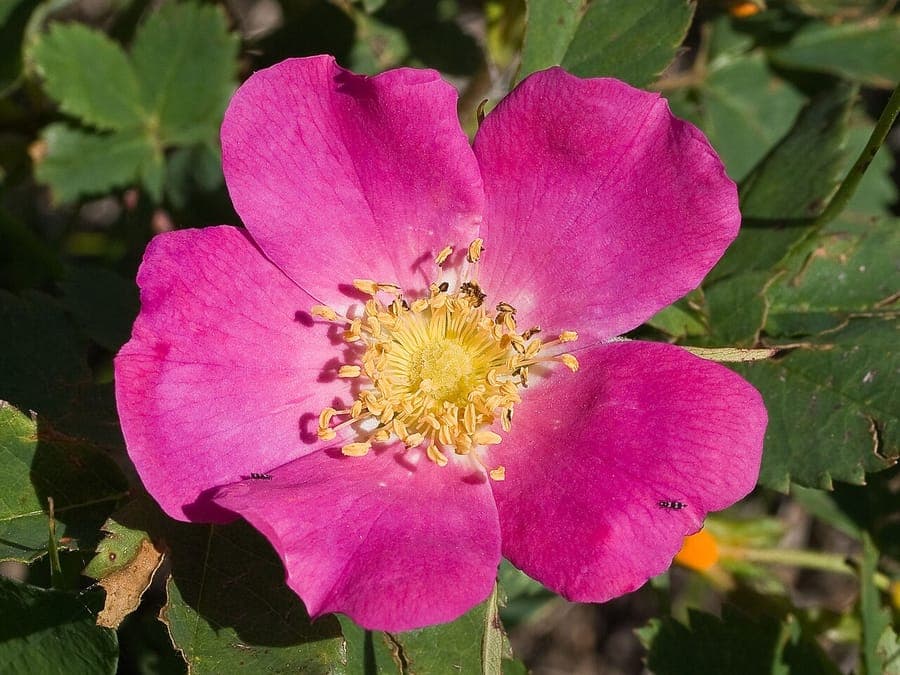
dougwaylett / CC BY 2.0, via Wikimedia Commons
Rosa woodsii: complete guide
Rosa woodsii
¿Quieres ver Rosa woodsii: complete guide en tu jardín?
1 minuto, sin tarjeta de crédito
Overview
Rosa woodsii, commonly known as Wood's rose or Alaska rose, is a captivating wild rose species native to North America. Growing from Alaska to New Mexico and Newfoundland, it demonstrates exceptional hardiness. This species is increasingly popular in gardens for its ornamental value, resilience, and wildlife benefits.
Belonging to the Rosaceae family (the same as apples and many garden shrubs), Rosa woodsii differs from hybrid roses through its natural growth pattern and minimal maintenance requirements.
Appearance and Bloom
Wood's rose develops as a compact, spreading shrub reaching 1 to 1.5 meters tall. The plant produces distinctive pink flowers blooming from May through August. These are simple, five-petaled flowers approximately 3-5 cm across, with golden stamens that attract bees and hummingbirds.
After flowering, striking red hips develop and persist long into winter, providing visual interest and food for birds. The foliage is green, compound, and fine-textured, turning yellow-orange in autumn. The stems bear sharp thorns, characteristic of roses and helpful for natural defense.
Ideal Location
Wood's rose performs best in full sun, requiring at least 6 to 8 hours of direct sunlight daily. This ensures optimal flowering and vigorous growth. The plant tolerates partial shade but produces fewer flowers in such conditions.
Avoid deep shadows from large trees or walls. Good air circulation is important for disease prevention. Also avoid wind-sheltered spots where moisture can accumulate.
Soil
Wood's rose is undemanding regarding soil quality, one of its main advantages. The plant tolerates pH values from 5.0 to 8.0 (acidic to neutral-alkaline).
Ensure well-draining soil to prevent waterlogging. Add compost or humus at planting. Sandy, well-structured soil is preferred over heavy clay. If you have heavy clay, work in 30-40% sand or peat to improve drainage.
The plant appreciates organic matter, so annually add compost or leaf mold. This improves soil structure without requiring synthetic fertilizer.
Watering
Wood's rose is reasonably drought-tolerant once established but grows better with regular water during the growing season. Water deeply 2-3 times weekly during dry periods rather than light daily watering.
In the first year after planting, regular watering is essential until the plant is well-rooted. Water at the base of the plant in the morning, not on foliage, to prevent disease.
During rainy seasons, additional watering is usually unnecessary. Ensure the plant doesn't sit in waterlogged soil; well-drained rainwater is preferable to stagnant conditions.
Diseño gratis
¿Quieres ver Rosa woodsii: complete guide en tu jardín? Crea un diseño gratis ahora.
Pruning
Wood's rose can thrive with minimal pruning, though light pruning improves shape and flowering. Prune in late winter (February-March) when frost has passed.
Remove dead, damaged, or diseased branches back to healthy wood. Thin out excessive, crossing growth to outward-facing buds. Keep the plant open in the center for improved air circulation.
Eliminate winter damage and crossing branches. Heavy pruning isn't necessary; light pruning of no more than 25% is typically sufficient.
Maintenance Calendar
February-March: Pruning, remove dead wood April: Begin fertilizing as growth starts May-August: Flowering period, regular watering September-October: Stop fertilizing, prepare for winter November-January: Winter dormancy, minimal care
The plant naturally establishes its growth pattern without intensive maintenance.
Winter Hardiness
Wood's rose is exceptionally hardy to zone 2-3 (to -40 Celsius), meaning it grows throughout the Netherlands and most of Europe. No special winter protection is needed in most regions.
Young plants may suffer minor damage in exceptionally severe winters but recover quickly in spring. A mulch layer (5-10 cm) can help newly planted specimens during the first winter.
Companion Plants
Wood's rose combines well with:
- Lavender: Complementary purple flowers
- Groundcovers: Low-growing soil coverage
- Sedum: Drought-tolerant, similar nutrient needs
- Herbs like sage and thyme: Natural garden feel
- Conifers: Contrasting form and color palette
Avoid strong root competitors such as espalier trees placed directly adjacent.
Closing
Rosa woodsii is an excellent choice for anyone desiring a natural, low-maintenance rose with abundant ornamental value. This North American species offers pink summer blooms, red autumn hips, and bird food in a compact package.
On gardenworld.app, find detailed plant guides for your garden design. Use our plant browser to plan Wood's rose in combination with other species. With gardenworld.app, create your dream garden effortlessly!
The plant is available at major garden centers and online retailers.
¿Quieres ver Rosa woodsii: complete guide en tu jardín? Crea un diseño gratis ahora.
Sube una foto, elige un estilo y obtén un diseño fotorrealista con lista de plantas en menos de un minuto.
Más de 10.000 jardines diseñados
Sin tarjeta de crédito


Plantas similares
Siberian crab apple: complete guide
Malus x robusta
Complete guide to the Siberian crab apple (Malus x robusta): location, soil, pruning, winter hardiness and the best companion plants for your garden.
Chinese flowering crabapple (Malus x spectabilis): complete guide
Malus x spectabilis
Meet the Chinese flowering crabapple (Malus x spectabilis): a classic spring bloomer with carmine buds and pink blossom.
Potentilla crassinervia: complete guide
Potentilla crassinervia
Potentilla crassinervia, the Corsican cinquefoil, grows wild on Corsica and Sardinia's peaks. Discover how to grow this hardy alpine rock garden gem.