
Alvesgaspar / CC BY-SA 3.0, via Wikimedia Commons
Virginia rose: complete guide
Rosa virginiana
¿Quieres ver Virginia rose: complete guide en tu jardín?
1 minuto, sin tarjeta de crédito
Overview
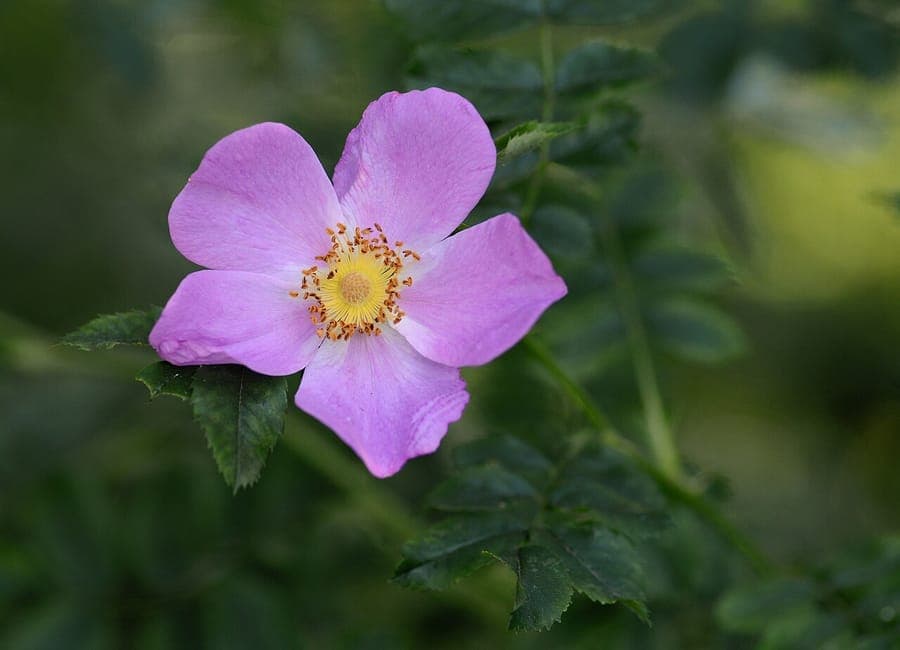
The Virginia rose (Rosa virginiana) is a wild, shrubby rose native to eastern North America. Distinguished by its bright pink flowers (20-30 mm), red hips, and particularly striking red-coloured young stems, it grows low (1-2 meters) and spreads via underground stolons into dense colonies. This is an excellent rose for naturalistic gardens, wild hedgerows, and group plantings.
Appearance and Bloom Cycle
Virginia rose reaches 1-1.5 meters tall and spreads via rhizomes to 2-3 meters wide. Stems are smooth, red to purple, especially on young growth and in winter - highly ornamental. Leaves are compound (7-9 leaflets), glossy green, small (2-3 cm).
Flowers are semi-double, bright pink (circa 20 mm), incredibly abundant in May-June. Fruit are eye-catching red hips (10-15 mm), persisting deep into winter. This rose flowers once annually.
Ideal Location
Virginia rose thrives in full sun but tolerates half-shade. Minimum three to four hours of sunlight suffices. Excellent for naturalistic gardens, wild hedgerows, and group plantings.
Very wind-resistant and suitable for coastal and urban settings. Not ideal as a specimen plant - better as a mass planting or hedging rose.
Soil Requirements
Virginia rose grows in virtually all soil types, whether acidic or alkaline, poor or fertile. This is an exceptionally tolerant rose. Any preference for well-drained soil, but it thrives even in heavy clay.
No special feeding required. Compost or leaf mould assists establishment in year one. After establishment, minimal nutrition is needed.
Diseño gratis
¿Quieres ver Virginia rose: complete guide en tu jardín? Crea un diseño gratis ahora.
Watering
Regular deep watering (5-8 litres weekly) during the first growing season is essential. After establishment (1-2 years), the rose is very drought-tolerant. This is a rose for natural water cycles.
Not suitable for permanently wet sites - stagnant water encourages fungal disease.
Pruning
Virginia rose rarely requires pruning. Remove only dead or damaged wood in early spring (March). Old stems (older than 5-6 years) can be cut to the ground to encourage rejuvenation.
This rose grows naturally; excessive pruning is unnecessary and compromises its natural form.
Maintenance Calendar
MARCH: Remove deadwood APRIL: Water during dry spells MAY-JUNE: Bloom period JULY-AUGUST: Inspection SEPTEMBER-OCTOBER: Enjoy red hips NOVEMBER-DECEMBER: Appreciate winter stem colour
Winter Hardiness
Virginia rose is hardy to USDA Zone 3 (-40°C). Across Europe, this rose grows without protection. An exceptionally hardy rose suitable for all temperate zones and colder regions.
Companion Plants
Virginia rose combines beautifully with:
- Ornamental grasses (feathery contrast)
- Lavandula (colour contrast)
- Juniperus (structural interest)
- Polygonatum (shade companions)
- Helleborus (winter interest)
Perfect for mixed borders with herbaceous perennials.
Closing
Rosa virginiana is a classic wild rose for those who love naturalistic, low-maintenance gardens. With its bright pink flowers, red hips, and red winter stems, this rose offers year-round interest. Ideal for nature-friendly gardens, wild hedgerows, and woodland edge planting. This isn't a rose for formal gardens - it's for those seeking something natural and sustainable. Design your natural garden with gardenworld.app and choose roses that suit your style. Explore more roses on gardenworld.app.
¿Quieres ver Virginia rose: complete guide en tu jardín? Crea un diseño gratis ahora.
Sube una foto, elige un estilo y obtén un diseño fotorrealista con lista de plantas en menos de un minuto.
Más de 10.000 jardines diseñados
Sin tarjeta de crédito


Plantas similares
Siberian crab apple: complete guide
Malus x robusta
Complete guide to the Siberian crab apple (Malus x robusta): location, soil, pruning, winter hardiness and the best companion plants for your garden.
Chinese flowering crabapple (Malus x spectabilis): complete guide
Malus x spectabilis
Meet the Chinese flowering crabapple (Malus x spectabilis): a classic spring bloomer with carmine buds and pink blossom.
Potentilla crassinervia: complete guide
Potentilla crassinervia
Potentilla crassinervia, the Corsican cinquefoil, grows wild on Corsica and Sardinia's peaks. Discover how to grow this hardy alpine rock garden gem.