
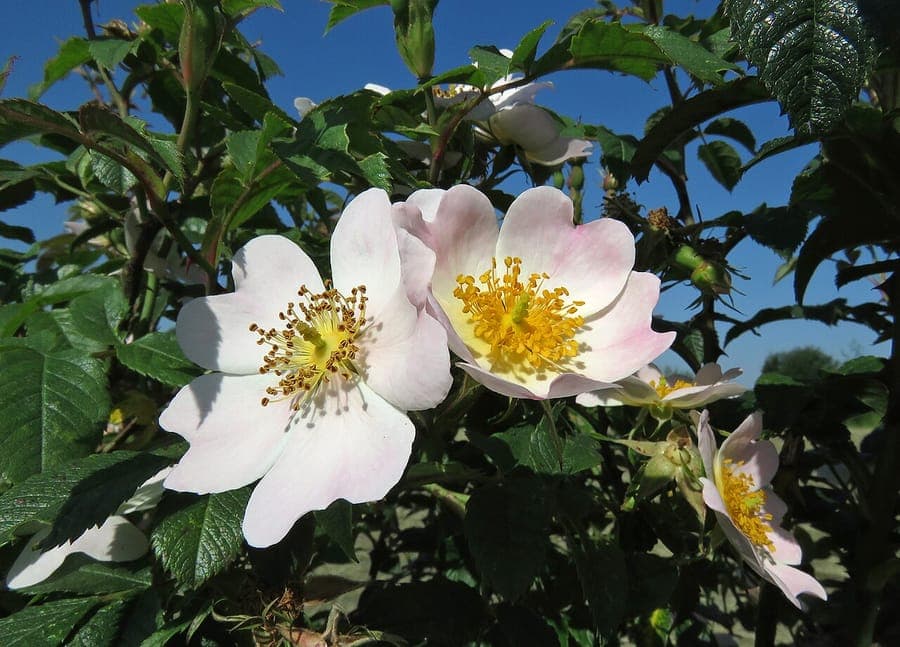
Claire Felloni / CC BY-SA 2.0 fr, via Wikimedia Commons
Short-styled field-rose: complete guide
Rosa stylosa
¿Quieres ver Short-styled field-rose: complete guide en tu jardín?
1 minuto, sin tarjeta de crédito
Overview
Short-styled field-rose (Rosa stylosa), also called stylosa rose or short-styled rose, is a wild shrub rose from Europe and Northwest Africa. This robust, extremely hardy plant grows to 3 metres and produces abundant pink flowers yearly with virtually no maintenance demands. Unlike many garden roses, this species needs no fussing.
What makes this rose exceptional is the combination of extreme hardiness, reliable flowering, and tolerance for poor soil and difficult conditions. This is a plant that doesn't require feeding, spraying, or constant pruning. Garden centres stock it as potted nursery stock.
Appearance & bloom cycle
Short-styled field-rose forms an open, branching shrub reaching 2-3 metres tall and 2-2.5 metres wide. Branches are green to red-brown with thorns (small prickles). Foliage is green and compound with five leaflets per leaf, about 3 centimetres long.
From May to June, the plant produces abundant flowers measuring 3-4 centimetres across. The blooms are pink, simple (five petals), and lightly scented. After flowering, bright red hips form and persist through autumn and into early winter, providing food for wildlife.
Ideal location
Short-styled field-rose thrives in full sun to partial shade. A minimum of 4 hours direct sun daily is good, more is better. In deep shade it survives but flowers sparsely. This is a plant for sunny borders, hedgerows, or as a standalone specimen in full sun.
Wind and rough weather don't bother it; this is a tough plant. Heavy rain may shed some flowers, but new blooms quickly follow. Plant it where it has room to reach natural size without constant pruning.
Soil requirements
Short-styled field-rose is more moisture-tolerant than many garden roses and tolerates heavy clay better too. It grows in virtually any soil: heavy clay, sandy, acidic, or neutral. Good drainage is less critical than with cultivated roses. The plant accepts compacted soil.
For best establishment, dig a hole twice the width of the pot and backfill with a mix of garden soil, compost, and sand. Even in very poor soil (stony, very acidic, or alkaline), it establishes and grows, just slower. Liming acidic soil can help.
Watering
Once established, short-styled field-rose needs minimal water. Regular rainfall sustains it. Water regularly during the first growing season (planting year), especially during dry spells.
After establishment (year two onward), watering can drop to zero in most climates. During extreme summer droughts, supplementary water improves vigour, but this is rarely necessary. Overwatering is more harmful than underwatering.
Diseño gratis
¿Quieres ver Short-styled field-rose: complete guide en tu jardín? Crea un diseño gratis ahora.
Pruning
This rose needs far less pruning than cultivated varieties. In early spring (March-April), light pruning to shape is optional. Remove dead or winter-damaged branches.
Heavy pruning is unnecessary and counterproductive, reducing flowering. Let the plant grow naturally into its preferred shape. If it exceeds space, remove some older stems (5+ years) down to ground to encourage rejuvenation. Never remove more than one-third annually.
Maintenance calendar
March: Light pruning of winter damage. Growing season starts.
April-May: Peak flowering period. Water young plants. Enjoy flowers.
June-July: Flowering fades. Hips forming. No maintenance needed.
August-September: Red hips visible. Plant slows. No pruning.
October-November: Autumn colour. Hips provide wildlife food. Planting window opens.
December-February: Winter dormancy. Branch structure visible. Light removal of dead wood if needed. No feeding.
Winter hardiness
Short-styled field-rose is extremely hardy, tolerating around -25°C. In USDA zones 4-9, it's a permanent solution. This plant requires no winter protection, even in harsh climates.
Hard winters cause natural leaf drop (the plant is deciduous), which is normal. Allow leaves to fall naturally; don't prune before winter, as this damages buds. The plant always regrows vigorously in spring.
Companion plants
Short-styled field-rose works as a backdrop in borders. Combine with lower-growing foreground plants: lavender, potentilla, hardy perennials. For colour contrast, plant beside yellow or white shrubs.
This rose makes an excellent informal hedge. Space plants 1.5 metres apart for complete coverage within 3-4 years. It provides autumn and winter food for birds.
Closing
For a rose without the fuss of hybrid teas, short-styled field-rose delivers. It thrives in heavy soil, tolerates variable conditions, and asks for almost no pruning or feeding. Once planted in sun to partial shade, it produces reliably for decades. Design hedgerows and shrub borders on gardenworld.app featuring this rose, visualising how it grows from small potted specimen to a 3-metre flowering hedge. Use gardenworld.app's design tools to plan your wild rose plantings and watch them mature.
¿Quieres ver Short-styled field-rose: complete guide en tu jardín? Crea un diseño gratis ahora.
Sube una foto, elige un estilo y obtén un diseño fotorrealista con lista de plantas en menos de un minuto.
Más de 10.000 jardines diseñados
Sin tarjeta de crédito


Plantas similares
Siberian crab apple: complete guide
Malus x robusta
Complete guide to the Siberian crab apple (Malus x robusta): location, soil, pruning, winter hardiness and the best companion plants for your garden.
Chinese flowering crabapple (Malus x spectabilis): complete guide
Malus x spectabilis
Meet the Chinese flowering crabapple (Malus x spectabilis): a classic spring bloomer with carmine buds and pink blossom.
Potentilla crassinervia: complete guide
Potentilla crassinervia
Potentilla crassinervia, the Corsican cinquefoil, grows wild on Corsica and Sardinia's peaks. Discover how to grow this hardy alpine rock garden gem.