
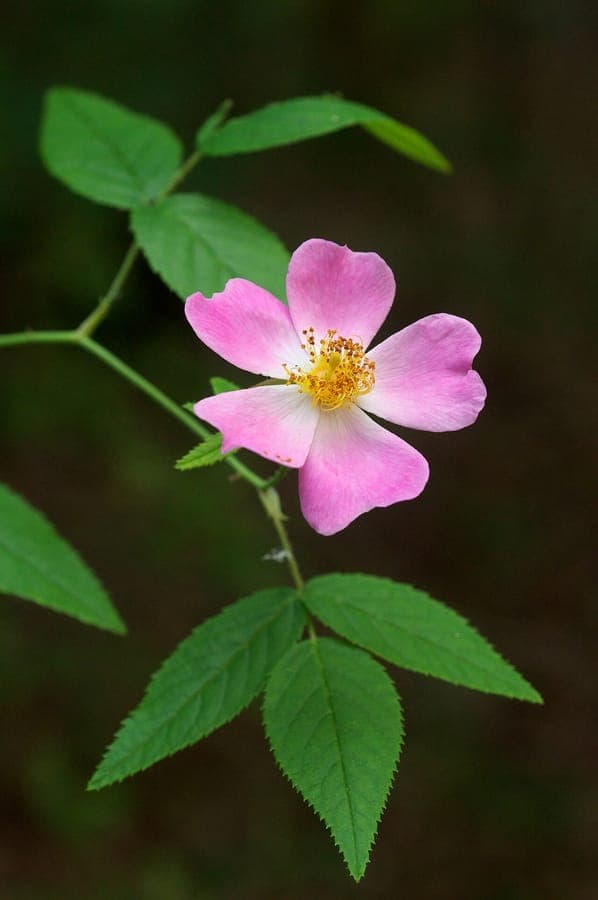
Eric Hunt / CC BY-SA 4.0, via Wikimedia Commons
Prairie Rose: complete guide
Rosa setigera
¿Quieres ver Prairie Rose: complete guide en tu jardín?
1 minuto, sin tarjeta de crédito
Overview
The Prairie Rose, scientifically Rosa setigera, is a beautiful American climbing rose from the Rosaceae family. Also called "Climbing Prairie Rose," this robust rose loves vertical growth and produces abundant pink flowers. Perfect for pergolas, fences, and garden walls, this rose offers minimal maintenance requirements with reliable annual flowering.
Appearance and Bloom
The Prairie Rose grows to 2-3 meters tall, forming long, flexible canes. Foliage is small, bright green, and glossy with fine texture. Flowers are pink to pale pink, semi-double blooms with strong, pleasant fragrance. Flowering occurs June-July with possible repeat blooming in September-October. Red hips follow in autumn.
Ideal Location
Plant the Prairie Rose in full sun to partial shade. Perfect for southwest-facing walls, pergolas, and espaliers. Thrives in locations with good air circulation. Avoid excessive moisture and windy exposures.
Soil
Position in fertile, well-draining soil. Suits neutral to slightly alkaline soils. Improve poor soils with compost or peat moss for better growth. Add mulch annually for soil enrichment.
Diseño gratis
¿Quieres ver Prairie Rose: complete guide en tu jardín? Crea un diseño gratis ahora.
Watering
Water regularly during first year establishment. Once established, tolerates moderate drought. Water deeply but infrequently for strong root development. Avoid wet foliage situations promoting fungal diseases.
Pruning
Prune after flowering by cutting back excessive growth. Remove dead canes in spring. Shape by shortening side shoots for more compact growth.
Maintenance Calendar
Spring: prune, apply compost around base. Summer: regular watering, enjoy blooming. Autumn: possible second blooming. Winter: minimal care, frost protection for young plants.
Winter Hardiness
Hardy to -20°C depending on cultivar. Fully hardy in temperate zones. Young plants may need mulch protection against frost.
Companion Plants
The Prairie Rose combines beautifully with clematis and other bloomers. Underplant with lavender or catnip for complementary flowers. Displays attractively against aged brick walls.
Closing
The Prairie Rose offers charm and blooms for classic gardens without demanding care. This robust climbing rose adds character and beauty to garden structures year after year. Visit gardenworld.app for more rose guides. Discover gardenworld.app for garden design ideas!
¿Quieres ver Prairie Rose: complete guide en tu jardín? Crea un diseño gratis ahora.
Sube una foto, elige un estilo y obtén un diseño fotorrealista con lista de plantas en menos de un minuto.
Más de 10.000 jardines diseñados
Sin tarjeta de crédito


Plantas similares
Siberian crab apple: complete guide
Malus x robusta
Complete guide to the Siberian crab apple (Malus x robusta): location, soil, pruning, winter hardiness and the best companion plants for your garden.
Chinese flowering crabapple (Malus x spectabilis): complete guide
Malus x spectabilis
Meet the Chinese flowering crabapple (Malus x spectabilis): a classic spring bloomer with carmine buds and pink blossom.
Potentilla crassinervia: complete guide
Potentilla crassinervia
Potentilla crassinervia, the Corsican cinquefoil, grows wild on Corsica and Sardinia's peaks. Discover how to grow this hardy alpine rock garden gem.