
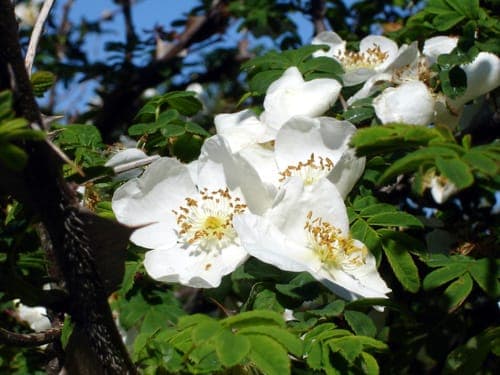
Ulf Eliasson epibase / CC BY 2.5, via Wikimedia Commons
Silky rose: complete guide
Rosa sericea
¿Quieres ver Silky rose: complete guide en tu jardín?
1 minuto, sin tarjeta de crédito
Overview
The silky rose (Rosa sericea) is a refined, natural wild rose from the Himalayas. This elegant shrub distinguishes itself through its delicate, usually white flowers and beautifully gleaming red stems that remain decorative even in winter.
Unlike many cultivated roses, this strong, untamed plant retains its natural beauty. Perfect for those seeking something beyond the garden rose and valuing honesty and robustness in plant choice.
Appearance & Bloom
The silky rose reaches a height of 1.5 to 2.5 meters and forms an open shrub with elegantly spread stems. The flowers are small, usually white or light pink, with only 4 petals instead of the usual 5, making it unique.
Blooming occurs in May-June. Later in the season, small orange-red hips form that attract birds. The young stems are glossy red and provide nice contrast with the evergreen foliage.
Ideal Location
This rose grows best in full sun with at least 6 hours of direct sunlight. Choose open, sunny spots where air can circulate well, as this prevents disease.
It tolerates wind well, so suitable for exposed garden areas. Protection from northerly winds is pleasant but not necessary.
Soil
The silky rose grows in almost all well-draining soils. Preference for moderate to richer soils, but tolerates poor soils too. pH between 6.0 and 7.5 is ideal.
Ensure good drainage as waterlogging leads to root problems. Add compost when planting to improve nutrition and structure.
Diseño gratis
¿Quieres ver Silky rose: complete guide en tu jardín? Crea un diseño gratis ahora.
Watering
Once the plant is planted in the ground, it needs little additional water. Water during dry periods, especially during the growing season. Excessive watering is harmful.
Established plants grow well without extra feeding. In container culture, regularly check if the soil is drying out.
Pruning
Minimal pruning, this natural rose finds its own form. Remove only dead or damaged branches. After flowering in June, you can trim excess branches, but this is optional.
Heavy pruning does not rejuvenate the plant if not needed. Let it grow naturally for optimal appeal.
Maintenance Calendar
March: Inspect for damage and remove winter damage. April-May: Check for aphids and other pests. June: Enjoy the bloom. July-August: Water in extreme drought. October: Hips are now ornamental. November-February: Enjoy the red stems.
Winter Hardiness
The silky rose is hardy to about -15 degrees Celsius. It survives cold winters without protection. Snow can damage young shoots, but recovery is quick.
Well suited in USDA zones 5-9.
Companion Plants
Combine with other natural elements like wild herbs, ornamental grasses, and shade-tolerant ground covers. Lavender next to this rose offers nice color contrast. Clematis can grow along the rose for additional blooming.
It works well as a specimen or in small groups with underplanting.
Closing
The silky rose brings wildness and beauty to any garden. Easy to maintain, robust and full of character, it is an excellent choice for those who value natural gardens. Plant it in full sun on well-draining soil, and you will have a beautiful shrub for years.
Available at Intratuin and Gamma. More wild rose ideas at gardenworld.app/nl and gardenworld.app/en.
¿Quieres ver Silky rose: complete guide en tu jardín? Crea un diseño gratis ahora.
Sube una foto, elige un estilo y obtén un diseño fotorrealista con lista de plantas en menos de un minuto.
Más de 10.000 jardines diseñados
Sin tarjeta de crédito


Plantas similares
Siberian crab apple: complete guide
Malus x robusta
Complete guide to the Siberian crab apple (Malus x robusta): location, soil, pruning, winter hardiness and the best companion plants for your garden.
Chinese flowering crabapple (Malus x spectabilis): complete guide
Malus x spectabilis
Meet the Chinese flowering crabapple (Malus x spectabilis): a classic spring bloomer with carmine buds and pink blossom.
Potentilla crassinervia: complete guide
Potentilla crassinervia
Potentilla crassinervia, the Corsican cinquefoil, grows wild on Corsica and Sardinia's peaks. Discover how to grow this hardy alpine rock garden gem.