
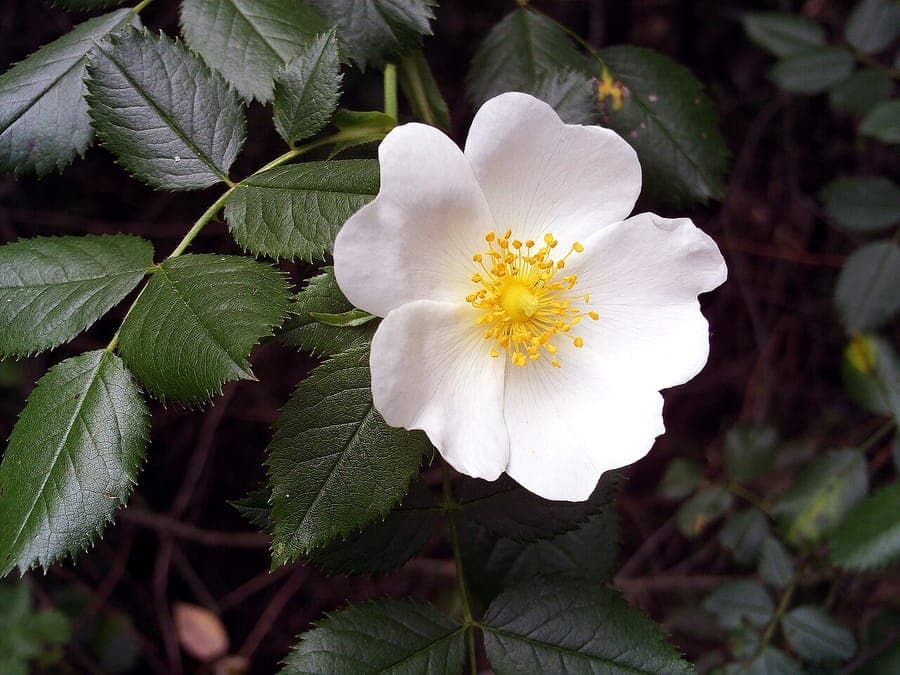
Javier martin / Public domain, via Wikimedia Commons
Rosa pouzinii: complete guide
Rosa pouzinii
¿Quieres ver Rosa pouzinii: complete guide en tu jardín?
1 minuto, sin tarjeta de crédito
Overview
Rosa pouzinii, sometimes referred to as Pouzin rose, is a beautiful wild rose native to the western and central Mediterranean region, especially from France, Italy, Spain and North Africa. This plant is renowned for its robustness, its beautifully formed flowers and its characteristic spherical hips.
This rose grows as an open, frost-hardy shrub and is perfect for natural gardens, Mediterranean applications and low-maintenance landscaping. The plant is highly adaptable and thrives in dry, fertile soils.
Appearance and bloom cycle
Rosa pouzinii reaches a height of approximately 1 to 2 metres and grows as an open, spreading shrub. The plant forms a beautiful natural shape without requiring much pruning.
The stems are green to reddish-brown and are covered with numerous, sharp thorns. The leaves are small to moderate, approximately 1.5 to 4 centimetres long, with the classic rose leaf appearance with serrated edges. The foliage is green and remains attractive during the growing season.
The flowers are semi-double, approximately 3 to 4.5 centimetres in diameter, pink or pale red in colour with yellow stamens in the heart. The flowers grow in clusters and have a light, pleasant fragrance. The flowering period is May to June, when the plant flowers abundantly.
The true ornamental value, however, consists of the characteristic hips that develop after flowering. These are round to slightly flattened, approximately 1.5 to 2 centimetres in diameter, orange-red to red in colour and hang until deep into winter. They are food for birds and have great decorative value.
Ideal location
Rosa pouzinii grows best in full sun. At least five to six hours of direct sunlight daily is necessary for optimal growth and abundant flowering and berry fruiting.
The plant can be trained against south-facing walls where heat is intense. It tolerates hot, dry locations excellently and flowers and fruits most abundantly there.
The plant can also grow in partial shade, but flowers and fruits less abundantly there. Wind tolerance is good; this plant thrives in windy environments.
Soil requirements
Rosa pouzinii grows on virtually all soil types, even poor, dry soils. The plant is not picky regarding pH and tolerates both acidic and alkaline soils.
The plant does not need much nutrition. In fact, it grows better in less fertile soils. Well-draining soil is important; heavy clay soils should be improved with sand and gravel.
The plant tolerates dry, chalky soils excellently, making it perfect for Mediterranean gardens and dry mountain areas.
Diseño gratis
¿Quieres ver Rosa pouzinii: complete guide en tu jardín? Crea un diseño gratis ahora.
Watering
Rosa pouzinii is very drought-tolerant. After establishment (the first year), regular watering is sufficient. After that, the plant can usually survive without supplemental water, depending on local rainfall and climate conditions.
In very dry periods, water can be given, but this is not essential. The plant grows better with moderate water than with excessive water, which can cause rot problems.
In rainy areas, usually no supplemental watering is needed.
Pruning
Rosa pouzinii requires minimal pruning. Light shaping after flowering can help the plant maintain its form and stimulate lower growth.
Do not specifically remove faded flowers, as the characteristic hips have great ornamental value and hang until late winter.
Damaged, weak or crossing branches can be removed. Avoid heavy pruning, as this plant prefers to take wild forms.
The plant can be trained against walls or wire structures by carefully tying in some longer branches.
Maintenance calendar
May-June: Flowering period. Plant flowers abundantly. Carefully remove faded flowers.
July-September: Hip formation, growth and ripening. Provide adequate moisture supply in very dry periods.
October-December: Hips are fully ripe, orange-red and hang. Birds eat them.
January-March: Winter rest. Plant is dormant and of little interest. Remove damaged foliage.
April: Preparation for growth. Light shaping can be performed.
Winter hardiness
Rosa pouzinii is very winter-hardy, down to approximately -20 to -25 degrees Celsius. The plant originates from Mediterranean mountain areas where frost is common and tolerates cold very well.
The plant is resistant to frost and snow. In areas with heavy snow, snow can be carefully removed from branches, although the plant usually tolerates snow well.
Companion plants
Rosa pouzinii combines beautifully with other Mediterranean and wild garden plants:
Lavandula (lavender) - its blue/purple flowers create a beautiful colour contrast with the pink roses.
Rosmarinus (rosemary) - grey-green herbaceous foliage offers nice contrast.
Santolina - yellow foliage and yellow button flowers create interesting contrast.
Cistus (rock roses) - pink flowers and similar preference for dry locations.
Phillyrea - green shrubs provide background structure.
Closing
Rosa pouzinii is an indispensable choice for gardeners who love wild roses, Mediterranean gardens and low-maintenance landscapes. The plant offers lovely flowers, very characteristic ornamental hips and extreme winter hardiness with minimal maintenance requirements.
Find this rose at your local garden centres. For more information about Mediterranean gardens and roses, visit gardenworld.app for complete guides and plant advice. Create an authentic Mediterranean garden with this French treasure!
On gardenworld.app you will also find more advice for combining Mediterranean plants in your garden schemes.
¿Quieres ver Rosa pouzinii: complete guide en tu jardín? Crea un diseño gratis ahora.
Sube una foto, elige un estilo y obtén un diseño fotorrealista con lista de plantas en menos de un minuto.
Más de 10.000 jardines diseñados
Sin tarjeta de crédito


Plantas similares
Siberian crab apple: complete guide
Malus x robusta
Complete guide to the Siberian crab apple (Malus x robusta): location, soil, pruning, winter hardiness and the best companion plants for your garden.
Chinese flowering crabapple (Malus x spectabilis): complete guide
Malus x spectabilis
Meet the Chinese flowering crabapple (Malus x spectabilis): a classic spring bloomer with carmine buds and pink blossom.
Potentilla crassinervia: complete guide
Potentilla crassinervia
Potentilla crassinervia, the Corsican cinquefoil, grows wild on Corsica and Sardinia's peaks. Discover how to grow this hardy alpine rock garden gem.