
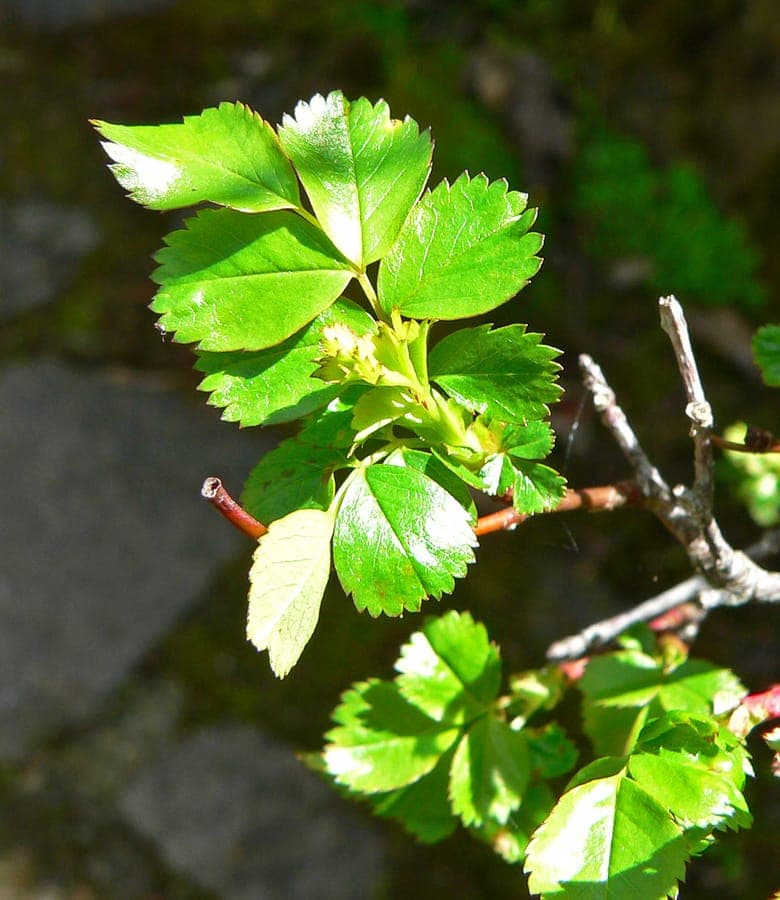
Stan Shebs / CC BY-SA 3.0, via Wikimedia Commons
Cluster rose: complete guide
Rosa pisocarpa
¿Quieres ver Cluster rose: complete guide en tu jardín?
1 minuto, sin tarjeta de crédito
Overview
The Cluster rose (Rosa pisocarpa), also known as pea rose or pea-fruit rose, is a native wild rose from western North America. This member of the Rosaceae family grows from British Columbia through California and is a beloved bird and wildlife-friendly plant. The name "pisocarpa" refers to the characteristic pea-like fruits (hips) appearing after blooming.
This compact, dense shrub grows to approximately 1.5 to 2 meters tall and forms dense thickets. The Cluster rose distinguishes itself through bird-attracting hips persisting until winter, providing excellent food sources for birds and wildlife. The plant is exceptionally hardy and low-maintenance.
Appearance and Bloom
The Cluster rose displays small to medium-sized, glossy green leaves with a rough texture. The flowers are pink to deep pink, approximately 2-3 cm wide, appearing in clusters of five to ten blooms on twigs from May through June. The flowers possess a light sweet fragrance.
Following bloom, characteristic small red berries (hips) form, approximately pea-sized. These hips mature from green to yellow, orange, and finally bright red. The hips persist into deep winter, making it an extraordinarily valuable food source for bird species.
Ideal Location
The Cluster rose thrives in sunny locations receiving at least 6 hours of direct daily sunlight. The plant tolerates partial shade, though bloom and fruit set may be less abundant. In very hot climates, some afternoon shade helps keep foliage healthy.
The plant is extremely wind-tolerant and grows excellently in windy coastal environments. This makes it ideal for coastal gardens and exposed areas where other roses struggle.
Soil
The Cluster rose is remarkably soil-tolerant and grows in virtually all soil types, from acidic to alkaline. However, well-drained soil promotes better growth and health. Ideal pH ranges from 5.5 to 7. If soil is very heavy, improve it with compost and gravel for enhanced drainage.
The plant tolerates even lean, stony soils excellently. This makes it suitable for naturalistic or wild gardens where other cultivars struggle. Add organic material at planting for improved first-year growth.
Diseño gratis
¿Quieres ver Cluster rose: complete guide en tu jardín? Crea un diseño gratis ahora.
Watering
Once well-rooted, the Cluster rose is extremely drought-tolerant. Water regularly during the first growing season (2-3 times weekly, depending on weather). Once established (after 1-2 years), dramatically reduce watering.
During dry summers, supplemental water remains beneficial, but the plant tolerates extended drought better than most cultivated roses. In very wet winters, minimize watering to prevent root rot. The plant is extremely tolerant of both drought and excess water once established.
Pruning
The Cluster rose grows naturally into an attractive dense form requiring minimal pruning. Annual pruning may occur in early spring to remove dead wood and shape. Prune approximately 30% of the plant annually, encouraging new growth.
Remove long shoots emerging from the cluster to maintain tidy form. After bloom, spent flowers may be removed, but many gardeners retain these for natural bird food. Avoid heavy pruning, which may reduce subsequent growth.
Maintenance Calendar
March to April: Inspect frost damage, light formation pruning, begin fertilizing. May to June: Regular watering as bloom begins, enjoy flowering. July to August: Continue watering, observe fruit set. September to October: Reduce water frequency, prepare for dormancy. November to February: Minimal maintenance, retain bird food.
Winter Hardiness
The Cluster rose is hardy down to approximately -30 degrees Celsius (zone 4a). This makes it suitable for zones 4 through 9. In very cold zone 3 areas, some extra protection may be beneficial in the first year. Once established, the plant is extremely robust.
The plant thrives in northern regions and tolerates snowfall and frost excellently. Protected plantings are usually unnecessary.
Companion Plants
The Cluster rose combines beautifully with other North American native plants. Combine with other Ribes species (currants) or Sambucus (elderberry). For herbaceous companions, plant nearby Aster novae-angliae or Rudbeckia.
In wildlife gardens, associate with Juniperus scopulorum or other native conifers. The red fruits contrast with green conifer needles, offering attractive eye-appeal.
Closing
The Cluster rose is an outstanding choice for bird-friendly, low-maintenance gardens appreciating natural beauty. With minimal pruning and moderate watering, this North American native plant forms a bird magnet with season-long interest. Plant today and enjoy spring blooms and bird food through winter. Find availability at local garden centers and learn more at gardenworld.app and gardenworld.app.
¿Quieres ver Cluster rose: complete guide en tu jardín? Crea un diseño gratis ahora.
Sube una foto, elige un estilo y obtén un diseño fotorrealista con lista de plantas en menos de un minuto.
Más de 10.000 jardines diseñados
Sin tarjeta de crédito


Plantas similares
Siberian crab apple: complete guide
Malus x robusta
Complete guide to the Siberian crab apple (Malus x robusta): location, soil, pruning, winter hardiness and the best companion plants for your garden.
Chinese flowering crabapple (Malus x spectabilis): complete guide
Malus x spectabilis
Meet the Chinese flowering crabapple (Malus x spectabilis): a classic spring bloomer with carmine buds and pink blossom.
Potentilla crassinervia: complete guide
Potentilla crassinervia
Potentilla crassinervia, the Corsican cinquefoil, grows wild on Corsica and Sardinia's peaks. Discover how to grow this hardy alpine rock garden gem.