
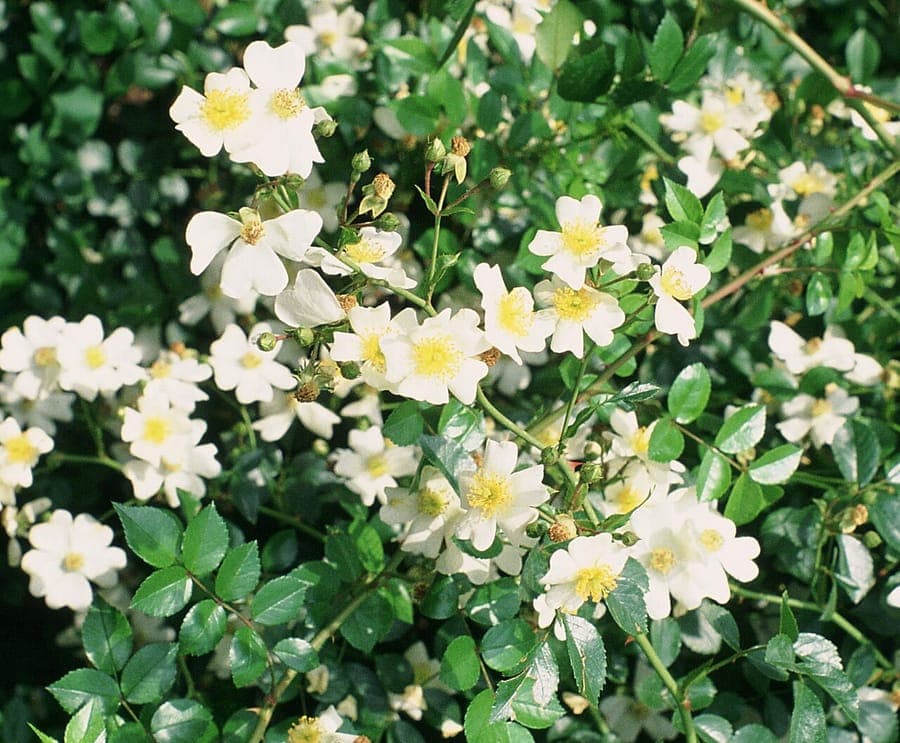
A. Barra / CC BY-SA 3.0, via Wikimedia Commons
Rosa lucieae: complete guide
Rosa lucieae
¿Quieres ver Rosa lucieae: complete guide en tu jardín?
1 minuto, sin tarjeta de crédito
Rosa lucieae, commonly known as Japanese Memorial rose or Wichura's rose variant, is a vigorously growing rose species originating from Southeast China, South Korea, central and southern Japan to the Philippines. This variant features rapid growth, stoloniferous spread, and subshrub habit. The plant offers excellent landscape design potential due to its wild character and robust nature.
Overview and Characteristics
Rosa lucieae distinguishes itself from related species through rapid growth and extensive root systems that produce new plants. This makes it ideal for erosion control and ground coverage on larger properties. The plant is celebrated in Japan as a decorative landscape element, admired for its coarse foliage texture and abundant flowering.
Appearance and Blooming
The plant grows into a compact to medium-sized shrub with dark grey-green leaves featuring coarse texture. Flowers appear in clusters, typically soft pink to white with yellow stamens. Blooming is extremely abundant from June through July. After flowering, characteristic round red hips develop, persisting until October and providing food for birds and small mammals.
Ideal Location
Rosa lucieae thrives in sunny locations with at least six hours of direct sun daily. The plant accepts half-shade, though this may result in fewer flowers. Provide adequate space as this has an expanding growth pattern. Plant in locations prone to erosion or where you need vegetation establishment. Good air circulation promotes health.
Soil and Nutrition
This rose is not particular about soil type but thrives in well-draining ground with neutral to slightly acidic pH (4.8-7). Add biological matter at planting time. Compost or rotted organic material aids water retention on sandy soils. Fertilizing during growth season helps; use balanced or rose fertilizer monthly. Nitrogen fertilizer in autumn stimulates fruit development.
Watering and Moisture Management
Regular watering is crucial during the first growing season. Once established, this is a drought-tolerant plant. Water regularly to ensure deep soil penetration. Sandy soils require more frequent watering than heavier soils. Avoid wetting foliage by watering at the base. Good drainage prevents root rot. In very dry periods, supplemental water aids health.
Pruning and Formation
Pruning can be minimal for wild appearance or extensive for more structure. Prune in early spring. Remove dead or diseased wood. To keep the plant more bounded, thin by cutting some canes to ground level. Wild growth can continue for years without pruning. Deadheading is optional but extends blooming.
Maintenance Calendar
Spring (March-April): Optional pruning, check winter damage, fertilize. Summer (May-October): Regular water especially in dry periods, follow blooming. Fall (October-November): Less water, leave hips for birds. Winter (December-February): Hardy dormancy, no intervention needed.
Winter Hardiness and Climate Tolerance
Rosa lucieae is extremely hardy to -20 degrees Celsius, perfect for English winters. The plant tolerates wide moisture variations and suits diverse climate zones. Root systems penetrate deeply, promoting drought tolerance. It thrives in continental climates equally well as maritime settings.
Design Applications
As ground cover on slopes: Plant in groups to prevent erosion. In wild gardens: The explosive growth pattern suits natural styles. In hedge formations: Combine with other roses for mixed screening. As specimen plant: In locations where you want wildlife food. As native element: For bird-friendly garden design.
Companion Plants
Pairs well with other vigorous growers like aster, echinacea, and sedum. In bird-friendly combinations add lilac, hawthorn, and berberis. The strong rose texture is beautifully complemented by finer plants nearby.
Conclusion
Rosa lucieae offers much more than beauty: erosion control, wildlife food, and garden structure. An essential plant for gardens needing both function and aesthetics. Design your garden with gardenworld.app and include this remarkable rose species in your plan. For purchase: major garden centres. More plant guides at gardenworld.app.
¿Quieres ver Rosa lucieae: complete guide en tu jardín? Crea un diseño gratis ahora.
Sube una foto, elige un estilo y obtén un diseño fotorrealista con lista de plantas en menos de un minuto.
Más de 10.000 jardines diseñados
Sin tarjeta de crédito


Plantas similares
Siberian crab apple: complete guide
Malus x robusta
Complete guide to the Siberian crab apple (Malus x robusta): location, soil, pruning, winter hardiness and the best companion plants for your garden.
Chinese flowering crabapple (Malus x spectabilis): complete guide
Malus x spectabilis
Meet the Chinese flowering crabapple (Malus x spectabilis): a classic spring bloomer with carmine buds and pink blossom.
Potentilla crassinervia: complete guide
Potentilla crassinervia
Potentilla crassinervia, the Corsican cinquefoil, grows wild on Corsica and Sardinia's peaks. Discover how to grow this hardy alpine rock garden gem.