
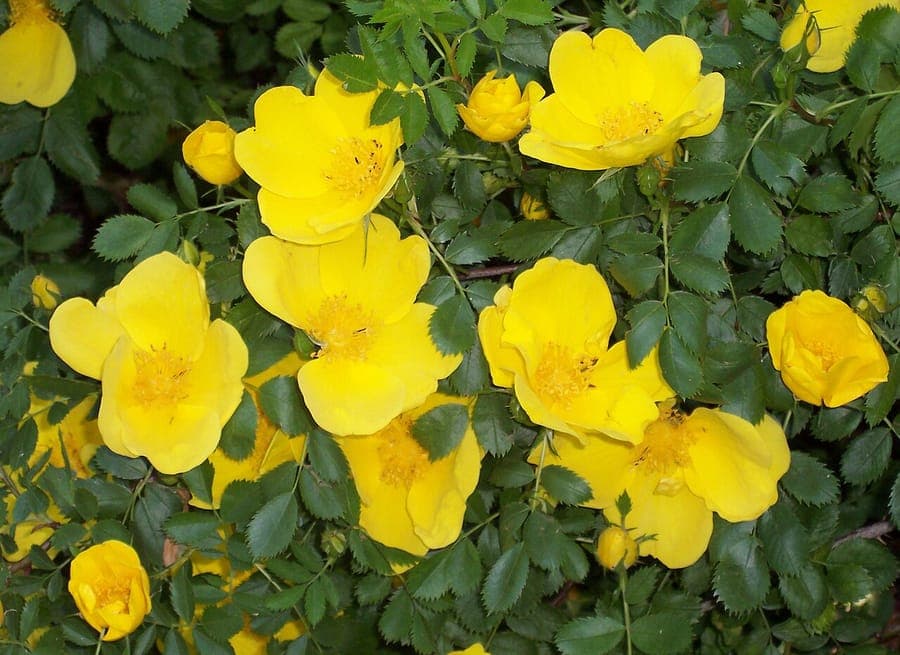
A. Barra / CC BY-SA 3.0, via Wikimedia Commons
Rosa foetida: complete guide
Rosa foetida
¿Quieres ver Rosa foetida: complete guide en tu jardín?
1 minuto, sin tarjeta de crédito
Overview
Rosa foetida, also called Persian yellow rose or Austrian copper rose, is a fascinating rose species with rich history. Originating from the Middle East, particularly Iran and Afghanistan, this rose with distinctive yellow blooms is a remarkable garden presence. The plant has a unique fragrance profile that some gardeners find intriguing.
Appearance and bloom
This rose grows into a shrub approximately 1 to 2 meters in height. The flowers are distinctly yellow, with some varieties featuring orange or red-striped petals. Flowers appear in spring, typically from April to June depending on climate. The blooms have a cup-shaped form and strong fragrance appreciated by many. The green, coarsely textured foliage gives the plant distinctive character.
Ideal location
Rosa foetida requires full sun - at least eight hours daily for optimal blooming. The plant tolerates various climates and growing conditions. Ensure good air circulation to prevent fungal diseases. The plant is extremely hardy and suitable for cold climates.
Soil
This rose grows well in well-draining soil and is less demanding than other rose species. A pH of 6.0 to 7.0 is ideal. The plant tolerates drier and less nutrient-rich soils reasonably well. Add organic material for better water retention. Ensure good drainage to prevent waterlogging.
Watering
Once established, it is quite drought-tolerant. Water regularly in the first year to develop strong roots. In dry periods provide water, but allow soil to dry between waterings. Avoid spraying foliage. In areas with abundant rainfall, supplemental water is usually unnecessary.
Diseño gratis
¿Quieres ver Rosa foetida: complete guide en tu jardín? Crea un diseño gratis ahora.
Pruning
Pruning helps control shape and promote blooming. In early spring remove dead or damaged branches. After flowering, weak branches can be cut back. This rose requires less pruning than many other species. Remove crossing wood carefully.
Maintenance calendar
February to March: Prepare for pruning, check for diseases. April to May: Blooming begins, minimal care needed. June to August: Remove dead wood, water during dry spells. September to October: Fall cleanup, no fertilizing. November to January: Rest period, minimal maintenance.
Winter hardiness
Rosa foetida is extremely hardy, to USDA zone 4 (-30 degrees Celsius). In cold climates, mulching around the base is beneficial but not strictly necessary. The plant is one of the hardiest yellow rose species. Protection is rarely needed in temperate climates.
Companion plants
Combine with sage, lavender, and other Mediterranean plants. White flowering plants contrast nicely with yellow blooms. Ground covers minimize weeds. Purple or blue flowers create attractive color harmony.
Conclusion
Rosa foetida is a unique choice for gardens with preference for classic and distinctive rose varieties. With minimal care, this plant provides years of character and beauty. Visit gardenworld.app for more garden recommendations. Design your dream garden with our tools at gardenworld.app.
¿Quieres ver Rosa foetida: complete guide en tu jardín? Crea un diseño gratis ahora.
Sube una foto, elige un estilo y obtén un diseño fotorrealista con lista de plantas en menos de un minuto.
Sin tarjeta de crédito


Plantas similares
Siberian crab apple: complete guide
Malus x robusta
Complete guide to the Siberian crab apple (Malus x robusta): location, soil, pruning, winter hardiness and the best companion plants for your garden.
Chinese flowering crabapple (Malus x spectabilis): complete guide
Malus x spectabilis
Meet the Chinese flowering crabapple (Malus x spectabilis): a classic spring bloomer with carmine buds and pink blossom.
Potentilla crassinervia: complete guide
Potentilla crassinervia
Potentilla crassinervia, the Corsican cinquefoil, grows wild on Corsica and Sardinia's peaks. Discover how to grow this hardy alpine rock garden gem.