
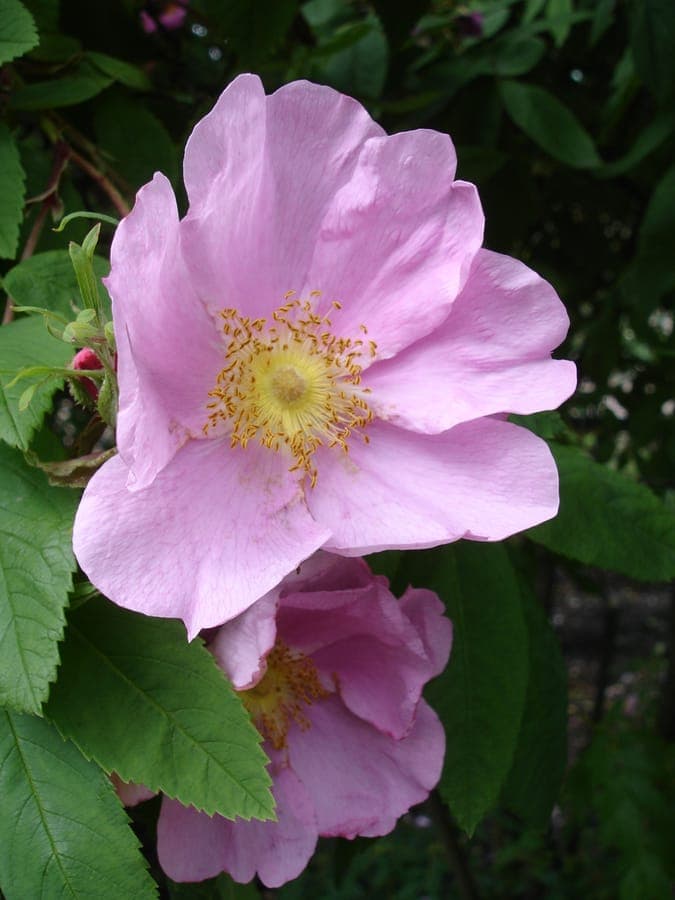
Epibase / CC BY 2.5, via Wikimedia Commons
Amur rose: complete guide
Rosa davurica
¿Quieres ver Amur rose: complete guide en tu jardín?
1 minuto, sin tarjeta de crédito
Overview
The Amur rose or Davurian rose (Rosa davurica) is a robust wild rose native to Northern Asia, specifically from the Amur region, Manchuria and Russia through to Japan and Korea. This beautiful shrub is celebrated for its simple pink flowers and impressive red rose hips that persist well into the season.
This is an excellent choice for natural gardens, hedgerows, and wild planting schemes. The Amur rose brings rustic charm, seasonal interest, and valuable nutrition for birds that feed on the hips.
Appearance and bloom
The Amur rose grows as a loose, bushy shrub with abundant branching. The plant typically reaches 1-2 meters tall and equally wide. The stems sport small thorns that make the plant intriguing and protective.
The flowers are simple blooms, pink to light pink in color, with five petals surrounding yellow stamens. The blooming period extends from May through June. After flowering, attractive rose hips form, ranging from red to orange-red.
These hips are visual honors and a food source for birds. They often persist deep into winter, providing decorative value when the rest of the garden is bare.
Ideal location
The Amur rose thrives in sunny locations with at least 4-6 hours of direct sunlight daily. Full sun gives the best flowering and fruiting. The rose also tolerates partial shade, though blooming is then less abundant.
Perfect for natural, informal gardens where you can appreciate the loose growth of the rose. Also suitable as a hedging plant in large native hedgerow programs.
Soil
The Amur rose is undemanding about soil and grows in virtually all soil types as long as drainage is present. This wild rose feels at home in poor to moderate soils and doesn't ask for extra feeding.
Heavy clay can be improved with compost or organic material, but it's not essential. The rose tolerates acidic to neutral soils. A mulch layer helps suppress weeds and retain moisture.
Diseño gratis
¿Quieres ver Amur rose: complete guide en tu jardín? Crea un diseño gratis ahora.
Watering
Once established, the Amur rose is fairly drought-tolerant and requires little water. Regular water helps with establishment and promotes better blooming, especially in dry periods.
Water deeply 1-2 times weekly during the first growing season. Mature plants do well with natural rainfall. In very dry summers, supplemental water may be beneficial.
Pruning
The Amur rose requires minimal pruning. In late winter, remove dead, damaged, or weak branches. Pruning won't damage that year's flowering, so you can carefully remove old canes to stimulate new growth.
The plant grows naturally well without much intervention. Excessive pruning can disrupt the vigorous growth character of this rose.
Maintenance calendar
Spring: Check for damaged branches and prune. Apply compost or slow-release fertilizer. Summer: Water in dry periods. Enjoy flowers and monitor for disease. Autumn: Enjoy red hips. No specific maintenance tasks. Winter: Leave hips for bird feeding.
Winter hardiness
The Amur rose is very winter hardy and tolerates temperatures down to -30 degrees Celsius without problems. This is a very robust choice for cold climates, including Northern Europe and Canada.
The plant requires no extra shelter or winter preparation. Its natural origin from the taiga of Northern Asia ensures extreme cold tolerance.
Companion plants
The Amur rose combines beautifully in informal planting groups with other native shrubs. Combine with Spiraea, Weigela, or other wild roses for multi-season interest.
Ground covers like low-growing woodland violets or wild chamomile add texture. On a larger scale, combine with native trees and shrubs for a natural woodland edge effect.
Closing
The Amur rose is a beautiful, low-maintenance choice for gardens that embrace a wild atmosphere and bird feeding. With its robustness, hardiness, and double appeal of flowers and fruits, this rose offers year-round interest.
Perfect for hedgerows, natural gardens, and informal planting schemes. Visit OBI or Hornbach in Germany for healthy plant material. More information is available at gardenworld.app/en and gardenworld.app/de.
¿Quieres ver Amur rose: complete guide en tu jardín? Crea un diseño gratis ahora.
Sube una foto, elige un estilo y obtén un diseño fotorrealista con lista de plantas en menos de un minuto.
Más de 10.000 jardines diseñados
Sin tarjeta de crédito


Plantas similares
Siberian crab apple: complete guide
Malus x robusta
Complete guide to the Siberian crab apple (Malus x robusta): location, soil, pruning, winter hardiness and the best companion plants for your garden.
Chinese flowering crabapple (Malus x spectabilis): complete guide
Malus x spectabilis
Meet the Chinese flowering crabapple (Malus x spectabilis): a classic spring bloomer with carmine buds and pink blossom.
Potentilla crassinervia: complete guide
Potentilla crassinervia
Potentilla crassinervia, the Corsican cinquefoil, grows wild on Corsica and Sardinia's peaks. Discover how to grow this hardy alpine rock garden gem.