
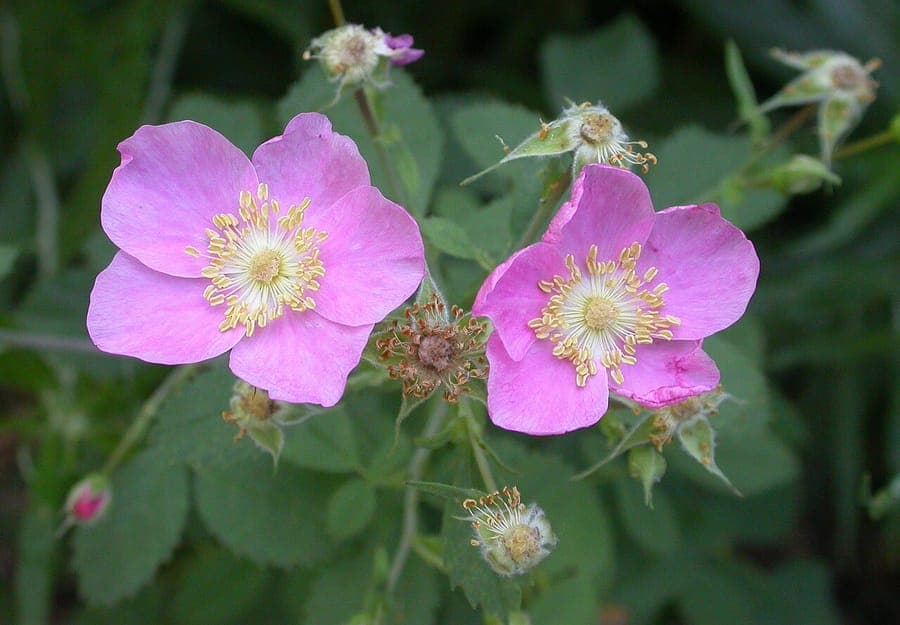
Copyright by Curtis Clark, licensed as noted / CC BY-SA 2.5, via Wikimedia Commons
Rosa californica: complete guide
Rosa californica
¿Quieres ver Rosa californica: complete guide en tu jardín?
1 minuto, sin tarjeta de crédito
Overview
Rosa californica, known as California Wildrose, is a vigorous, naturally spreading rose species native to California through Baja California. This American native grows in dry mountain meadows and scrublands across its native range. With its striking red flowers and subsequent ornamental red hips, it serves as an excellent structural plant for wildlife and natural gardens.
This rose belongs to the Rosaceae family and is celebrated for its rapid growth, hardy nature, and value to wildlife. In Europe, it thrives in larger gardens where its spreading habit finds adequate space.
Appearance and Bloom
Rosa californica grows into a substantial shrub, typically 1.5 to 2.5 meters tall and equally broad, forming dense, thicket-like growth. Stems are reddish-brown with numerous thorns.
Foliage is bright green, composed of multiple small leaflets in the classic rose arrangement. Flowers emerge in June and July, displaying five bright red to deep rose-red petals. The blooms carry weak to moderate fragrance. They grow in clusters that appear abundantly above the foliage.
Following bloom, the plant produces abundant scarlet hips that persist through winter, creating ornamental value and serving as bird food well into the colder months.
Ideal Location
Rosa californica performs best in full sun. Position it where it receives at least 6 to 8 hours of direct sunlight daily. In partial shade, growth becomes less vigorous and flowering diminishes.
Place this plant in a location with good air circulation. Wind poses no challenge; indeed, it prevents fungal issues. Avoid deep, stagnant shade.
Soil
Rosa californica thrives in diverse soil types and proves highly tolerant of soil quality variations. The plant accepts poor to moderately fertile soil well. Ideal pH ranges between 7.0 and 8.0 (neutral to slightly alkaline).
Good drainage matters more than fertility. Plant in standard garden soil or amend existing earth with sand. Excessive organic matter can promote overgrowth and reduce flowering.
Diseño gratis
¿Quieres ver Rosa californica: complete guide en tu jardín? Crea un diseño gratis ahora.
Watering
Once established, Rosa californica proves exceptionally drought-tolerant and requires minimal watering. Water newly planted roses regularly until established (first season). Mature plants need water only during severe drought.
Good drainage supersedes moisture content. Ensure water does not pool around the plant base.
Pruning
Rosa californica grows rapidly and vigorously, accepting aggressive cutting. Pruning occurs best in late winter (February-March). Remove all dead wood and weak growth. You may safely remove a third of plant height without damage.
Deadheading spent flowers encourages continued bloom if you prefer not to allow hips to form. However, if cultivating the plant for wildlife food, allow flowers to develop into ornamental fruit.
Maintenance Calendar
Spring (March-May): Prune in early spring. Water newly planted specimens regularly.
Summer (June-August): Bloom season. Scout for aphids and rose rosette. Water during dry spells.
Autumn (September-October): Hips form and ripen. Striking seasonal beauty. Minimal maintenance.
Winter (November-February): Plant dormancy. Prune in late winter. Protect against heavy snow.
Winter Hardiness
Rosa californica is extremely cold-hardy, tolerating temperatures to minus 15 to minus 20 degrees Celsius. It ranks among the hardiest garden roses.
Companion Plants
Rosa californica pairs beautifully with other wildrose species and native shrubs. In natural gardens, plant alongside grasses, perennials, and other wildlife-supporting plants. The red flowers contrast strikingly against dark green foliage or silvery-leaved neighbors.
In larger planting schemes, it serves as a structural element alongside other shrubs. For color contrast, introduce yellow or white-flowering plants nearby.
Closing
Rosa californica is an excellent choice for gardeners seeking drought-tolerant, structural plants. With its red flowers, ornamental hips, and robust character, it adds significant value to wildlife and natural gardens. Plant in full sun on well-draining soil and enjoy years of bird food and beauty.
Visit gardenworld.app for more native plant information. Discover how to design a natural garden. Consult our designers for guidance via gardenworld.app.
¿Quieres ver Rosa californica: complete guide en tu jardín? Crea un diseño gratis ahora.
Sube una foto, elige un estilo y obtén un diseño fotorrealista con lista de plantas en menos de un minuto.
Más de 10.000 jardines diseñados
Sin tarjeta de crédito


Plantas similares
Siberian crab apple: complete guide
Malus x robusta
Complete guide to the Siberian crab apple (Malus x robusta): location, soil, pruning, winter hardiness and the best companion plants for your garden.
Chinese flowering crabapple (Malus x spectabilis): complete guide
Malus x spectabilis
Meet the Chinese flowering crabapple (Malus x spectabilis): a classic spring bloomer with carmine buds and pink blossom.
Potentilla crassinervia: complete guide
Potentilla crassinervia
Potentilla crassinervia, the Corsican cinquefoil, grows wild on Corsica and Sardinia's peaks. Discover how to grow this hardy alpine rock garden gem.