
Alexwcovington / CC BY-SA 3.0, via Wikimedia Commons
Rosa arkansana: complete guide
Rosa arkansana
¿Quieres ver Rosa arkansana: complete guide en tu jardín?
1 minuto, sin tarjeta de crédito
Overview
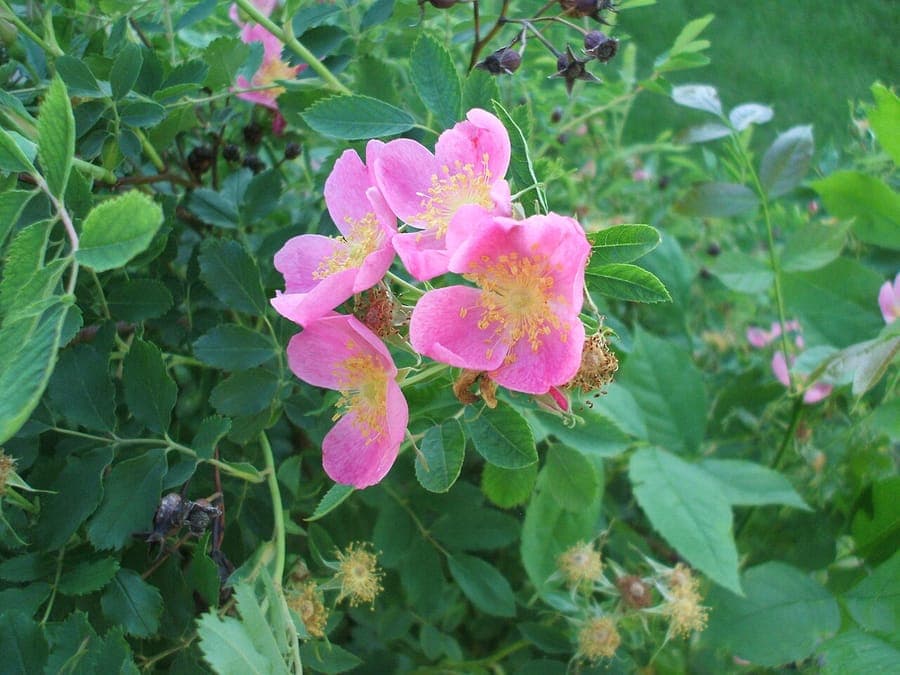
Rosa arkansana, commonly known as prairie rose or wild prairie rose, is a North American wild rose species naturally occurring from Canada to central America. This compact, spreading shrub blooms abundantly with simple pink flowers, followed by attractive red hips.
This rose species is completely winter-hardy and excellent for prairie landscapes, xeriscaping, and wild gardens. With its minimal maintenance requirements and appeal to pollinators, it represents an ecological and ornamental choice.
The plant spreads via underground root stolons, making it an effective ground cover and erosion control agent.
Appearance and Bloom
Rosa arkansana is a compact shrub typically reaching 50-100 centimeters tall, though it can reach 1.5 meters. Growth habit is bushy to spreading. Stems are dark brown to purple, covered with sharp prickles.
Leaves are small, bright green, glossy, compound with 7-11 leaflets. They color beautifully to yellow-orange in fall.
Flowers are the highlight. Simple, five-petaled blooms of pink to fuchsia-pink appear abundantly from May to July. Flowers measure approximately 3-5 centimeters across and are strongly fragrant - a characteristic rose scent.
After bloom, the plant produces lovely red to orange-red hips (seed pods) measuring approximately 1-1.5 centimeters. These persist into winter and feed birds.
Ideal Location
Rosa arkansana grows best in full sun with minimum 6 hours direct sunlight daily. The plant tolerates partial shade.
The plant is extremely drought-tolerant and thrives on poor, dry soil. Sand and gravel areas are ideal.
Soil
Rosa arkansana needs no rich soil. Indeed, fertile soil promotes leaf growth at the expense of blooming. Lean, well-draining soil is preferred.
The plant tolerates acidic to neutral soils and can even grow on alkaline soils. Add organic matter at planting but avoid heavy fertilization.
Diseño gratis
¿Quieres ver Rosa arkansana: complete guide en tu jardín? Crea un diseño gratis ahora.
Watering
Once established, Rosa arkansana is extremely drought-tolerant and requires little to no supplemental watering. Regular watering may be needed the first year post-planting to encourage deep rooting.
Overwatering can be problematic, especially in wet-weather areas. The plant performs better in dry conditions.
Pruning
Minimal pruning needed. In late winter, dead or damaged branches can be removed. Let the plant grow naturally.
To maintain compact form, light pruning after bloom is acceptable. This also triggers more bloom clusters.
Maintenance Calendar
April-May: Growth begins, minimal management June-July: Peak flowering, water only in extreme drought August-September: Hip development, minimal water October-March: Dormancy, no water needed
Winter Hardiness
Rosa arkansana is very hardy to -30 degrees Celsius. It's perfect for USDA zones 3-10. The plant overwinters without protection in most climates.
Companion Plants
Beautiful companions:
- Other prairie flowers: echinacea, rudbeckia, coreopsis
- Drought-lovers: lavender, sedum, yucca
- Native grasses
Planted together, they create an authentic prairie garden full of color and life.
Closing
Rosa arkansana is a hardy classic choice for wild or prairie landscapes. With its abundant pink flowers and attractive red hips, it delivers years of beauty and ecological value.
Available from plant nurseries specializing in North American native plants. Plant in fall or early spring for best results.
Visit gardenworld.app for more prairie garden tips and native plant guidance. Enjoy your prairie rose!
¿Quieres ver Rosa arkansana: complete guide en tu jardín? Crea un diseño gratis ahora.
Sube una foto, elige un estilo y obtén un diseño fotorrealista con lista de plantas en menos de un minuto.
Más de 10.000 jardines diseñados
Sin tarjeta de crédito


Plantas similares
Siberian crab apple: complete guide
Malus x robusta
Complete guide to the Siberian crab apple (Malus x robusta): location, soil, pruning, winter hardiness and the best companion plants for your garden.
Chinese flowering crabapple (Malus x spectabilis): complete guide
Malus x spectabilis
Meet the Chinese flowering crabapple (Malus x spectabilis): a classic spring bloomer with carmine buds and pink blossom.
Potentilla crassinervia: complete guide
Potentilla crassinervia
Potentilla crassinervia, the Corsican cinquefoil, grows wild on Corsica and Sardinia's peaks. Discover how to grow this hardy alpine rock garden gem.