
Sinai wild rose: complete guide
Rosa arabica
¿Quieres ver Sinai wild rose: complete guide en tu jardín?
1 minuto, sin tarjeta de crédito
Overview
Sinai wild rose (Rosa arabica) is one of the rarest wild roses on Earth, endemic to the high mountains of Egypt's Sinai Peninsula, particularly around Mount Saint Catherine and the surrounding wadis at 1500 to 2600 meters elevation. This is an extraordinary habitat for a rose: cold, occasionally snow-covered winters alternate with scorching, bone-dry summers, a combination few plant species can handle. On gardenworld.app, we treat this species mainly as a botanical curiosity for collectors and enthusiasts of alpine or rock gardens, rather than as a mainstream garden plant.
The shrub stays compact, typically 50 to 150 centimeters tall, with slender, thorny branches and a somewhat loose, scrambling habit that adapts to the rock crevices where it grows in the wild. The species is considered vulnerable due to habitat loss, overgrazing, and climate change, and is protected within the Saint Catherine Biosphere Reserve, a UNESCO-recognized area.
The species was first scientifically described in 1877, after botanical expeditions to the then hard-to-reach Sinai mountains collected the plant. Today, botanists estimate the remaining wild population at just a few hundred specimens, scattered across a handful of isolated mountain wadis around Jebel Katherina, Egypt's highest peak.
Appearance and bloom
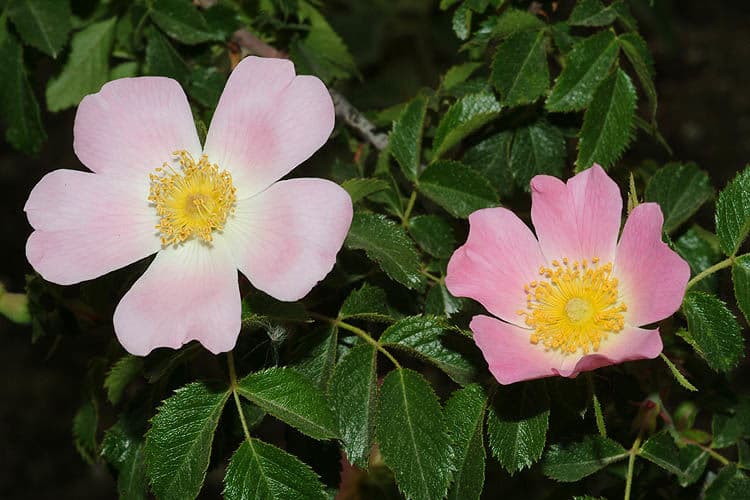
Sinai wild rose forms slender, thorny stems with compound leaves of five to seven small, toothed leaflets, typical of the rose family. In April and May, shortly after the mountain snowmelt, the flowers appear: simple, five-petaled blossoms in a soft pink shade, about 3 to 4 centimeters across, with a subtle fragrance. After flowering, small, bright red hips develop in autumn, rich in vitamin C, and are eagerly eaten by mountain birds. The combination of understated, wild beauty and extreme adaptation to a hostile environment makes this rose a fascinating subject for botanists.
Unlike the familiar cultivated roses sold at garden centers, Sinai wild rose shows no double flowers or showy color displays; its beauty lies in simplicity and resilience, traits it shares with other wild mountain roses such as Rosa pimpinellifolia and Rosa canina, though adapted to a far more extreme climate.
Ideal location
This rose needs full sun, at least 6 to 8 hours daily, and a well-ventilated, dry location that mimics its natural mountain habitat. Choose a sunny, elevated spot in the garden, preferably against a rock wall or in a raised scree bed, where excess water drains away quickly. Avoid damp, enclosed corners; the plant is adapted to dry mountain air and tolerates high humidity poorly. On gardenworld.app, we prefer placing this rare species in a dedicated rock garden section, alongside other alpine specialties.
Soil
Sinai wild rose grows naturally in rock crevices and stony wadi ground, so it needs exceptionally well-draining, gravelly soil with a pH between 6.5 and 8.0. Amend standard garden soil generously with coarse sand, grit, or lava granules to mimic its naturally rocky conditions. Rich, moisture-retentive soil is unsuitable and significantly increases the risk of root rot. A raised bed or scree bed with excellent drainage is the best guarantee of success.
For gardeners in wetter climates, a large pot filled with an extremely free-draining substrate is often the safest way to try this species, since it lets you control winter rainfall far more precisely than in open ground.
Diseño gratis
¿Quieres ver Sinai wild rose: complete guide en tu jardín? Crea un diseño gratis ahora.
Watering
After planting, keep the soil lightly moist for two to three weeks so the roots can establish. After that, restraint is key: water only during extended, extreme drought, and let the soil dry out completely between waterings. This rose is adapted to a climate with little summer rainfall, and overwatering is the most common cause of death in cultivation.
Pruning
Prune minimally and only to remove dead or damaged wood, preferably in late winter. Since the plant naturally has a loose, wild form, shaping pruning is unnecessary and even undesirable; the somewhat irregular natural silhouette is actually part of this wild species' charm.
Maintenance calendar
- January: dormant period; possible snow cover in native range
- February: first buds swell in mild weather
- March: foliage begins to unfurl
- April: bloom starts shortly after the last frost
- May: peak bloom; subtle fragrance noticeable
- June: bloom ends; hip formation begins
- July: drought check; water only during extreme heat
- August: hips continue ripening
- September: hips turn bright red
- October: foliage colors and gradual leaf drop
- November: dormancy sets in
- December: check for storm damage on thorny branches
Winter hardiness
Sinai wild rose is estimated to be hardy to USDA zone 7, tolerating winter lows around -15 degrees C, consistent with the high-mountain climate of its native habitat. In temperate Western European gardens, the plant generally overwinters well, provided the soil stays well drained; prolonged wet winters pose a greater risk than cold alone.
Companion plants
Pair Sinai wild rose with other drought-loving rock garden plants such as thyme (Thymus vulgaris), rock rose (Cistus), and lavender (Lavandula angustifolia), which share the same need for sun and fast drainage. Avoid pairing with moisture-loving perennials such as hostas, ferns, or other plants that demand rich, humus-heavy soil and a consistently damp root zone. On gardenworld.app, we recommend combining this rose with other rare mountain and rock garden plants for an authentic, botanically inspired garden section.
Closing
Sinai wild rose is no ordinary garden plant, but a rare botanical treasure for anyone seeking something truly special. Its extreme adaptation to one of the most inhospitable places on Earth makes it a fascinating conversation piece in any rock garden. Young plants or seed are found almost exclusively through specialty rose growers, botanical gardens, or rare seed exchanges; regular garden centers typically do not carry this species, so patience and a targeted search are essential. For those willing to seek it out and provide the right, dry location, Sinai wild rose is a living piece of wild history in the garden. Think of it less as an ordinary border addition and more as a living museum piece that rewards patience and the right conditions. Anyone who manages to source this rose and help it thrive is, in a small way, also contributing to the profile of a plant whose wild survival is far from guaranteed; every successful garden planting is, in its own modest way, a small act of support for this unique mountain species.
¿Quieres ver Sinai wild rose: complete guide en tu jardín? Crea un diseño gratis ahora.
Sube una foto, elige un estilo y obtén un diseño fotorrealista con lista de plantas en menos de un minuto.
Más de 10.000 jardines diseñados
Sin tarjeta de crédito


Plantas similares
Siberian crab apple: complete guide
Malus x robusta
Complete guide to the Siberian crab apple (Malus x robusta): location, soil, pruning, winter hardiness and the best companion plants for your garden.
Chinese flowering crabapple (Malus x spectabilis): complete guide
Malus x spectabilis
Meet the Chinese flowering crabapple (Malus x spectabilis): a classic spring bloomer with carmine buds and pink blossom.
Potentilla crassinervia: complete guide
Potentilla crassinervia
Potentilla crassinervia, the Corsican cinquefoil, grows wild on Corsica and Sardinia's peaks. Discover how to grow this hardy alpine rock garden gem.