
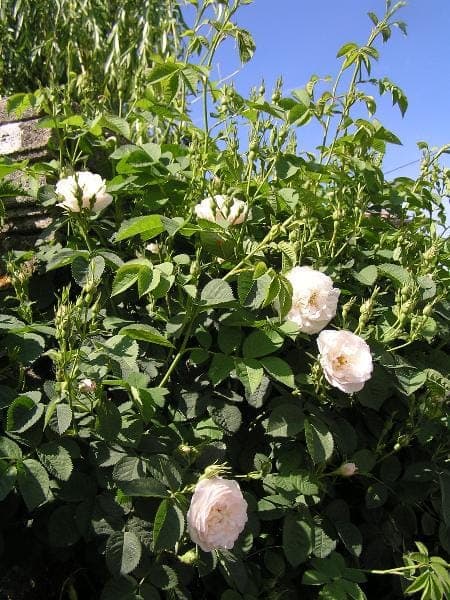
rosier / CC BY-SA 3.0, via Wikimedia Commons
Rosa alba: complete guide
Rosa alba
¿Quieres ver Rosa alba: complete guide en tu jardín?
1 minuto, sin tarjeta de crédito
Overview
Rosa alba, commonly known as the white rose of York or white rose, is one of the most iconic and cherished historic roses. This shrub descends from ancient crosses and has been cultivated in gardens for centuries. With its beautiful white flowers and intensely fragrant appearance, it's a valuable addition to any classic or romantic garden.
The rose is renowned for its resilience, health, and long blooming period. In its original habitat in the Middle East and Southern Europe, it grows as a strong, heavily branched shrub.
Appearance and bloom
Rosa alba produces semi-double to double flowers about 5-7 cm diameter. The flowers are pure white, sometimes with a pink tint on the outer petals. They appear in clusters and fill the air with an intense, sweet aroma.
Flowers typically appear in June to July (summer months in northern hemisphere), with sometimes a few repeat blooms later in the season. Growth is very vigorous shrub, with light grayish-green foliage that is very healthy and disease-resistant.
The plant grows to about 1.5-2.5 meters tall with a broad, dense habit. After blooming, interesting red to orange hips form in fall, adding extra ornamental value.
Ideal location
Rosa alba grows optimally in full sun locations. Ensure the plant receives at least 6 hours of direct sunlight daily. While it tolerates light partial shade, it will produce fewer flowers in shade.
Also choose a location with good air circulation - this helps prevent diseases. Avoid low, wet spots where water stagnates, as this can promote rust and fungal diseases.
This rose works beautifully as a specimen shrub, in mixed borders, or against walls and hedges where it can climb and grow.
Soil
Rosa alba grows best on nutrient-rich, well-draining soils. Ideal soil includes:
- Loamy or sandy soil with good drainage
- Mildly acidic to neutral (pH 6.0-7.0)
- Nutrient-rich with sufficient organic matter
- Deep enough for roots - at least 45-60 cm
Work plenty of compost or aged animal manure when planting. This improves both nutrient availability and water-holding capacity.
Avoid heavy clay without organic matter addition. If your soil is poor, add compost yearly around the roots.
Watering
Once established, Rosa alba is fairly drought tolerant. However, during the growing season (especially in hot summers), regular water improves blooming and plant health.
Water deeply but less frequently - this promotes deep root penetration. Water at the plant base, not on leaves, to prevent leaf diseases.
In dry periods, water about once weekly. In winter, the plant needs much less water - natural rainfall is usually sufficient.
Diseño gratis
¿Quieres ver Rosa alba: complete guide en tu jardín? Crea un diseño gratis ahora.
Pruning
Rosa alba doesn't need much pruning, but it helps maintain health and form. In late winter (February-March in temperate climates):
- Remove all dead, diseased, or damaged branches
- Thin old woody branches (over 3-4 years old)
- Halve the length of very long branches
- Ensure open, airy plant structure
Avoid heavy pruning - this can reduce next season's blooming. The plant recovers quickly from moderate pruning work.
Maintenance calendar
Spring: Perform pruning work carefully. Water regularly as growth starts. Apply fertilizer.
Summer: Provide regular water. Enjoy blooming. Monitor for diseases like mildew.
Fall: Admire hips (fruit). Reduce watering gradually. No fertilizer after August.
Winter: Rake fallen leaves. Perform pruning work. Protect against extreme frost with mulch.
Winter hardiness
Rosa alba is fully winter hardy in temperate climates. The plant tolerates temperatures from -15C to -20C without problems. In even colder regions, a protective mulch layer around the foot zone can help.
This is one of the hardiest rose species, making it perfect for increasingly cold climates. Young plants may benefit from some protection in their first winter.
Companion plants
Pair Rosa alba beautifully with:
- Other historic roses: Rosa damascena, Rosa centifolia
- Structure plants: Buxus, Taxus, Ilex
- Bloomers: Lavandula, Salvia, Delphinium
- Foliage plants: Artemisia, Santolina, Nepeta
- Climbers: Clematis, Hedera
Ensure companion plants share the same full-sun preference and moisture needs.
Closing thoughts
Rosa alba is more than a rose - it's a legend. With over 500 years of garden history, this plant has proven itself unshakably reliable, healthy, and beautiful.
While it doesn't bloom continuously, its few but full flowers and strong fragrance reward you many times over. If you want classic elegance and certain success, Rosa alba is your plant.
Visit gardenworld.app for more ideas on rose gardens and classic garden design. For suppliers check garden centers. Good luck with your white rose of York!
Want a classic, guaranteed rose? Read more on gardenworld.app for garden design inspiration and plant advice.
¿Quieres ver Rosa alba: complete guide en tu jardín? Crea un diseño gratis ahora.
Sube una foto, elige un estilo y obtén un diseño fotorrealista con lista de plantas en menos de un minuto.
Más de 10.000 jardines diseñados
Sin tarjeta de crédito


Plantas similares
Siberian crab apple: complete guide
Malus x robusta
Complete guide to the Siberian crab apple (Malus x robusta): location, soil, pruning, winter hardiness and the best companion plants for your garden.
Chinese flowering crabapple (Malus x spectabilis): complete guide
Malus x spectabilis
Meet the Chinese flowering crabapple (Malus x spectabilis): a classic spring bloomer with carmine buds and pink blossom.
Potentilla crassinervia: complete guide
Potentilla crassinervia
Potentilla crassinervia, the Corsican cinquefoil, grows wild on Corsica and Sardinia's peaks. Discover how to grow this hardy alpine rock garden gem.