
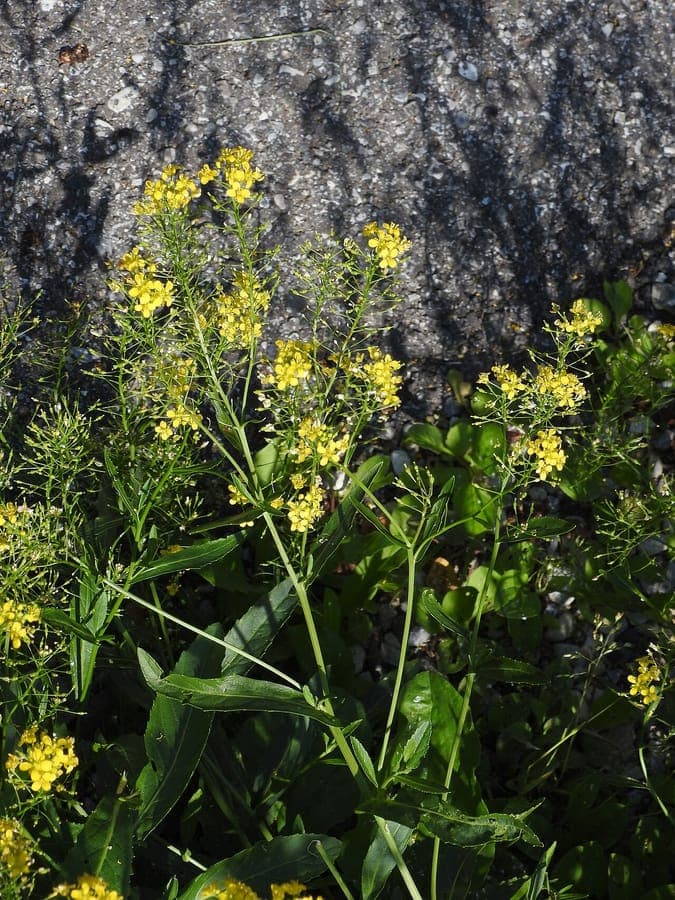
Robert Flogaus-Faust / CC BY 4.0, via Wikimedia Commons
Austrian Yellow-cress: complete guide
Rorippa austriaca
¿Quieres ver Austrian Yellow-cress: complete guide en tu jardín?
1 minuto, sin tarjeta de crédito
Overview
Rorippa austriaca, commonly known as Austrian Yellow-cress, Austrian Cress, or Austrian Field Cress, is a fascinating wetland plant from the mustard family (Brassicaceae) found in Central and Eastern Europe, from Austria to Russia. This underappreciated, highly water-adapted plant is perfectly suited to wetland restoration, water gardens, marshes, and damp grasslands across Europe. With its delicate, golden-yellow flower clusters and remarkable moisture tolerance, it offers invaluable possibilities for ecological garden design.
Appearance and bloom cycle
Austrian Yellow-cress grows as a non-woody, herbaceous plant, usually 20-50 cm tall, with numerous stems arising from underground runners. Foliage is small, entire to slightly toothed, narrowly lance-shaped, very fine. Flowers are abundant, small, four-petaled yellow blooms appearing in dense, cluster-like arrangements from May through September. After flowering, small, linear seed pods (siliques) develop and spread readily via water and seed. The plant dies back in autumn/winter but regenerates easily from seed or underground rhizomes in spring.
Ideal location
Austrian Yellow-cress thrives in full sun to partial shade, preferring at least 4-5 hours direct sunlight daily. This is the perfect plant for wet, low-lying areas, pond and stream margins, freshwater marshes, and regularly inundated grasslands. The plant tolerates even prolonged submersion (several months) without death. It's hardy to USDA zone 5, extremely suitable for all of Europe.
Soil requirements
Austrian Yellow-cress grows best in wet, muddy soils and may remain waterlogged. pH can range from neutral to slightly alkaline (pH 6.5-7.5). Organic, nutrient-rich soil is favorable; the plant thrives even in nutrient-rich, polluted waters. Well-draining sandy soil is far less ideal - this plant loves wet feet. Heavy clay with wet conditions is perfect.
Diseño gratis
¿Quieres ver Austrian Yellow-cress: complete guide en tu jardín? Crea un diseño gratis ahora.
Watering
Austrian Yellow-cress is a wetland plant requiring constant moisture. In naturalistic gardens, the plant can be grown in shallow water (0-15 cm deep) and will remain there throughout the growing season. In regular beds, soil must be kept regularly moist to wet. This plant will die in dry conditions; preventing desiccation is essential. In stagnant-water wildlife gardens, it thrives even better.
Pruning
Austrian Yellow-cress requires minimal maintenance pruning. After the frost period in spring (March-April), you may remove dead material. The plant will naturally regenerate from underground roots. For controlled growth, you may cut back excessive growth in May-June to 15-20 cm height, promoting more compact plants.
Maintenance calendar
January-March: Plant is dormant, minimal maintenance. April: Emergence of young growth, removal of dead material. May-June: Full bloom, enjoy flowers, possible growth pruning. July-September: Continuous blooming, seed set, wildlife feeding. October-November: Plant dies back, seeds ripen and disperse. December: Dormancy begins.
Winter hardiness
Austrian Yellow-cress is hardy to USDA zone 5 (-29 degrees Celsius), meaning it tolerates all of Europe without protection. In very cold regions, foliage and stems may die back, but underground rhizomes survive and regenerate in spring. The plant is highly winter-tolerant for a wetland plant.
Companion plants
Excellent companions in wetlands are other moisture-loving plants such as reed (Phragmites), cattail (Typha), water plantain (Plantago aquatica), and various native grasses like Molinia. For added ornamental value, combine with purple-flowered water loosestrife (Lythrum) or yellow marsh marigold (Caltha palustris). Avoid very drought-loving species.
Closing remarks
Austrian Yellow-cress is an undervalued, highly valuable wetland plant for European wetland restoration and water garden projects. It offers repeated golden blooming, wetland habitat creation, and minimal maintenance demands. Plant it in wet grasslands, stream margins, or shallow waters. Find it through water plant nurseries and ecological restoration suppliers; consult gardenworld.app for contacts. Austrian Yellow-cress is an exceptionally versatile plant for any water-garden enthusiast.
¿Quieres ver Austrian Yellow-cress: complete guide en tu jardín? Crea un diseño gratis ahora.
Sube una foto, elige un estilo y obtén un diseño fotorrealista con lista de plantas en menos de un minuto.
Más de 10.000 jardines diseñados
Sin tarjeta de crédito


Plantas similares
Brassica cretica: complete guide
Brassica cretica
Brassica cretica, the Cretan cabbage, grows wild on Aegean cliffs. Discover how to grow this drought-tolerant, yellow-flowered Mediterranean perennial.
Corsican cabbage: complete guide
Brassica insularis
Corsican cabbage is a rare Mediterranean rock cabbage with white flowers and blue-green leaves. Location, soil and winter protection.
Prostrate cabbage: complete guide
Brassica procumbens
Prostrate cabbage is a creeping North African cliff plant with yellow flowers. Discover location, soil type and winter protection.