
Wikimedia Commons / CC BY-SA 3.0, via Wikimedia Commons
Great yellow cress: complete guide
Rorippa amphibia
¿Quieres ver Great yellow cress: complete guide en tu jardín?
1 minuto, sin tarjeta de crédito
Overview
Great yellow cress (Rorippa amphibia), also known as great yellow watercress, is a robust aquatic plant native to Europe through Siberia and northwestern Iran. This plant thrives in both water and wet soils and is highly valuable for planting pond edges, marshes, and waterlogged areas. With its yellow flowers and robust growth habit, this plant is an important part of aquatic and semi-aquatic garden ecosystems. The plant reaches a height of 12 to 32 inches and forms dense clusters of glossy green foliage.
Appearance and Bloom
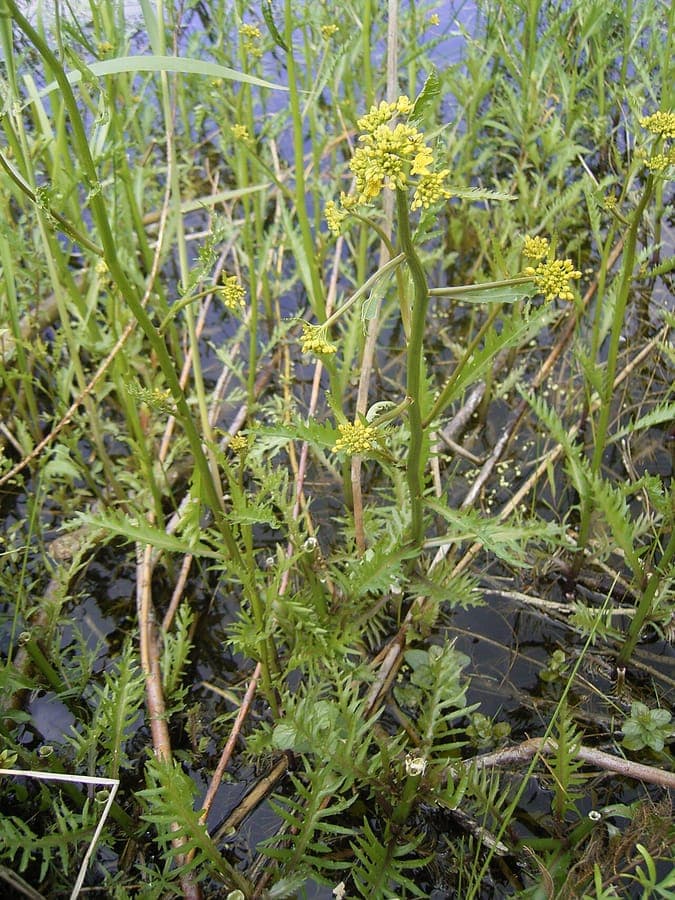
Great yellow cress is characterized by its smooth green, glossy leaves that can grow both above and below water. The leaves are highly variable in form; submerged leaves are very finely divided, while above-water leaves are more undivided. The stems are hollow and spongy, providing flotation in water.
Yellow flowers appear from May to September in small, dense clusters. These flowers are small but very attractive to insects and bees. After flowering, small seed pods form that enable seed dispersal.
Ideal Location
Great yellow cress thrives best at the water's edge or in shallow water up to about 8 inches deep. The plant, however, also accepts wet, muddy soils. Sunny locations give the best growth, but the plant also tolerates partial shade. At marsh edges and water features, this plant forms beautiful dense groups.
Soil
Great yellow cress makes no high demands on soil quality. The plant thrives on all sorts of soils as long as they are sufficiently moist. In water features, the plant can grow floating. Nutrient-rich mud or silt-bearing soil leads to even more vigorous growth.
The plant needs no additional feeding; water pollution can actually be favorable for this plant (it purifies water through nutrient uptake).
Diseño gratis
¿Quieres ver Great yellow cress: complete guide en tu jardín? Crea un diseño gratis ahora.
Watering
As an aquatic plant, water features or very wet soils are essential for great yellow cress. The plant grows in both shallow waters and marshy ground. In dry periods, moisture maintenance is critical.
Ensure the plant never dries out completely; this can be fatal for the plant.
Maintenance
Great yellow cress requires minimal maintenance. In enclosed water features, the plant can grow aggressively and may need pruning to prevent overgrowth. In open water features, this is less of an issue.
Remove dead plant material in spring.
Maintenance Calendar
March: Cleanup of dead parts. May-September: Flowering period; yellow flowers appear. October-November: Above-ground die-back; plant remains active underwater. December-February: Winter rest; plant survives beneath water surface.
Winter Hardiness
Great yellow cress is very winter-hardy and overwinters beneath the water surface. The plant can tolerate temperatures down to -13 degrees Fahrenheit and lower, making it suitable for almost all European climates.
Companion Plants
Great yellow cress combines beautifully with:
Other aquatic plants: Reeds, cattails, and water violet form natural bank vegetation.
Marsh sisters: Water plantain and marsh marigold add biological diversity.
Floating plants: Frogbit and water lilies form beautiful overlays.
Bank vegetation: Siberian iris and marsh forget-me-not integrate naturally.
Final Thoughts
Great yellow cress is an indispensable plant for those who want a natural, healthy water feature or marshy area. With its robust growth, yellow flowers, and water-filtering action, this plant offers many benefits to the garden ecosystem. Plant this species in mass at water edges for optimal effect.
Available at: Water garden centers, aquatic plant specialists
Want to learn more about aquatic plants? Visit gardenworld.app for advice and recommendations. Visit gardenworld.app for advice and recommendations.
¿Quieres ver Great yellow cress: complete guide en tu jardín? Crea un diseño gratis ahora.
Sube una foto, elige un estilo y obtén un diseño fotorrealista con lista de plantas en menos de un minuto.
Más de 10.000 jardines diseñados
Sin tarjeta de crédito


Plantas similares
Brassica cretica: complete guide
Brassica cretica
Brassica cretica, the Cretan cabbage, grows wild on Aegean cliffs. Discover how to grow this drought-tolerant, yellow-flowered Mediterranean perennial.
Corsican cabbage: complete guide
Brassica insularis
Corsican cabbage is a rare Mediterranean rock cabbage with white flowers and blue-green leaves. Location, soil and winter protection.
Prostrate cabbage: complete guide
Brassica procumbens
Prostrate cabbage is a creeping North African cliff plant with yellow flowers. Discover location, soil type and winter protection.