
Ewen Cameron / CC BY 4.0, via Wikimedia Commons
Roldana petasitis: complete guide
Roldana petasitis
¿Quieres ver Roldana petasitis: complete guide en tu jardín?
1 minuto, sin tarjeta de crédito
Overview
Roldana petasitis, commonly known as California geranium or velvet groundsel, is a tropical shrub from Mexico with a preference for warmth and light. Despite its Californian name, the plant is native to Mexican highlands, where it grows in moderately dry forest margins. This plant belongs to the Asteraceae family (the same family as sunflowers) and is valued for its decorative foliage and cheerful yellow flowers. In front yard and container gardens, it forms a striking exotic accent.
Appearance and Bloom
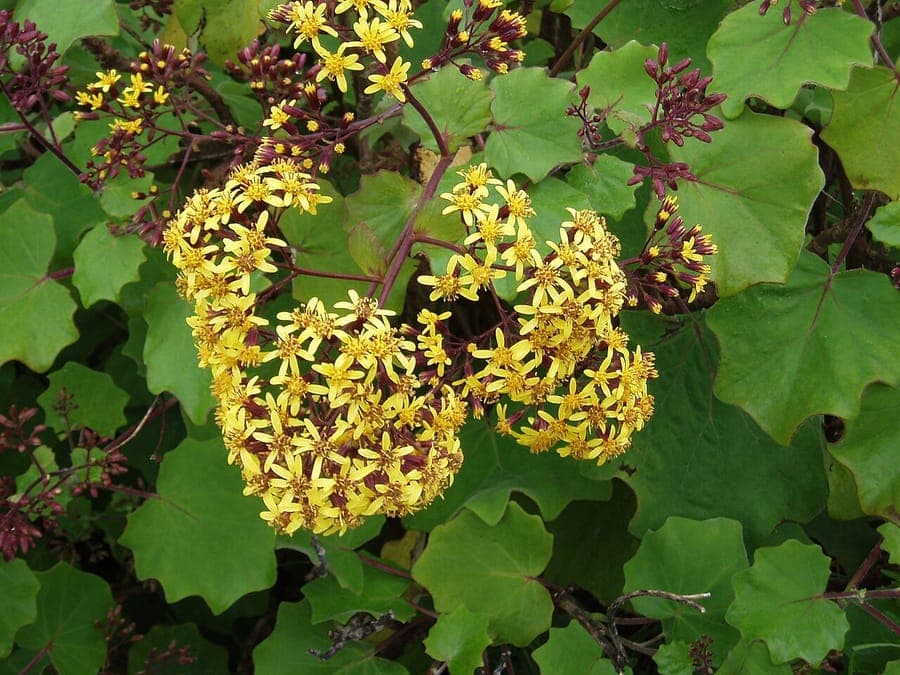
Roldana petasitis grows into a compact shrub 60-150 centimeters tall with a voluminous, vase-shaped silhouette. The leaves are most distinctive: large (20-35 centimeters), heart-shaped, velvety green with distinct leaf veins. The upper surface feels soft due to fine hairs; the underside is lighter green with prominent veins. Flowers appear in September-November in clusters of small, bright yellow disc flowers on 5-8 centimeter long stalks. The flowering period is long and sustained until the first frost.
Ideal Location
Roldana petasitis thrives best in full sunlight (at least 6 hours of direct sun per day), although light partial shade is acceptable in warmer climates. Too little light causes elongated stems and sparse blooms. The plant tolerates no full shade. Protect from strong winds that can damage large leaves. Ideal is a south- or west-facing spot, sheltered from cold winds. In areas with very hot summers, afternoon shade can be beneficial.
Soil
Roldana petasitis thrives in well-drained, moderately fertile soil. Heavy clay is undesirable and causes root rot. Add sand, bark, and organic matter to improve drainage. In containers, use potting soil supplemented with 20% perlite or bark. The pH should be neutral to slightly acidic (6.0-7.5). Avoid strongly alkaline soil which can cause leaf yellowing.
Diseño gratis
¿Quieres ver Roldana petasitis: complete guide en tu jardín? Crea un diseño gratis ahora.
Watering
Water regularly during the growing season (April-October) so the soil remains moist but not waterlogged. Check container moisture daily; pots dry quickly. In winter and cold periods, reduce drastically. Soft water is preferable. Excessive moisture leads to fungal infections; ensure adequate air circulation around the plant.
Pruning
Roldana petasitis responds well to pruning. Regularly pinch out growing tips to encourage a more compact, bushy plant. After flowering (November-December), drastic pruning back to 30-50 centimeters helps maintain shape and stimulates next season's blooming. Remove dead, damaged, or diseased wood at any time.
Maintenance Calendar
January-February: Overwintering in cold environment; minimal watering. March-April: Resume growth; begin moderate watering; apply balanced fertilizer. May-August: Water regularly; mist during dry periods; pinch out growing tips for compact form. September-October: Enjoy blooming; maintain watering. November-December: Blooming declines; prune back; reduce water supply.
Winter Hardiness
Roldana petasitis is not winter hardy in temperate climates. It tolerates minimum temperatures above 5-10°C; frost kills the plant. In temperate climates (Netherlands, Belgium, Germany), it is grown as an annual or container plant that must be brought indoors for winter. Seeds can be germinated indoors in February, or cuttings can be taken from mature plants.
Companion Plants
Roldana petasitis pairs well with:
- Pentas: for simultaneous long blooming
- Begonias: for contrasting leaf texture
- Echeverias: for textural contrast and arid look
- Solenostemon: for dramatic foliage patterns
- Ipomoea: for vertical dimension
Closing
Roldana petasitis offers an exotic twist on standard container and front yard gardens. Its velvety soft leaves and cheerful blooms reward the gardener with visual impact. Whether grown as an annual cultivar or overwintered, this Mexican plant adds character to any garden design. Consult Truffaut or Jardiland for plant sources, or GardenWorld.app for adaptations to your specific climate.
¿Quieres ver Roldana petasitis: complete guide en tu jardín? Crea un diseño gratis ahora.
Sube una foto, elige un estilo y obtén un diseño fotorrealista con lista de plantas en menos de un minuto.
Más de 10.000 jardines diseñados
Sin tarjeta de crédito


Plantas similares
Calendula stellata: complete guide
Calendula stellata
Complete guide to Calendula stellata, the star-flowered marigold from Sicily: location, soil, watering and companion planting tips.
Korean chrysanthemum: complete guide
Chrysanthemum x rubellum
Chrysanthemum x rubellum is a hardy autumn perennial with single pink to copper flowers from August to November. Care and combinations.
Helianthus divaricatus: complete guide
Helianthus divaricatus
Helianthus divaricatus is a North American woodland sunflower with yellow summer blooms, ideal for naturalistic borders and shady edges.