
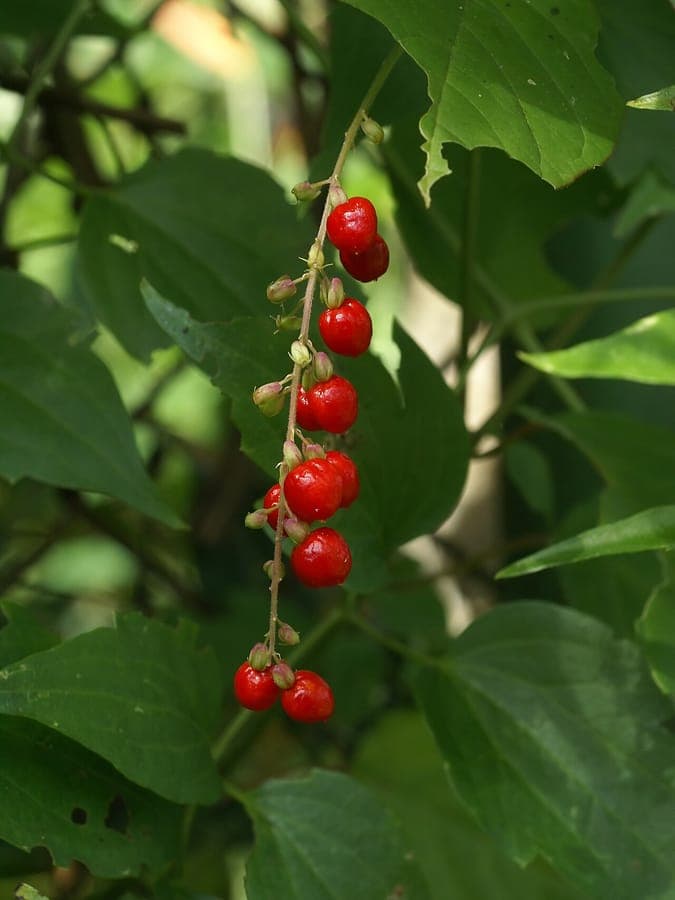
Hans Hillewaert / CC BY-SA 3.0, via Wikimedia Commons
Rivina humilis: complete guide
Rivina humilis
¿Quieres ver Rivina humilis: complete guide en tu jardín?
1 minuto, sin tarjeta de crédito
Overview
Rivina humilis, commonly known as coralberry, bloodberry or turkeyberry, is a beautiful tropical shrub native to warm Americas. This plant is renowned for its small, striking red or orange berries that attract birds and provide ornamental effect in the garden.
The plant grows rapidly and compactly, making it ideal for pot culture and warm gardens. With its small flowers and abundant berries, the plant remains interesting throughout the season. The plant is simple to grow and requires only basic maintenance care.
Appearance and bloom cycle
Rivina humilis reaches a height of 30 to 90 centimetres and grows compact and branching. The plant grows rapidly and forms a dense shrub with nice proportions.
The leaves are small to moderate, approximately 2 to 8 centimetres long, lance-shaped and have a fresh green colour. The foliage is soft and smooth. In warmer climates, leaves can remain green throughout the year.
The flowers are very small and inconspicuous, white to pale pink, approximately 0.5 centimetre diameter. They appear in small inflorescences. The true attraction, however, are the berries that follow.
The berries are the highlight of this plant. They are small, round, approximately 0.5 to 1 centimetre in diameter, and red to orange in colour (some cultivars yellow or purple). The berries appear abundantly and remain on the plant for long periods. They are not edible for humans, but birds love them. The plant flowers and produces berries almost year-round in warm climates.
Ideal location
Rivina humilis grows best in full sun to partial shade. Full sunshine encourages richer berry fruiting. In shade, however, the plant also grows well, only with fewer berries.
The plant can be grown both indoors (with lots of light) and outdoors in warm seasons. For balconies and terraces, this plant is excellent. It forms an attractive accent in pot culture.
The plant tolerates slightly windy weather but prefers sheltered locations.
Soil requirements
Rivina humilis has moderate soil requirements. The plant grows well in well-draining, moderately fertile soil. The plant tolerates even slightly poor soil material.
A mixture of garden soil, sand and organic material works excellently. The plant thrives in both acidic and neutral to slightly alkaline soil types. A pH between 5.5 and 7.5 is suitable.
For pot culture: standard potting soil with some extra perlite for drainage works fine.
Diseño gratis
¿Quieres ver Rivina humilis: complete guide en tu jardín? Crea un diseño gratis ahora.
Watering
Rivina humilis needs moderate water. During the growing period, water when the soil feels dry, usually two to three times per week in warm periods. The plant tolerates short dry periods well.
Avoid excessive water and waterlogging, which can cause rot problems. In rainy periods, supplemental watering can be omitted.
For pot culture: water until the top 2-3 centimetres feels dry. The plant is well adapted to changing moisture conditions.
In winter or during quiet growth periods, water moderately reduce.
Pruning
Rivina humilis grows rapidly and can be pruned regularly to maintain a compact shape. After winter, damaged or old branches can be removed.
Do not specifically remove faded flowers, as the plant continuously flowers and this removal has little effect. The berries remain interesting, however, so proceed carefully.
The plant can be shortened to stimulate branching and promote a denser form. This is especially useful for young plants.
Maintenance calendar
Spring (March-May): Growing period. Water and fertilise regularly. Shortening long branches promotes branching.
Summer (June-August): Peak of flowering and berry fruiting. Ensure adequate water and nutrition.
Autumn (September-November): Preparation for rest. Gradually reduce feeding.
Winter (December-February): In warm climates, the plant continues to grow. In cold climates it is brought indoors and grows minimally. Strongly reduce water and feeding.
Winter hardiness
Rivina humilis is not winter-hardy and cannot tolerate frost. Plants exposed to frost die. The plant is suitable for USDA zones 10-11 (minimum -1 to 4 degrees Celsius).
In cold climates, the plant must be brought indoors for winter. With plenty of light and warm temperatures, the plant can continue to grow indoors.
In warmer regions, the plant can remain outdoors and functions as a native shrub.
Companion plants
Rivina humilis combines beautifully with:
Other tropical plants such as Croton, Iresine and Coleus for extra colour and texture.
Foliage plants such as Begonia and Caladium for contrast with the red berries and green leaves.
Flowering tropical plants such as Pentas and Ixora for similar sunny preferences.
Closing
Rivina humilis is an ideal choice for gardeners with warm climates or for houseplant habitats. The plant is simple to grow, grows rapidly and rewards with abundant red berries that attract birds and provide ornamental effect.
Find this plant at your local garden centres. Create a beautiful tropical setting with this charming berry producer! For more growing and care information, visit gardenworld.app for comprehensive plant guides.
On gardenworld.app you will also find additional advice for growing tropical plants in temperate climates.
¿Quieres ver Rivina humilis: complete guide en tu jardín? Crea un diseño gratis ahora.
Sube una foto, elige un estilo y obtén un diseño fotorrealista con lista de plantas en menos de un minuto.
Más de 10.000 jardines diseñados
Sin tarjeta de crédito


Plantas similares
Acer pycnanthum: complete guide
Acer pycnanthum
Acer pycnanthum, the Japanese swamp maple, is a fast-growing tree with early red flowers and brilliant autumn color, ideal for damp garden settings.
Freeman maple: complete guide
Acer × freemanii
Everything about the Freeman maple (Acer x freemanii): a fast-growing shade tree with spectacular autumn colour for large gardens.
Silver vine: complete guide
Actinidia polygama
Discover silver vine (Actinidia polygama): a hardy climbing plant with silvery foliage, loved by gardeners and cats alike.