
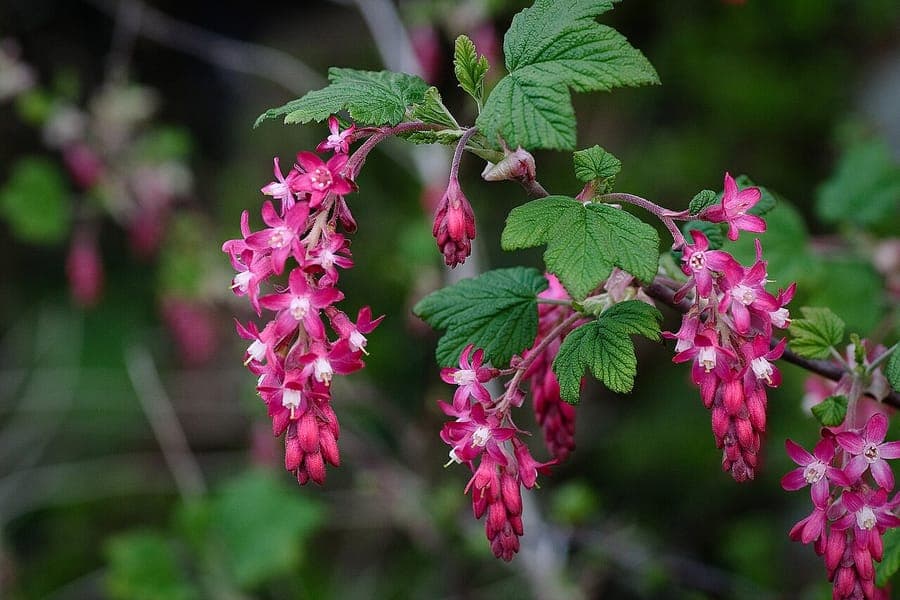
Mark Robinson from Williton, UK / CC BY 2.0, via Wikimedia Commons
Flowering currant: complete guide
Ribes sanguineum
¿Quieres ver Flowering currant: complete guide en tu jardín?
1 minuto, sin tarjeta de crédito
Overview
The flowering currant (Ribes sanguineum), also called red-flowering currant, is the only species in this guide grown primarily for ornamental rather than edible value. This American shrub is a fixture of the spring tapestry, flowering when little else is fresh and green.
In February-March, when gardens are still grey and dormant, the flowering currant explodes in full glory with hundreds of small pink or red-purple flowers. This is drama in early spring.
Appearance & bloom cycle
The flowering currant forms an upright shrub of 2-3 metres height (potentially to 4 metres) with a naturally loose, somewhat disordered growth form. The leaves are 5-12 centimetres long, coarsely veined and dark green, with an aromatic, somewhat unpleasant-smelling scent (not as strong as black currant, but noticeable).
The flowers are the highlight: small (0.8-1 centimetre), trumpet-shaped, pink to deep red-purple, in drooping clusters of 20-30 flowers. Blooming begins in February in mild winters, peaks in March-April. Honeybees and wild bees adore these flowers.
The fruits are blue to black berries, approximately 1 centimetre wide, not palatable (very sour). They provide food value for birds, not humans.
Ideal location
The flowering currant grows best in full sun to partial shade with minimum 3-4 hours sunlight daily. Full shade results in long twigs and fewer flowers. An open spot without compression from other large shrubs is preferred.
This plant is very wind-resistant and grows well at altitude. Protect against strong westerly winds that can damage early flowers. Don't position in frost pockets, where spring frosts after flowering can occur.
Soil requirements
The flowering currant is soil-tolerant and grows on virtually all soil types from sand to heavy clay. Ideal pH is 6.0-8.0 (neutral to slightly alkaline). This is far less critical than many other ornamental shrubs.
Poor soils are no problem. Rich soils help however better flowering. Mix 10-20% well-rotted compost at planting. Good drainage is preferred; waterlogged roots for extended periods are intolerable.
Watering
Young shrubs (first year) need regular water: twice weekly during dry seasons, approximately 15 litres per plant. Once established (after year 1), this plant needs little water thanks to its deep root system.
During extreme drought (>4 weeks without rain), supplemental water can help young trees. Don't mulch heavily; flowering currant tolerates this poorly.
Diseño gratis
¿Quieres ver Flowering currant: complete guide en tu jardín? Crea un diseño gratis ahora.
Pruning
The flowering currant demands annual pruning to remain compact and floriferous. Immediately after flowering (May), remove approximately one-third of the oldest branches to make room for younger, more productive wood.
Shortening twigs to 50-60 centimetres helps maintain compact form. This plant grows naturally tall and leggy, so regular shaping is essential. Heavy cutting back can undermine next season's flowering.
Maintenance calendar
February-March: Bloom peak. Enjoy the flowers. Begin pruning preparation.
April-May: Peak pruning period. Remove oldest branches. Plant grows quickly now.
June-August: Growing period. Watering essential for young shrubs. Check for insects.
September-October: Winter preparation. Complete growth pruning. Leaf-fall begins.
November-January: Dormancy period. Minimal activity. Inspect for winter damage.
Winter hardiness
The flowering currant is very winter-hardy to USDA zone 6 (-25°C), and even to zone 5 in sheltered locations. In zone 5, very young trees may experience some damage, but recover quickly.
The real problem is spring frost after flowering - flowers can be burned by May frosts. Plant in sheltered, north-facing location to avoid late-season frosts.
Companion plants
The flowering currant works well in early-season mixed plantings:
- Helleborus niger (Christmas rose): frost-tolerant, concurrent bloom
- Cyclamen coum: low, concurrent bloom
- Forsythia intermedia: yellow flowers contrast nicely
- Magnolia species: similar bloom timing
Don't plant near other red-flowered species; flowering currant thrives better with contrasts. Yellow and white complement better.
On gardenworld.app, see how spring borders are designed with early-flowering shrubs. Timing is everything for seasonal impact.
Closing remarks
The flowering currant is the ideal shrub for those wanting early spring excitement in their garden. Minimal pruning (annually), minimal water once established, maximum flowering - this is efficient ornamental horticulture.
On gardenworld.app, find guides for early-season border combinations that fully utilize this American species. This is ornamental efficiency.
¿Quieres ver Flowering currant: complete guide en tu jardín? Crea un diseño gratis ahora.
Sube una foto, elige un estilo y obtén un diseño fotorrealista con lista de plantas en menos de un minuto.
Más de 10.000 jardines diseñados
Sin tarjeta de crédito


Plantas similares
Canadian gooseberry: complete guide
Ribes oxyacanthoides
Discover the Canadian gooseberry, an extremely hardy North American fruit shrub with bristly stems and tart berries for jams and orchards.
Ribes bracteosum: complete guide to this Pacific Northwest shrub
Ribes bracteosum
Grow stink currant, a hardy Pacific Northwest shrub with deep-lobed foliage, fragrant blooms, and dark berries attractive to birds.
Ribes acerifolium: complete guide
Ribes acerifolium
Discover Mapleleaf currant - a stunning native shrub with maple-like leaves and interesting berries. Ideal for natural gardens.