
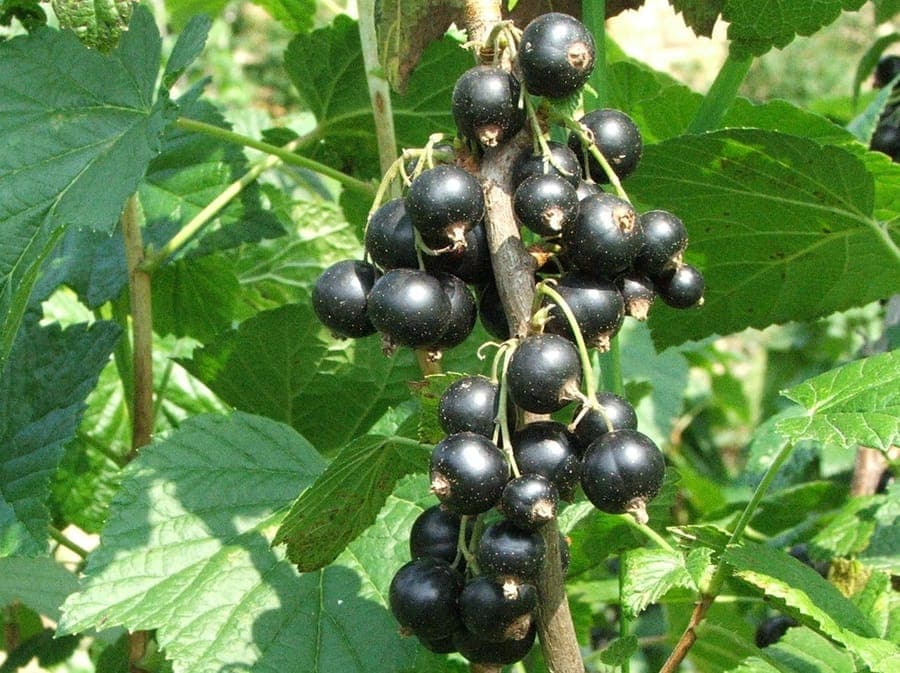
Jerzy Opioła / CC BY-SA 3.0, via Wikimedia Commons
Black currant: complete guide
Ribes nigrum
¿Quieres ver Black currant: complete guide en tu jardín?
1 minuto, sin tarjeta de crédito
Overview
The black currant (Ribes nigrum) is one of the most nutritious and productive berry shrubs you can grow. Despite its modest size (1.5-2 metres), this plant produces enormous quantities of vitamin C-rich berries. A single, mature specimen can yield 5-8 kilograms of berries per season.
It's not merely a food plant; the black currant also offers decorative value with light green flowers in spring and dark grey young branches in winter. This is productivity with style.
Appearance & bloom cycle
The black currant forms a compact shrub with irregularly growing twigs. The leaves are 5-10 centimetres long and distinctly aromatic (characteristic of this species - the entire plant smells somewhat like black currants). Young branches are dark purple to grey.
In April-May, small, green-yellow flowers appear in drooping clusters. Flowers are inconspicuous but very important for bees. Fruits ripen from green (July) to deep black (August). Ripe berries are approximately 1 centimetre wide, very juicy.
Ideal location
The black currant grows best in full sun with minimum six hours direct sunlight daily. Partial shade is tolerated, but fruit production declines. An open, air-permeable location is preferred because it reduces disease pressure.
This plant is wind-resistant and grows well at altitude. The only caveat: it can spread a scent some find unpleasant (though usually unnoticeable in gardens). Don't plant directly beneath bedroom windows.
Soil requirements
The black currant grows on many soils but thrives on well-draining, rich soil with pH 6.0-7.5 (neutral to slightly alkaline). Poor soils are no problem, but higher yields develop with organic matter.
Mix 30-40% well-rotted compost at planting. This plant tolerates both dry and wet soils better than many others, though prolonged waterlogging causes problems. Well-draining clay soils are ideal.
Watering
Young shrubs (first 2 years) need regular water: twice weekly during dry seasons, approximately 10-15 litres per plant. Established shrubs need less water, but regular moisture during fruiting period helps yields.
Daily watering during extreme drought (>3 weeks without rain). Mulch 5 centimetres deep around the shrub in March to help moisture retention.
Diseño gratis
¿Quieres ver Black currant: complete guide en tu jardín? Crea un diseño gratis ahora.
Pruning
The black currant must be regularly pruned for optimal fruit production. Remove old branches (3+ years) annually in January-February to make room for younger, more productive wood.
One-year-old twigs produce most fruit. Hard cutting back to 30 centimetres every winter helps maintain a compact, productive shrub. Half of all wood should be older than one year.
Maintenance calendar
January-February: Heavy pruning session; remove older branches. Apply organic fertilizer.
March-April: Growth begins. Regular watering essential. Check for aphids (common).
May-June: Bloom period. No pruning now. Ensure bee-friendly environment.
July-August: Fruit ripening. Watering critical for fruit size/quality. Harvest period.
September-October: Winter preparation. Remove diseased foliage. Apply potassium fertilizer.
Winter hardiness
The black currant is very winter-hardy, tolerating to USDA zone 3 (-35°C). This is no limitation in temperate Europe. However, very late frosts (May) can damage flowers, so avoid planting in frost pockets.
Companion plants
The black currant works well in productive mixed gardens:
- Red currant (Ribes rubrum): similar culture, different colour
- Bramble: compatible growth, different season
- Gooseberry: low-growing, remains beneath black currant
- Oregano: underplanting, bee-attraction
Avoid direct shade from large trees. Give 1.5 metres spacing to other shrubs for air flow.
On gardenworld.app, see how food gardens are designed with berries, vegetables, and herbs together. Integrated food gardening is the future.
Closing remarks
The black currant is for gardeners who enjoy home-grown food. With minimal pruning and management, you'll get decades of harvests. This is real fruit growing for beginning gardeners.
On gardenworld.app, find recipes for berry preserves and harvest celebrations. This is food growing that really delivers.
¿Quieres ver Black currant: complete guide en tu jardín? Crea un diseño gratis ahora.
Sube una foto, elige un estilo y obtén un diseño fotorrealista con lista de plantas en menos de un minuto.
Más de 10.000 jardines diseñados
Sin tarjeta de crédito


Plantas similares
Canadian gooseberry: complete guide
Ribes oxyacanthoides
Discover the Canadian gooseberry, an extremely hardy North American fruit shrub with bristly stems and tart berries for jams and orchards.
Ribes bracteosum: complete guide to this Pacific Northwest shrub
Ribes bracteosum
Grow stink currant, a hardy Pacific Northwest shrub with deep-lobed foliage, fragrant blooms, and dark berries attractive to birds.
Ribes acerifolium: complete guide
Ribes acerifolium
Discover Mapleleaf currant - a stunning native shrub with maple-like leaves and interesting berries. Ideal for natural gardens.