
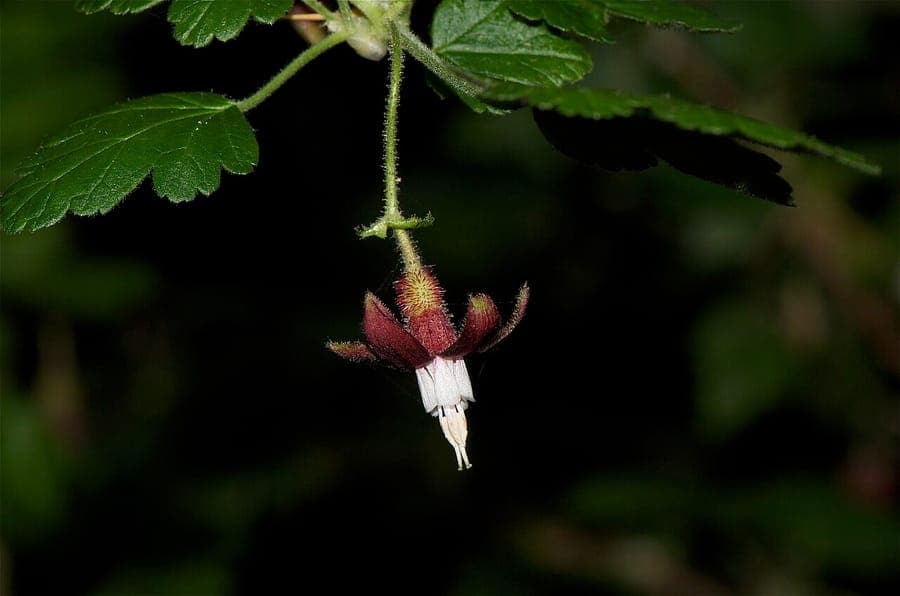
jkirkhart35 / CC BY 2.0, via Wikimedia Commons
Ribes menziesii: complete guide
Ribes menziesii
¿Quieres ver Ribes menziesii: complete guide en tu jardín?
1 minuto, sin tarjeta de crédito
Overview
Ribes menziesii, commonly called Canyon gooseberry, is a fascinating shrub from the Grossulariaceae family. This American native plant naturally grows in canyons and mountain areas of Oregon and California. It is an excellent choice for naturalistic garden designs and robust landscape projects.
The shrub belongs to the genus Ribes, which is famous for berry production and versatile forms. Canyon gooseberry distinguishes itself through strong adaptation to dry conditions and its valuable role in the ecosystem.
Appearance and Bloom
Canyon gooseberry is a deciduous to semi-evergreen shrub reaching 1 to 2 meters tall. The branches are notably armed with fine thorns, making this plant require careful placement in plantings. These spines serve as natural protection against animals.
The leaves are small, deeply lobed, giving the plant a delicate appearance. They emerge in spring and display beautiful autumn colors. The flowers are small, inconspicuous green to yellow, appearing in May and June. Although not spectacular in color, they are important for pollinators.
From July to September, fruits ripen into small, dark purple to black berries, approximately 1 cm in size. These berries are not edible and remain on the branches long, providing valuable nourishment for birds.
Ideal Location
Canyon gooseberry thrives best in a fully sunny location. This promotes strong growth and optimal berry production. The plant can however also grow in light part shade, though growth will be slower.
Ensure well-drained soil. The plant requires less water than many other garden plants and can tolerate drought when established. This makes it ideal for water-conscious gardens and areas with limited water availability.
Due to its robust nature, Canyon gooseberry is suited for poor soils and slopes where other plants struggle. Plant it where the thorns do not create a hindrance to traffic.
Soil
Ribes menziesii is not fussy regarding soil preparation. It grows well in sandy, rocky, or clay soils. The plant prefers neutral to slightly acidic pH but also tolerates chalky soils. Ensure the soil drains well to avoid waterlogging.
When planting in compact gardens, adding compost-rich soil can help improve moisture retention. A mulch layer of 5-7 cm helps regulate moisture balance, especially during dry periods.
Watering
Once established (after 1-2 seasons), Canyon gooseberry is exceptionally drought-tolerant. As a young plant, water regularly, especially during dry spells. Water deeply but not frequently, encouraging deeper roots.
During the growing season (May-September), water once weekly if there is no rain. In dry summers, water more frequently. In autumn and winter, additional water is rarely needed except during extremely dry periods.
Avoid waterlogging and stagnant moisture, which can cause disease.
Diseño gratis
¿Quieres ver Ribes menziesii: complete guide en tu jardín? Crea un diseño gratis ahora.
Pruning
Canyon gooseberry requires minimal pruning. The natural form is usually attractive. Pruning can occur in late winter (February-March) or immediately after flowering.
Remove dead, damaged, or diseased branches. Thin the shrub lightly if it becomes too dense to improve air circulation. Since the plant has thorns, always wear gloves and long sleeves when pruning.
Old wood can be carefully removed from the shrub's heart to encourage renewal, but the plant also tolerates no pruning for years.
Maintenance Calendar
Spring (March-May): Check for dead wood and prune. Start watering if dry. Growth period begins.
Summer (June-August): Continue watering during dry periods. Observe flowering and berry formation. Minimal maintenance needed.
Autumn (September-November): Reduce watering as season progresses. Harvest berries for birds or remove for neatness.
Winter (December-February): Hardy plant requires no protection. Check plant health. Planting work can be undertaken.
Winter Hardiness
Canyon gooseberry is extremely winter hardy and suitable for most temperate climate zones in Europe. The plant tolerates frost down to about -20C. This makes it a reliable choice for permanent landscape plantings.
Even in harsh winters, the plant loses its leaves and enters dormancy. Early spring growth reminds us that the plant remains vital. In rare extreme frost periods, branches may be damaged, but the shrub usually recovers from the base.
Companions and Useful Partners
Canyon gooseberry combines well with other robust native species such as Mahonia, Ceanothus, and buckbrush. The thorns provide protection for nesting birds, so combine with bird-food plants like rowan or hawthorn.
Plant near other berry-producing plants to attract birds. The plant also thrives in dry border combinations with salvias, lavender, and other Californian native plants.
Avoid moisture-loving plants such as hostas or aquilegias in the same garden zone.
Closing
Ribes menziesii offers a unique combination of ecological value, robustness, and naturalistic character. Whether you are working on water-conscious landscaping or simply want to add an interesting native shrub, Canyon gooseberry is a wonderful choice.
You will find seeds and young plants at specialty nurseries. For more information on ecological and water-conscious plantings, visit gardenworld.app where thousands of designs provide inspiration. GardenWorld helps you see how you can integrate Canyon gooseberry into your own garden. Because this shrub grows completely independently of intensive maintenance, it is ideal for busy garden owners.
With its American roots and European suitability, Ribes menziesii offers a bridge between continents in your garden.
¿Quieres ver Ribes menziesii: complete guide en tu jardín? Crea un diseño gratis ahora.
Sube una foto, elige un estilo y obtén un diseño fotorrealista con lista de plantas en menos de un minuto.
Más de 10.000 jardines diseñados
Sin tarjeta de crédito


Plantas similares
Canadian gooseberry: complete guide
Ribes oxyacanthoides
Discover the Canadian gooseberry, an extremely hardy North American fruit shrub with bristly stems and tart berries for jams and orchards.
Ribes bracteosum: complete guide to this Pacific Northwest shrub
Ribes bracteosum
Grow stink currant, a hardy Pacific Northwest shrub with deep-lobed foliage, fragrant blooms, and dark berries attractive to birds.
Ribes acerifolium: complete guide
Ribes acerifolium
Discover Mapleleaf currant - a stunning native shrub with maple-like leaves and interesting berries. Ideal for natural gardens.