
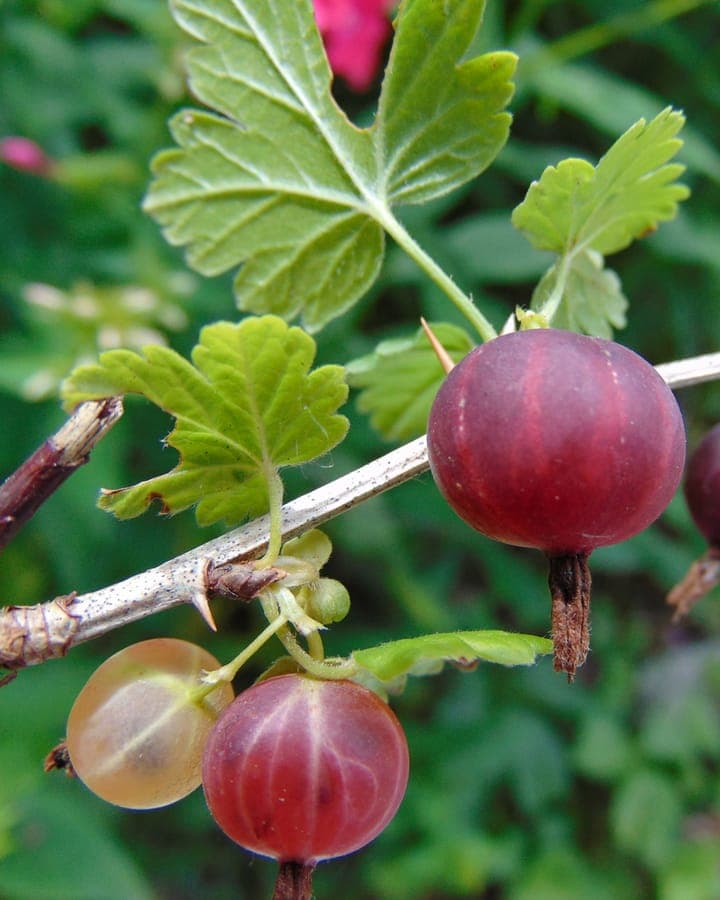
Nadiatalent / CC BY-SA 4.0, via Wikimedia Commons
American Gooseberry: complete guide
Ribes hirtellum
¿Quieres ver American Gooseberry: complete guide en tu jardín?
1 minuto, sin tarjeta de crédito
Overview
Ribes hirtellum, commonly known as American Gooseberry or Hairy Gooseberry, is a North American shrub native to Canada and eastern United States. This is a valuable, underestimated edible plant that thrives in temperate European climates. The plant produces delicious, nutritious berries that can be eaten fresh or processed into jams, syrups, and preserves. With its native wildlife value, attractive spring flowers, and autumn coloring, American Gooseberry deserves far more attention from European gardeners.
Appearance and bloom cycle
American Gooseberry grows as a deciduous shrub, typically 1 to 1.5 meters tall and broad, with thin, gray twigs mostly sparsely thorned (less than European Ribes uva-crispa). Foliage is small, rounded to kidney-shaped, finely margined, and colors red to orange in autumn, providing attractive fall display. Flowers appear in April-May as small, inconspicuous green to red-purple clusters, highly attractive to bees. Berries ripen from June to August, starting green, becoming red, and finishing deep purple to nearly black at full ripeness - usually 1-1.5 cm diameter, sweet and fine-flavored.
Ideal location
American Gooseberry grows well in full sun to partial shade, preferring at least 4-6 hours direct sunlight daily for optimal fruiting. The plant tolerates limited shade - under very shady conditions, fruit set will significantly decrease. This is hardy to USDA zone 4, making it very suitable for all of the Netherlands, Belgium, Germany, France, and northern regions of any European country. The plant thrives even in extremely cold regions without issue.
Soil requirements
American Gooseberry is not particularly soil-fussy. Neutral to slightly alkaline soil (pH 6.0-7.5) is ideal, but the plant tolerates lightly acidic soils (pH 5.5). Soil should be regularly moist, especially during the growing season, but waterlogging must be avoided - well-draining soil is essential. Moderately fertile soil suffices; excessive nitrogen promotes lush foliage at the expense of fruit production. Sandy to loamy soil works fine.
Diseño gratis
¿Quieres ver American Gooseberry: complete guide en tu jardín? Crea un diseño gratis ahora.
Watering
Once established, American Gooseberry has moderate water needs. During the growing season (April-July), regular moisture is ideal, especially if rain fails for longer than 2-3 weeks. Drip irrigation is highly efficient. During the frost period in winter, virtually no water is needed. Preventing drought around fruit-setting time (May-June) helps ensure better harvest.
Pruning
American Gooseberry requires annual maintenance pruning. In late winter (February-March), cut old, unproductive branches to ground level, retaining 3-4 healthy, young branches. Also remove diseased, damaged, or shriveled canes. Ensure the shrub remains open so air and sunlight penetrate well. Avoid severe pruning during the growing season.
Maintenance calendar
January-February: Winter pruning, remove old canes. March-April: Flowering begins, watch for insects. May-June: Fruit set, water regularly. July-August: Harvest ripe berries, seed development. September-October: Autumn coloring, light pruning if needed. November-December: Dormancy, minimal maintenance.
Winter hardiness
American Gooseberry is completely winter-hardy throughout Europe, down to USDA zone 4 (-30 degrees Celsius). The plant tolerates heavy frosts, snow, and extreme cold excellently. In very mild winters, foliage may not fully drop, which is normal. The plant will always regrow from underground nodes and buds in spring.
Companion plants
American Gooseberry pairs well with other berry and fruit shrubs in edible gardens. Ideal companions include red currant (Ribes rubrum), black currant (Ribes nigrum), honeysuckle berries (Lonicera), bilberry (Vaccinium), and raspberries (Rubus). Plant some herbs nearby such as mint, thyme, and sorrel, which attract bees. Avoid very shade-giving partners.
Closing remarks
American Gooseberry is a valuable, nearly forgotten edible plant that every European edible or forest garden should contain. The berries are nutritious, edible, and processable, the plant is hardy and maintenance-free, and it provides valuable wildlife feed. Plants are available from tree nurseries offering fruit shrubs; consult gardenworld.app for supplier contacts. For optimal harvest, plant at least two shrubs together for cross-pollination. American Gooseberry deserves a prominent place in every European garden.
¿Quieres ver American Gooseberry: complete guide en tu jardín? Crea un diseño gratis ahora.
Sube una foto, elige un estilo y obtén un diseño fotorrealista con lista de plantas en menos de un minuto.
Más de 10.000 jardines diseñados
Sin tarjeta de crédito


Plantas similares
Canadian gooseberry: complete guide
Ribes oxyacanthoides
Discover the Canadian gooseberry, an extremely hardy North American fruit shrub with bristly stems and tart berries for jams and orchards.
Ribes bracteosum: complete guide to this Pacific Northwest shrub
Ribes bracteosum
Grow stink currant, a hardy Pacific Northwest shrub with deep-lobed foliage, fragrant blooms, and dark berries attractive to birds.
Ribes acerifolium: complete guide
Ribes acerifolium
Discover Mapleleaf currant - a stunning native shrub with maple-like leaves and interesting berries. Ideal for natural gardens.