
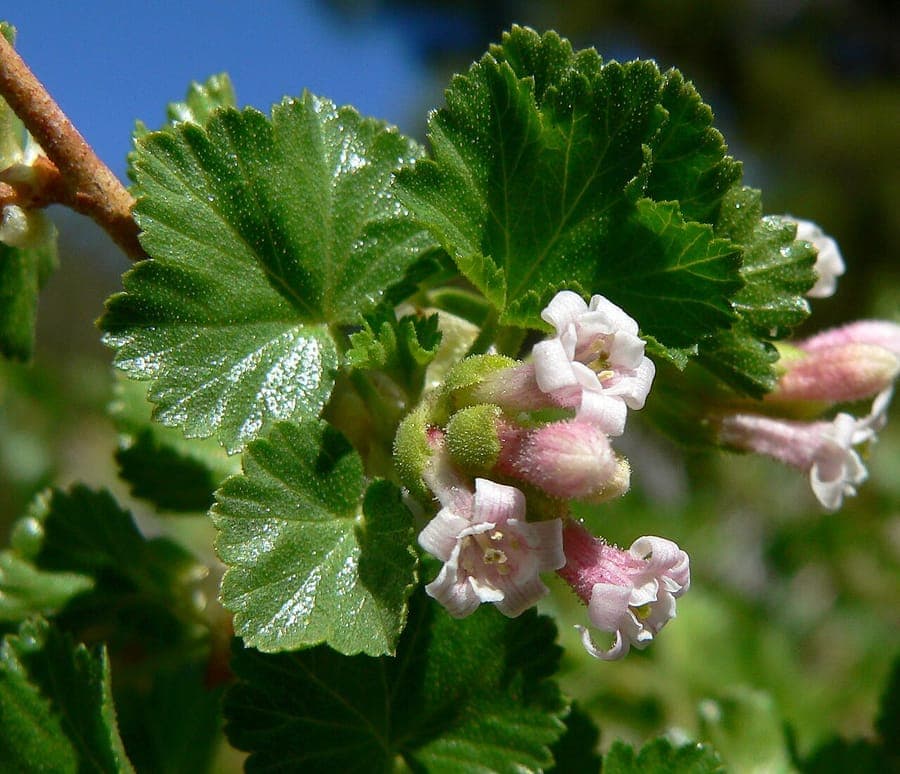
Stan Shebs / CC BY-SA 3.0, via Wikimedia Commons
Wax currant: complete guide
Ribes cereum
¿Quieres ver Wax currant: complete guide en tu jardín?
1 minuto, sin tarjeta de crédito
Overview
The wax currant (Ribes cereum) is a native North American shrub from the drier regions of western Canada to western and central United States. This compact shrub is celebrated for its small, pleasantly scented pink flowers and striking red to orange fruits that persist throughout summer. With its tolerance for dry conditions and low maintenance requirements, the wax currant offers an excellent choice for gardens with limited water availability.
Appearance and Bloom
The wax currant grows as a compact, multi-stemmed shrub, typically 100-150 centimeters tall and wide. From May to June, small pale yellow to pink flowers appear in delicate clusters that are subtly fragrant. These flowers attract honeybees and various pollinators. Following bloom, small round fruits develop, turning from green to red-orange and remaining visible throughout summer. These berries interest birds and can be eaten by humans, though they are quite tart.
Ideal Location
Discover the unique quality of this currant: it thrives exclusively in dry, inhospitable locations. Plant this shrub in full sun for optimal flowering and fruit set. It tolerates windy conditions and thrives on steep slopes or dry borders. This plant pairs well with other drought-tolerant specimens like lavender, sage, and roses. Avoid wet, shady areas where the plant may rot or develop diseases.
Soil
The wax currant thrives in light, well-draining soil with low fertility. Heavy clay soils should be lightened with sand or gravel. This shrub accepts even poor soils and feels at home in stony terrain. Slightly alkaline soil with pH 6.5 to 7.5 is perfect. No heavy fertilizing is needed; excess nutrients can cause lush growth at the expense of fruit production. Mulching is not necessary and may even be harmful for this drought-adapted plant.
Diseño gratis
¿Quieres ver Wax currant: complete guide en tu jardín? Crea un diseño gratis ahora.
Watering
Watering is where this currant truly distinguishes itself. Once established (after one growing season), this plant requires minimal water. Water only during prolonged drought. Even in dry years across temperate zones, this plant thrives without supplemental watering. This makes it an ideal choice for gardens in drier climates or for gardeners wishing to minimize water consumption. Overwatering can be harmful.
Pruning
Pruning of wax currant is minimal. Remove only dead, damaged, or crossing wood each spring. Light pruning encourages more compact growth and better fruit production, but avoid heavy cutting. Some gardeners lightly cut back about one-third of the oldest stems each year to rejuvenate the shrub. This can be done in late winter or early spring before new growth starts.
Maintenance Calendar
March-April: Inspect for dead wood and carefully remove it. May-June: Enjoy spring bloom. June-August: Fruits ripen, enjoy summer interest. September: Leave fruits for birds. October-November: Plant tolerates wind and early frost well. December-February: Dormant period, no maintenance needed.
Winter Hardiness
The wax currant is extremely hardy, tolerating temperatures down to minus 20 to minus 25 degrees Celsius. In northern climates, this plant grows without any protection. The plant can even endure heavy snowfall and strong winds. This makes it suitable for harsh climates and exposed positions.
Companion Plants
Wax currant combines well with other drought-tolerant plants. Consider Cotoneaster, Berberis, Ilex verticillata, bergenia, and sedums. For color, use sage, lavender, and rugosa roses. Ornamental grasses like stipa and festuca provide structure. The fruits attract birds, integrating well with wildlife-friendly gardens.
Closing
The wax currant is an underrated shrub offering numerous benefits for dry gardens. With minimal water and maintenance requirements, interesting spring bloom, and extended summer fruit display, this plant delivers lasting pleasure. Find this plant at larger garden centers or specialty suppliers. With one-time planting, enjoy years of rustic charm and bird-friendly properties in your landscape.
¿Quieres ver Wax currant: complete guide en tu jardín? Crea un diseño gratis ahora.
Sube una foto, elige un estilo y obtén un diseño fotorrealista con lista de plantas en menos de un minuto.
Más de 10.000 jardines diseñados
Sin tarjeta de crédito


Plantas similares
Canadian gooseberry: complete guide
Ribes oxyacanthoides
Discover the Canadian gooseberry, an extremely hardy North American fruit shrub with bristly stems and tart berries for jams and orchards.
Ribes bracteosum: complete guide to this Pacific Northwest shrub
Ribes bracteosum
Grow stink currant, a hardy Pacific Northwest shrub with deep-lobed foliage, fragrant blooms, and dark berries attractive to birds.
Ribes acerifolium: complete guide
Ribes acerifolium
Discover Mapleleaf currant - a stunning native shrub with maple-like leaves and interesting berries. Ideal for natural gardens.