
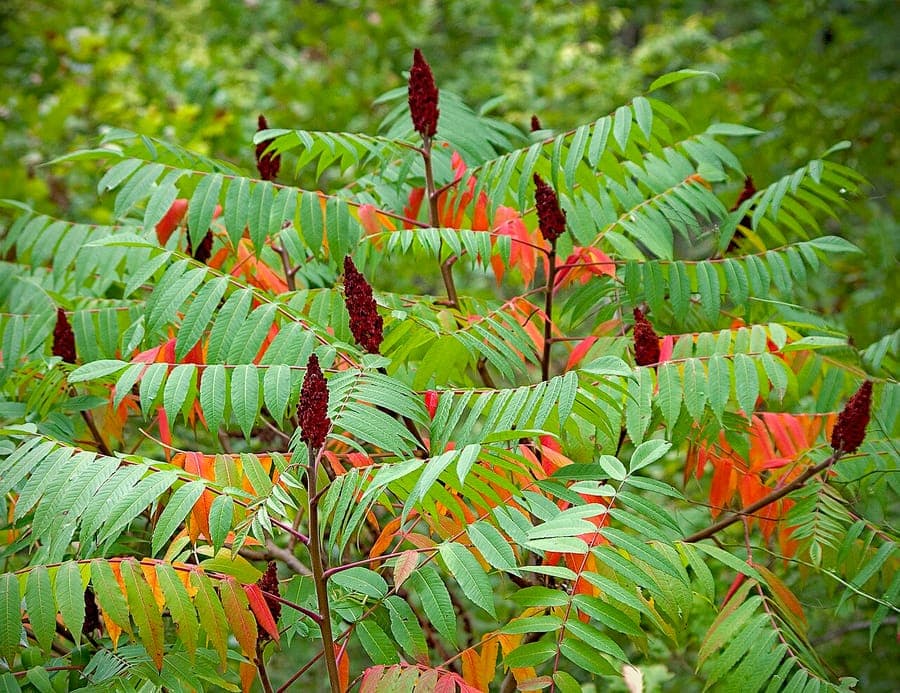
Katya from Moscow, Russia / CC BY-SA 2.0, via Wikimedia Commons
Virginia sumac: complete guide
Rhus typhina
¿Quieres ver Virginia sumac: complete guide en tu jardín?
1 minuto, sin tarjeta de crédito
Overview
Virginia sumac (Rhus typhina), also known as staghorn sumac or vinegar tree, is a spectacular North American shrub to small tree from the Anacardiaceae family. This plant is famous for its characteristic velvety young twigs, dramatic fall coloring and striking red fruit pyramids that persist for the whole season.
The staghorn sumac is an excellent choice for gardeners seeking durable, low-maintenance plants with seasonal drama. From velvety twigs in spring to fiery fall coloring to architectural red berries in winter, this tree provides continuous visual interest.
Appearance and bloom period
Virginia sumac grows as a shrub to small tree, typically 3 to 8 meters tall (sometimes up to 10 meters). The young twigs are deeply red to brown colored with velvety hairs - the most striking feature. The compound leaves are long, approximately 50 centimeters, with many small green leaflets that turn spectacularly orange to red in fall.
The flowers are clusters of yellow-green blooms in striking upright panicles appearing in June through July. After pollination, characteristic densely clustered red, hairy berries form that ripen in August and remain visible much of the year, especially attractive in winter.
Ideal location
Virginia sumac thrives in full to partial sun locations. The plant performs well on open meadows, woodland edges and somewhat sheltered forest margins. Full sun promotes better fall coloring and appearance, although the plant also tolerates considerable shade.
The plant is highly tolerant of windy environments, making it suitable for many garden locations. Planting in open, somewhat exposed situations promotes stronger growth patterns.
Soil requirements
Virginia sumac grows on very diverse soils, from acidic to alkaline (pH 4.5 to 8.0). The plant is not fussy about soil quality and grows even on poor, nutrient-deficient soils. The plant tolerates both dry and moist conditions, though it prefers well-draining soils.
The plant is highly adaptable and can grow well on most soils, from sandy to clay-like composition. This makes staghorn sumac an excellent choice for difficult sites.
Diseño gratis
¿Quieres ver Virginia sumac: complete guide en tu jardín? Crea un diseño gratis ahora.
Watering
Once established, Virginia sumac has low water requirements. The plant tolerates drought conditions excellently once well planted and established. In the first growing year after planting, regular watering is important for good root establishment.
During very dry periods, supplemental watering can help, but this is not essential for established plants. The plant actually fares better with dry weather than with very wet conditions.
Pruning
Pruning Virginia sumac is optional. The plant has a naturally attractive growth pattern. When pruning is desired (e.g. for shaping or size management), this can best be done in early spring before the growing season begins.
Remove dead or damaged branches as soon as noticed. The plant tolerates heavy pruning well and will quickly recover with vigorous regrowth from pruning cuts. Some gardeners prune staghorn sumac regularly to maintain a more shrubby form.
Maintenance calendar
Spring: Inspect for winter damage. Prune if desired in early spring. Add a layer of compost around the base for nutrition.
Summer: Water regularly in the first year. Once established, supplemental watering is usually not needed unless very dry. Monitor growth.
Autumn: Enjoy the spectacular fall coloring. Dead leaves can remain for soil improvement.
Winter: Enjoy the architectural red fruit pyramids. The plant rests underground.
Winter hardiness
Virginia sumac is extremely winter hardy (USDA zones 3 to 8), tolerating temperatures down to minus 35 degrees Celsius without any problem. The plant is very well adapted to cold winters and actually grows better in colder climates.
Companion plants
Virginia sumac grows well in combination with:
- Other North American shrubs
- Forest birds and pollinators
- Other fall-coloring plants
- Grasses and perennials
Final thoughts
Virginia sumac is an excellent choice for those seeking durable, low-maintenance ornamental value. The plant offers four-season beauty: velvety spring sprouts, green summer foliage, spectacular fall glow and architectural winter fruits. Available at garden centers and tree nurseries. For plant consultations, consult gardenworld.app. With minimal care, your staghorn sumac will add value to your garden for decades.
¿Quieres ver Virginia sumac: complete guide en tu jardín? Crea un diseño gratis ahora.
Sube una foto, elige un estilo y obtén un diseño fotorrealista con lista de plantas en menos de un minuto.
Más de 10.000 jardines diseñados
Sin tarjeta de crédito


Plantas similares
Skunkbush sumac: complete guide
Rhus trilobata
Everything about Rhus trilobata: siting, soil, autumn colour, pruning, and how this tough ornamental shrub earns a place in any garden.
Winged sumac: complete guide
Rhus copallinum
Everything about Rhus copallinum, the winged sumac with spectacular autumn colour. Location, pruning and garden value in full detail.
Aromatic sumac: complete guide
Rhus aromatica
Full guide to aromatic sumac (Rhus aromatica): planting, soil, care, pruning and companion plants for dry, sunny gardens and slope stabilisation.