
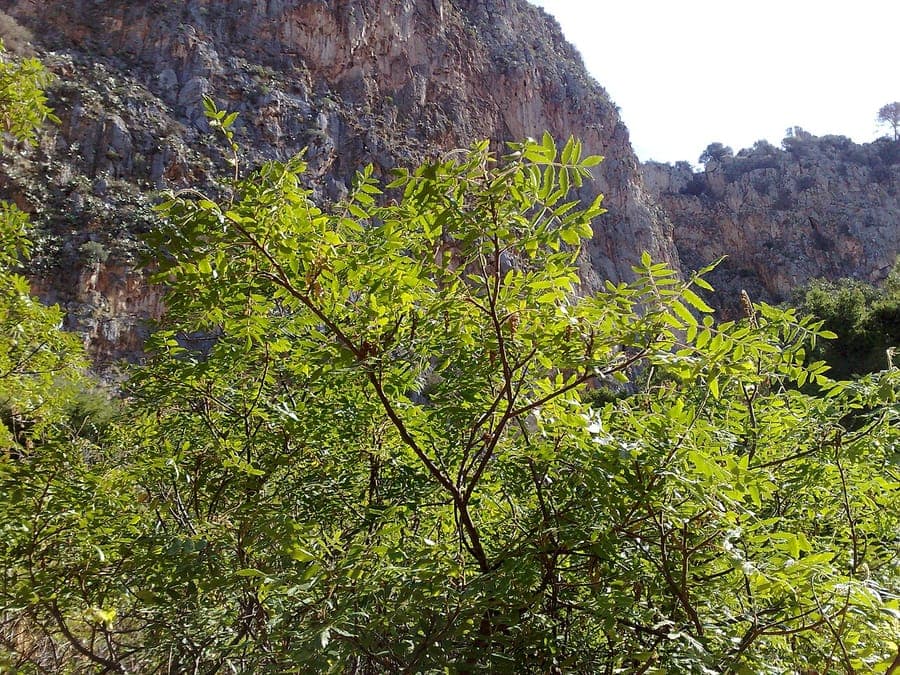
Dedda71 / CC BY-SA 3.0, via Wikimedia Commons
Tanner's sumac: complete guide
Rhus coriaria
¿Quieres ver Tanner's sumac: complete guide en tu jardín?
1 minuto, sin tarjeta de crédito
Overview
Tanner's sumac (Rhus coriaria) is a characteristic Mediterranean shrub from the Anacardiaceae family, native to the Mediterranean region and the Near East. This plant stands at the intersection of history, culture and culinary tradition. The name refers to its historical use in the tanning industry, where tannins from leaves and branches were used.
The plant is far more than just a historical curiosity. With its elegant compound leaves, sparkling red berries and aromatic properties, tanner's sumac offers both culinary and decorative value. In Middle Eastern cuisine, the dried berries are ground into a tart-flavored spice widely used in salad recipes.
Appearance and bloom period
Tanner's sumac grows as a compact shrub, typically 2 to 3 meters tall (can reach 4 to 5 meters). The stems are gray-brown, smooth with lightly hairy young growth. The leaves are pinnately compound (approximately 10 to 20 pairs of small leaflets), elliptical, lightly hairy, aromatic when crushed.
The flowers are tiny, yellow-green blooms in dense, upright panicles appearing in June through July. The fruits are highly characteristic: small, round berries with a red to brown color, covered with fine hairs. These berries ripen from August to October and retain their color and form even after drying.
Ideal location
Tanner's sumac thrives in full, sunny locations. The plant performs excellently on south-facing sites where it receives maximum sun exposure. This promotes better fruiting and more intense aroma in leaves and fruits.
The plant is not fussy about wind exposure and performs well in windy environments. A somewhat sheltered spot is however preferred as it helps prevent young leaf damage.
Soil requirements
Tanner's sumac grows on various soils but prefers dry, well-draining soils. The plant thrives on nutrient-rich to moderately rich soils (pH 6.0 to 8.0). The plant also tolerates slightly alkaline soils well.
The plant actually prefers somewhat drier soils and tolerates drought conditions reasonably well once established. On very wet, stagnant soils, the plant struggles and root rot can occur.
Diseño gratis
¿Quieres ver Tanner's sumac: complete guide en tu jardín? Crea un diseño gratis ahora.
Watering
Once established, tanner's sumac has low water requirements. The plant can tolerate drought stress without problems. In the first growing year after planting, regular watering is important for good root establishment.
Water regularly to moderately during growth phase. Once mature, supplemental watering can usually be omitted except during very dry periods. The plant prefers rather drier soil than wet conditions.
Pruning
Pruning tanner's sumac is optional. The plant has an attractive natural growth form. When pruning is desired (e.g. for shaping or size management), this can best be done in early spring.
Remove dead or damaged branches as soon as noticed. With invasive growth (which rarely occurs), you can prune back to desired size. The plant rarely has disease or pest problems.
Maintenance calendar
Spring: Inspect the plant for winter damage. Add a layer of organic mulch around the base (not directly against stem). This helps moisture retention.
Summer: Water regularly if very dry. Harvest leaves for drying when fully green. Dry in shade to preserve aroma.
Autumn: Harvest ripe berries. Dry these for culinary use or personal use. Leave some berries for birds.
Winter: No special maintenance required. Plant rests. Dried fruits can be harvested.
Winter hardiness
Tanner's sumac is hardy in USDA zones 6 to 9, tolerating temperatures down to approximately minus 20 degrees Celsius in protected settings. The plant grows best in warmer climates and may experience some damage in very severe winters in more temperate zones.
In colder climates, the plant grows better when planted against a warm wall or surrounded with protective mulch. Some twig dieback may occur in very severe winters.
Companion plants
Tanner's sumac grows well with:
- Other Mediterranean plants such as lavender and rosemary
- Dry-land grasses
- Mediterranean shrubs
- Other aromatic herb plants
Final thoughts
Tanner's sumac is a valuable addition to gardens with Mediterranean or even temperate continental climate. The plant offers interesting ornamental value and practical culinary use. The dried berries are available at specialty spice shops but growing your own brings much satisfaction. For plant consultation, consult gardenworld.app. With proper care, your tanner's sumac will produce beautiful fruits for many years and provide a culinary treasure chest.
¿Quieres ver Tanner's sumac: complete guide en tu jardín? Crea un diseño gratis ahora.
Sube una foto, elige un estilo y obtén un diseño fotorrealista con lista de plantas en menos de un minuto.
Más de 10.000 jardines diseñados
Sin tarjeta de crédito


Plantas similares
Skunkbush sumac: complete guide
Rhus trilobata
Everything about Rhus trilobata: siting, soil, autumn colour, pruning, and how this tough ornamental shrub earns a place in any garden.
Winged sumac: complete guide
Rhus copallinum
Everything about Rhus copallinum, the winged sumac with spectacular autumn colour. Location, pruning and garden value in full detail.
Aromatic sumac: complete guide
Rhus aromatica
Full guide to aromatic sumac (Rhus aromatica): planting, soil, care, pruning and companion plants for dry, sunny gardens and slope stabilisation.