
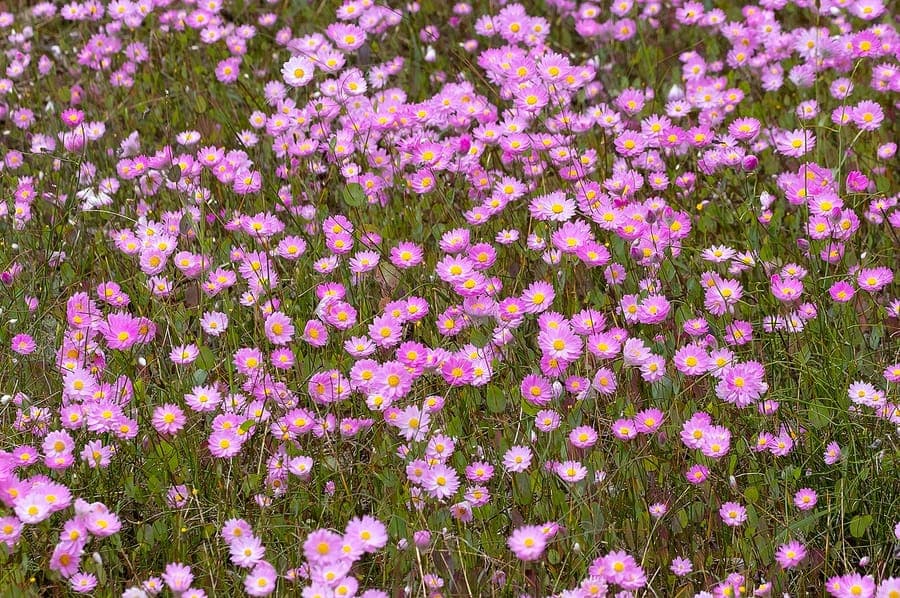
knicolson / CC BY 4.0, via Wikimedia Commons
Rhodanthe manglesii: complete guide
Rhodanthe manglesii
¿Quieres ver Rhodanthe manglesii: complete guide en tu jardín?
1 minuto, sin tarjeta de crédito
Overview
Rhodanthe manglesii, commonly known as paper daisy or swan river everlasting, is a fascinating annual flowering plant native to Western Australia. This plant is renowned for its remarkable flowers that possess a papery texture and retain their colour for many years. It is popular among florists and gardeners interested in dried flowers and long-lasting floral displays.
The plant thrives in temperate and warm climates and can be easily grown from seed. With its fine foliage and abundant small flowers, this plant creates a beautiful accent in borders, pots and garden schemes. The flowers appear in various shades of pink, white and sometimes with red accents.
Appearance and bloom cycle
Rhodanthe manglesii reaches a height of approximately 30 to 60 centimetres and has a compact, branching growth habit. The stems are thin and wiry, with small linear leaves that have a silvery sheen. The foliage is very fine and elegant.
The flowers are the true showstopper of this plant. They are small, approximately 1-2 centimetres in diameter, with a papery involucrum (bracts) surrounding the actual flower. Flowers appear from June to October in temperate climates. They can be pink, white, or bicoloured, often with a golden-yellow centre. What makes this plant particularly special is that the flowers retain their colour when dried, making them ideal for dry flower arrangements and decorative displays.
The plant flowers very abundantly when sufficient sun is available. The flowers attract butterflies and bees.
Ideal location
Rhodanthe manglesii prefers full sun. At least six hours of direct sunlight daily is ideal, but more is even better. In full sun locations, plants grow more compactly and produce more flowers.
The plant can be cultivated both in open ground and in pots and containers. In containers, the plant can be easily moved to optimal sun positions. For balcony and patio gardens, this plant is extremely suitable.
The plant is sensitive to strong wind. While the plant itself is sturdy, heavy wind gusts can damage the thin stems. In windy areas, it is advisable to place the plant near protective screens or windbreaks.
Soil requirements
Rhodanthe manglesii has very modest soil requirements. The plant grows well in well-draining, moderately fertile soil. Overly rich soil promotes mainly leaf growth at the expense of flowering.
The plant tolerates dry conditions well and also grows well in sandy or gravelly soils. A pH between 6 and 7 is ideal. Heavy clay soils should be supplemented with sand and organic material to improve drainage.
For pot culture, a light, well-draining potting soil works best. A mixture of potting soil, sand and perlite in equal proportions gives good results. Ensure good drainage in pots with drainage holes.
Diseño gratis
¿Quieres ver Rhodanthe manglesii: complete guide en tu jardín? Crea un diseño gratis ahora.
Watering
Rhodanthe manglesii is drought-tolerant and requires only moderate water after establishment. The plant tolerates dry periods well and can survive for long periods without water.
During growth and flowering periods, water when the soil feels dry. Avoid excessive watering, as this can cause leaf disease and root rot. In rainy periods, additional watering can usually be omitted.
For pot culture: water until the soil feels dry, usually once to twice a week in warm periods. Ensure pots do not stand in water, as this leads to rot.
In dry years or in very dry locations, supplemental watering may be needed, but usually adjust to rainfall. The plant is economical with water and more suitable for dry gardens than for moist environments.
Pruning
Rhodanthe manglesii requires very little pruning. Light shaping of young plants can help achieve a more compact growth habit.
Remove faded flowers regularly to encourage longer flowering. This is especially important when growing the plant for fresh flower material.
Once the plant has reached its peak (usually mid-August), the tips can be lightly shortened to stimulate further branching.
The plant is annual and dies after completing its growing season. Seed can be collected from ripe fruits at the end of the season.
Maintenance calendar
May: Sow indoors or direct sow outdoors when soil is warm enough (minimum 15 degrees Celsius).
June-August: Plant young plants in their final position. Regularly remove faded flowers.
September-October: Flowering period culminates. Collect ripe seed when seed pods turn brown and dry.
November-December: Container plants die off after frost. Clean seed and store dry for next season.
Winter hardiness
Rhodanthe manglesii is not winter hardy in temperate climates and is treated as an annual. The plant cannot tolerate frost and dies at the first frost.
In warmer climates (USDA zones 9-11), the plant can sometimes grow as a short-lived perennial, but usually dies after first frost.
In warmer regions with mild winters, seed can overwinter and germinate naturally the following season. Store seed in a dry, cool place until next spring.
Companion plants
Rhodanthe manglesii combines beautifully with other summer bloomers and garden plants. Group this plant together with:
Helichrysum species (other everlasting flowers) for similar flower form effects. Statice (Limonium) creates a nice contrast with its fine, vertical flower spires.
Heiuchera and other foliage plants accentuate the fine foliage of Rhodanthe.
Amaranthus and Celosia bring texture and deeper colours to borders where Rhodanthe grows.
Closing
Rhodanthe manglesii is an excellent choice for gardeners who love dried flowers and long-lasting floral displays. The plant is easy to grow, requires minimal maintenance and rewards you with abundant papery flowers that you can dry and keep for years.
Find this plant at your local garden centres and nurseries. For more growing and care information, visit gardenworld.app for comprehensive plant guides. Let yourself be inspired by the possibilities with this Australian treasure and create a flower-rich garden full of colour and texture!
On gardenworld.app you will also find additional advice for combining dried flowers in your garden schemes.
¿Quieres ver Rhodanthe manglesii: complete guide en tu jardín? Crea un diseño gratis ahora.
Sube una foto, elige un estilo y obtén un diseño fotorrealista con lista de plantas en menos de un minuto.
Más de 10.000 jardines diseñados
Sin tarjeta de crédito


Plantas similares
Calendula stellata: complete guide
Calendula stellata
Complete guide to Calendula stellata, the star-flowered marigold from Sicily: location, soil, watering and companion planting tips.
Korean chrysanthemum: complete guide
Chrysanthemum x rubellum
Chrysanthemum x rubellum is a hardy autumn perennial with single pink to copper flowers from August to November. Care and combinations.
Helianthus divaricatus: complete guide
Helianthus divaricatus
Helianthus divaricatus is a North American woodland sunflower with yellow summer blooms, ideal for naturalistic borders and shady edges.