
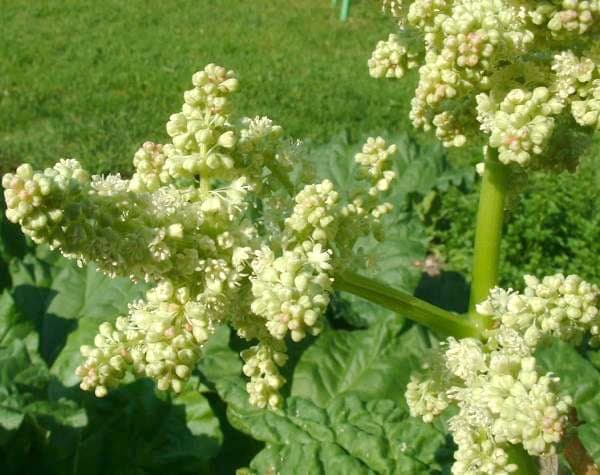
The original uploader was Jeffdelonge at French Wikipedia. Later version (color enhancement) was uploaded by Tournachon at fr.wikipedia. / CC BY-SA 3.0, via Wikimedia Commons
Rhubarb: complete guide
Rheum rhaponticum
¿Quieres ver Rhubarb: complete guide en tu jardín?
1 minuto, sin tarjeta de crédito
Overview
Rhubarb (Rheum rhaponticum), also known as Bulgarian rhubarb, is a remarkable perennial plant from the Polygonaceae family. Native to the mountains of Bulgaria, this plant has established itself throughout Europe as a valued garden specimen. With its imposing foliage and tart, edible stems, rhubarb offers a unique combination of decorative value and practical use.
The plant is typically grown for its characteristic pink to red-colored stems, which can be eaten raw or cooked. Rhubarb is versatile in the kitchen: from pies and compotes to jams and sauces.
Appearance and bloom period
Rhubarb boasts some of the largest leaves of all perennial plants. The leaf blades are deep green, coarsely textured, and can reach up to 60 centimeters in length. The leaf stalks (what we eat as rhubarb) are hollow, juicy, and display beautiful red-pink tones, especially after frost.
Flowers appear in May through June as small white or greenish blooms in compound panicles above the leaf canopy. While not spectacular, these flowers have their own charm and attract pollinators. After flowering, small triangular fruits form.
Ideal location
Rhubarb thrives in a location with plenty of sunlight, at least 6 hours of direct sun daily. The plant tolerates partial shade but will produce less vibrant stems with a slightly weaker color.
A sheltered spot without strong winds is ideal. As the plant grows quite large, provide ample space (at least 90 centimeters in all directions). Good air circulation helps prevent fungal diseases.
Soil requirements
Rhubarb prefers nutrient-rich, well-draining soil with a pH between 6.0 and 6.8. Before planting, work in generous amounts of organic material such as compost or rotted manure. This improves both water retention and nutrient availability.
The plant also performs reasonably well on less ideal soils, provided they don't become waterlogged. On heavy clay soils, raised beds are recommended for better drainage.
Diseño gratis
¿Quieres ver Rhubarb: complete guide en tu jardín? Crea un diseño gratis ahora.
Watering
Rhubarb requires regular water supply, especially during dry weather and the growing season. Water deeply rather than superficially, allowing the root system to develop deep into the soil. Keep the soil consistently moist but never waterlogged.
In the first year after planting, regular watering is essential for root establishment. Once established, the plant can tolerate dry periods, although watering during droughts produces more developed stems.
Pruning
Pruning rhubarb is straightforward. Remove the flower panicles as soon as they appear, unless you want to collect seeds. This encourages the plant to focus its energy on leaf growth.
Also promptly remove any damaged or diseased leaves. Leave the foliage on the plant in autumn to decompose and add organic matter to the soil.
Maintenance calendar
Spring: Work a layer of ripe compost (about 5 centimeters) around the plant. This provides nutrition and helps with moisture retention.
Summer: Water regularly during dry weather. Remove flower panicles. Harvest stems carefully (max one-third of the plant at a time).
Autumn: Leave dead leaf material in place. Mulch with 10 centimeters of compost.
Winter: No maintenance needed. The plant rests underground.
Winter hardiness
Rhubarb is extremely winter hardy (USDA zones 3 to 9) and tolerates temperatures down to minus 35 degrees Celsius without damage. The plant actually requires a cold period - without sufficient winter cold, flowering performance will be compromised the following season.
Companion plants
Rhubarb grows well with:
- Asparagus plants (both are perennial crops)
- Lettuce and spinach in the shade of rhubarb
- Herb plants such as tarragon and mint
- Beans and onions have positive interactions
Final thoughts
Rhubarb is a rewarding plant for those with patience. After two years of growth, a single plant already provides a decent harvest. Available at garden centres. For more plant consultations, visit gardenworld.app where detailed rhubarb growing tips are also available. With proper care, your rhubarb plant will provide enjoyment for many years.
¿Quieres ver Rhubarb: complete guide en tu jardín? Crea un diseño gratis ahora.
Sube una foto, elige un estilo y obtén un diseño fotorrealista con lista de plantas en menos de un minuto.
Más de 10.000 jardines diseñados
Sin tarjeta de crédito


Plantas similares
Crosby's wild buckwheat: complete guide
Eriogonum crosbyae
Full guide to growing Eriogonum crosbyae: ideal site, soil, watering, winter hardiness and companion plants for this rare western wild buckwheat.
Spreading buckwheat: complete guide
Eriogonum effusum
Full guide to growing Eriogonum effusum: ideal site, soil, watering, winter hardiness and companion plants for this prairie subshrub from the American West.
Tall woolly buckwheat: complete guide
Eriogonum elatum
Full guide to Eriogonum elatum: siting, soil, watering, pruning and companion plants for this elegant white-flowered buckwheat from the western United States.