
Alexander Klink / CC BY 4.0, via Wikimedia Commons
Rheum palmatum: complete guide
Rheum palmatum
¿Quieres ver Rheum palmatum: complete guide en tu jardín?
1 minuto, sin tarjeta de crédito
Overview
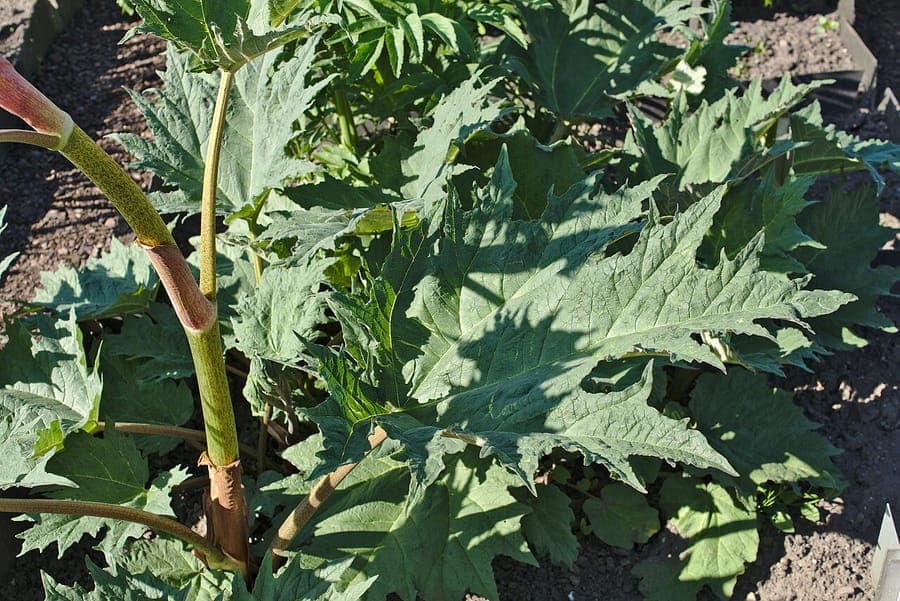
Rheum palmatum, called Chinese rhubarb or medicinal rhubarb, is a spectacular structural plant from the mountains of China. This is not an edible rhubarb but an ornamental producing enormous hand-shaped leaves up to 90 centimeters wide. Perfect for gardeners seeking dramatic texture and scale in their border.
At full maturity, Chinese rhubarb reaches 1.5 to 2 meters tall with impressive clump form. Leaves emerge red or rose-tinted, then turn green as they mature. Bold red flower spikes add Asian elegance to mid-summer gardens.
Appearance and bloom
The leaves are the star of Rheum palmatum. They are deeply lobed to palmately divided, with toothed margins that are strikingly red or purple-red, especially in spring. Leaf undersides are also often purple-flecked or flushed.
From May to June, stiff, columnar flower arrangements rise 30 to 60 centimeters tall, packed with thousands of tiny red flowers. These panicles remain ornamental all season, contrasting beautifully against green foliage. Winged seeds follow bloom.
Ideal location
Choose a sunny to part-shaded spot with good air circulation. Chinese rhubarb grows best in cool, somewhat moist environments. Intense afternoon sun in very hot climates can scorch leaves.
This is a specimen plant - ideal as a focal point in borders, providing height where needed, or beside water features. Plants are large enough to function as architectural specimens. Allow at least 1 to 1.5 meters of space on all sides.
Soil
Chinese rhubarb tolerates a range of soils but thrives in rich, deep, well-drained earth. This demands deep soil preparation - work the ground to at least 45 centimeters deep and incorporate abundant compost or rotted leaf mold.
The plant loves moist but not waterlogged conditions. Soil pH can be neutral to mildly acidic. On very dry sites, supplemental watering is essential. On heavy clay, add sand and compost for better drainage.
Watering
Rheum palmatum is a moisture-lover requiring regular watering, especially during the growing season. In year one, water deeply and frequently - keep soil consistently moist. After establishment, watering can be less frequent, but supply water during dry spells.
Ideally, soil remains moderately moist. In hot summers, weekly watering may be needed. Add mulch to retain moisture. Avoid wetting foliage to prevent disease. Water at the base in early morning.
Diseño gratis
¿Quieres ver Rheum palmatum: complete guide en tu jardín? Crea un diseño gratis ahora.
Pruning
Minimal pruning is needed. Remove dead or damaged leaves as they occur. After flowering, cut seed stalks if you don't want self-seeding. When leaves are storm-damaged, remove them carefully.
Bottom leaves naturally die in autumn - leave them until fully withered, as they protect growth points. From mature plants, gently remove outer leaves without serious disturbance.
Maintenance calendar
March-April: Inspect emerging growth. Water heavily as the plant awakens. Add compost at the base.
May-June: Flowering period. Red panicles appear. Enjoy the display. Water during dry spells.
July-August: Peak leaf growth. Some leaves may scorch in extreme heat and drought. Extra water helps. Add mulch.
September-October: Flowers fade. Seed develops. Foliage turns orange-gold. Continue watering.
November-December: Leaves die back. Seed stalks shatter. Plant smells herbal. Minimal intervention.
January-February: Dormant. Check for disease under fallen leaves. Prepare for spring growth.
Winter hardiness
Rheum palmatum is reliably hardy in temperate to cold climates. The plant tolerates temperatures down to -20 degrees Celsius. In very harsh winters, tender spring growth may be frosted, but roots survive.
In hot, dry climates, the plant may go dormant mid-summer if soil dries, especially in extreme heat.
Companion plants
Rheum palmatum pairs well with:
- Hostas for contrasting leaf shapes
- Astilbes for feathery flowers against coarse foliage
- Polemonium and other background plants
- Large grasses like Miscanthus
- Rodgersias for similar scale
Tall partners:
- Gunnera (even more dramatic)
- Filipendula (meadowsweet)
- Inula magnifica
Underplanting:
- Hosta sieboldii
- Astilboides tabularis
- Petasites (butterbur)
Closing
Chinese rhubarb is for gardeners who love dramatic foliage and scale. This is no modest plant but a living sculpture. It grows superbly in temperate climates with adequate moisture. For Asian-style gardens or anyone wanting imposing leaf forms, this excels. At GardenWorld, we help select large structural plants for professional designs. Discover more at gardenworld.app.
¿Quieres ver Rheum palmatum: complete guide en tu jardín? Crea un diseño gratis ahora.
Sube una foto, elige un estilo y obtén un diseño fotorrealista con lista de plantas en menos de un minuto.
Más de 10.000 jardines diseñados
Sin tarjeta de crédito


Plantas similares
Crosby's wild buckwheat: complete guide
Eriogonum crosbyae
Full guide to growing Eriogonum crosbyae: ideal site, soil, watering, winter hardiness and companion plants for this rare western wild buckwheat.
Spreading buckwheat: complete guide
Eriogonum effusum
Full guide to growing Eriogonum effusum: ideal site, soil, watering, winter hardiness and companion plants for this prairie subshrub from the American West.
Tall woolly buckwheat: complete guide
Eriogonum elatum
Full guide to Eriogonum elatum: siting, soil, watering, pruning and companion plants for this elegant white-flowered buckwheat from the western United States.