
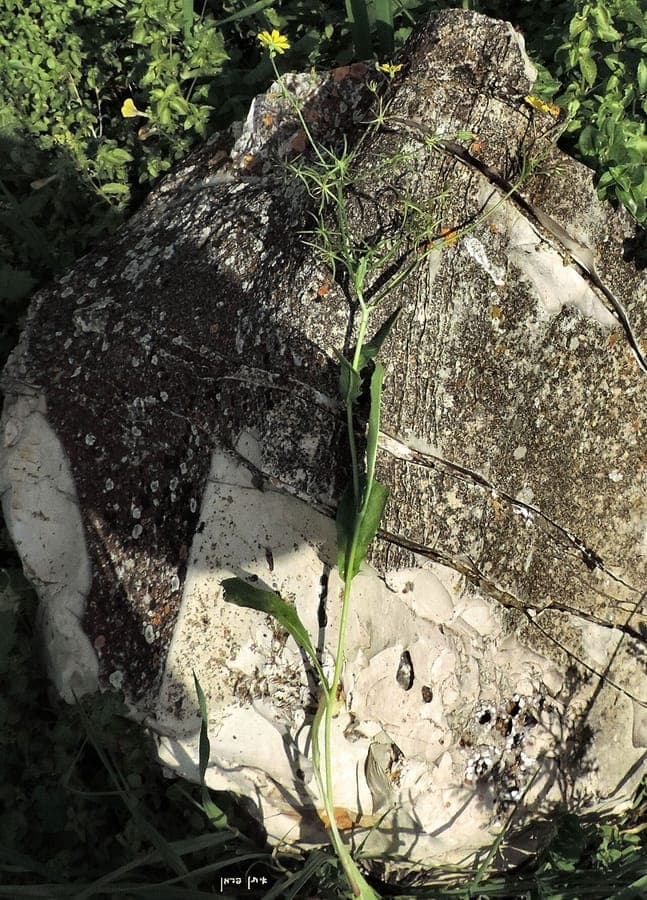
איתן פרמן / CC BY-SA 3.0, via Wikimedia Commons
Rhagadiolus stellatus: complete guide
Rhagadiolus stellatus
¿Quieres ver Rhagadiolus stellatus: complete guide en tu jardín?
1 minuto, sin tarjeta de crédito
Overview
Rhagadiolus stellatus, commonly known as star hawkbit or stellate hawkbit, is an elegant annual herbaceous plant from the Asteraceae family. This Mediterranean crop grows wild across Europe and North Africa. The plant is cultivated both for its yellow daisy flowers and for its young leaves, which are edible with a lightly bitter taste.
Star hawkbit is a dual-purpose plant - attractive yellow flowers for the garden and useful young leaves for the kitchen.
Appearance and bloom
Star hawkbit grows as a slender, branched plant, usually 20 to 40 centimeters tall. Leaves are green, elongated, often slightly rough-textured. Flowers are small yellow daisies (actually composite flowers), about one centimeter across, scattered in small clusters along the stems.
Bloom runs April through June. The flowers are often held short in many cases, especially if young leaves are harvested. The plant can reflower in autumn if reseeded in early stage.
Ideal location
Star hawkbit grows best in full sun to light partial shade. Minimum six hours direct sun daily is ideal. The plant tolerates shade poorly. In warm areas, light afternoon shade can help keep the plant green and palatable longer.
Soil requirements
Star hawkbit grows well in virtually any well-draining soil. It thrives especially in poor, sandy soil with pH around 7.0 to 8.0. Heavy, highly fertile soil can lead to less flowering. The plant prefers Mediterranean growing conditions.
Diseño gratis
¿Quieres ver Rhagadiolus stellatus: complete guide en tu jardín? Crea un diseño gratis ahora.
Watering
Star hawkbit tolerates drought well once established. Water regularly in the young stage (first two weeks) to establish a strong root system. After establishment, watering can be drastically reduced. The plant has low moisture needs.
During extreme dry periods, some water can help, but is not strictly necessary.
Pruning and maintenance
Star hawkbit requires minimal intervention. If you grow it for greens, harvest young leaves while small. This can encourage the plant to produce more foliage. Leave some leaves on the plant for continued growth.
Do not remove spent flowers unless you want more young leaves. The plant can be pulled and removed once warm weather arrives.
Maintenance calendar
April to May: Plant seed outdoors; water regularly until establishment. June to July: Peak growth and bloom; harvest young leaves carefully. August to September: Growth begins to slow; reseed for autumn crop. October: Possible autumn bloom; plant disappears in warmer areas.
Winter hardiness
Rhagadiolus stellatus is an annual plant - not winter-hardy. It cannot survive frost. In cold areas, seed in spring and pull in autumn. In Mediterranean climate zones (USDA 9-11), it can grow longer.
Companion plants
Star hawkbit combines interestingly with other Mediterranean plants:
- Other field plants: cosmos, poppies
- Vegetable plants: lettuce, chard
- Herbs: oregano, marjoram
Closing
Rhagadiolus stellatus is a unique plant combining nutritional value and ornamental worth. Yellow flowers add visual beauty while leaves provide nutrients. Seed is available via online vegetable suppliers. For more Mediterranean vegetable and garden ideas, visit gardenworld.app.
¿Quieres ver Rhagadiolus stellatus: complete guide en tu jardín? Crea un diseño gratis ahora.
Sube una foto, elige un estilo y obtén un diseño fotorrealista con lista de plantas en menos de un minuto.
Más de 10.000 jardines diseñados
Sin tarjeta de crédito


Plantas similares
Calendula stellata: complete guide
Calendula stellata
Complete guide to Calendula stellata, the star-flowered marigold from Sicily: location, soil, watering and companion planting tips.
Korean chrysanthemum: complete guide
Chrysanthemum x rubellum
Chrysanthemum x rubellum is a hardy autumn perennial with single pink to copper flowers from August to November. Care and combinations.
Helianthus divaricatus: complete guide
Helianthus divaricatus
Helianthus divaricatus is a North American woodland sunflower with yellow summer blooms, ideal for naturalistic borders and shady edges.