
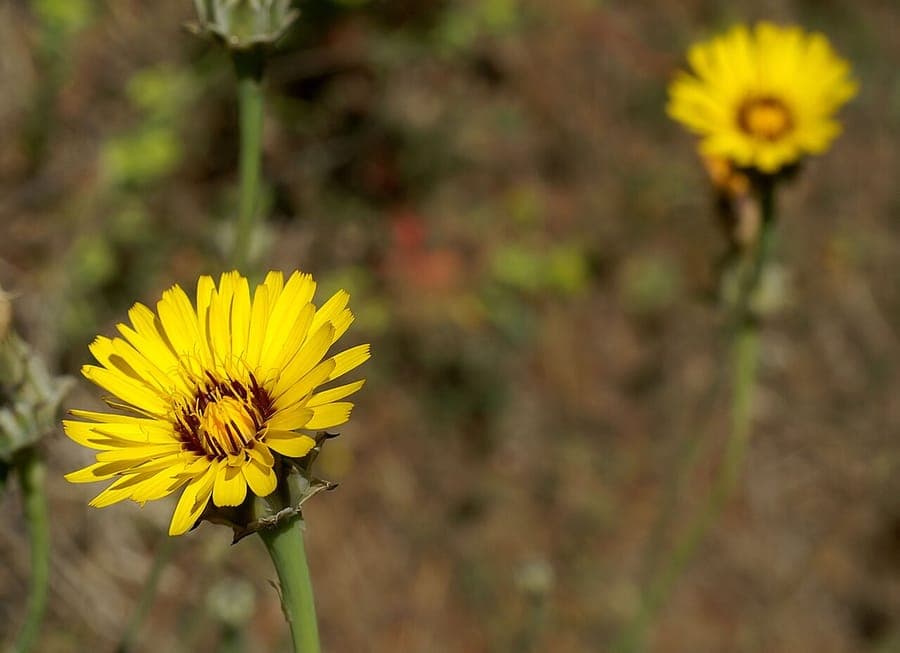
Orchi / CC BY-SA 3.0, via Wikimedia Commons
Reichardia tingitana: complete guide
Reichardia tingitana
¿Quieres ver Reichardia tingitana: complete guide en tu jardín?
1 minuto, sin tarjeta de crédito
Overview
Reichardt tingitana, commonly known as false sow-thistle, is a fascinating biennial or perennial herb native to North Africa, ranging from Morocco to Tanzania. This plant belongs to the Asteraceae family and is celebrated for its striking golden-yellow flowers and distinctive leaf morphology. The common name references a superficial resemblance to true thistles, though it is not a true thistle at all.
The plant grows as a herbaceous species and is valued by gardeners seeking a low-maintenance addition to their landscape. In Europe, it has gradually gained recognition due to its hardiness and attractive appearance, making it an excellent choice for Mediterranean-style gardens.
Appearance and Bloom
Reichardt tingitana reaches heights of 40 to 100 centimeters, forming a dense, upright plant with branched stems. The stems are grayish-green and covered with fine hairs. The leaves are highly distinctive, featuring a deeply lobed, lyre-like shape with prominent wavy margins. The foliage has a rough texture that is immediately noticeable when touched.
The flowers represent one of the plant's greatest assets. They appear in characteristic yellow flower heads typical of the Asteraceae family, measuring 2-4 centimeters in diameter. The flowers are abundant and densely packed in spherical clusters. The blooming period extends from March through October, depending on climate and growing conditions.
After blooming, the plant develops interesting seed heads with feathery fruits dispersed by wind. These architectural elements add an extra dimension to the late-season garden display.
Ideal Location
Reichardt tingitana thrives in full sun, requiring at least six to eight hours of direct sunlight daily for optimal flowering and robust growth. While the plant tolerates partial shade, flowering will be reduced in shadier locations.
The plant prefers warm, dry sites protected from strong winds, which can cause the stems to lodge. In temperate climates across the Netherlands, Germany, and Belgium, it performs best in borders or containers where soil warmth is maximized.
Soil
Reichardt tingitana is remarkably tolerant of various soil types. It thrives in well-draining, moderately fertile soil and accepts both acidic and alkaline conditions. Avoid heavy, waterlogged clay soils, as the plant is susceptible to root rot.
When planting in the garden, amending heavy clay with sand or gravel improves drainage. The plant flourishes in poor, stony soils and does not require much nutrition, making it ideal for difficult garden spots.
Diseño gratis
¿Quieres ver Reichardia tingitana: complete guide en tu jardín? Crea un diseño gratis ahora.
Watering
Reichardt tingitana is drought-tolerant and requires minimal water once established. During the first season after planting, provide regular water until the plant develops a strong root system. Afterwards, supplemental watering can be reduced dramatically.
Under normal conditions with regular rainfall, additional watering is unnecessary. Only during extended dry spells, particularly in summer, may supplemental irrigation be needed. Container-grown plants require more frequent watering due to faster moisture depletion.
Pruning
Reichardt tingitana requires minimal pruning. Remove spent flowers after blooming to maintain neatness and encourage additional blooms. In late winter, cut the plant back to 20-30 centimeters above ground to promote a more compact growth habit.
The plant can be cut to ground level after flowering, which is particularly useful in cold regions. This promotes recovery and ensures stronger growth in the following season.
Maintenance Calendar
Spring: Sow seeds or plant seedlings after the last frost date. Water regularly until the plant is established. Remove weeds around the base.
Summer: Reduce watering as the plant matures. Ensure adequate air circulation. Deadhead spent flowers to encourage continuous blooming.
Autumn: Remove tired flower stems. Leave seed heads standing if you wish to collect seeds or attract birds.
Winter: In mild climates, the plant can remain outdoors. In colder regions, provide protection or overwinter indoors.
Winter Hardiness
Reichardt tingitana exhibits moderate winter hardiness. In mild areas, such as coastal regions of the Netherlands and Belgium, it can survive winter outdoors if positioned in a dry, sunny location. In harsher climates, protection or indoor overwintering is recommended.
In severe winters, many plants will not survive. However, this is not problematic, as the species readily self-seeds. By collecting and storing seeds, you can grow fresh plants the following season.
Companion Plants
Reichardt tingitana pairs beautifully with other drought-tolerant plants such as lavender, sage, and ornamental grasses. It grows well alongside other Mediterranean herbs and complements blue or purple-flowered neighbors perfectly. In mixed borders, it performs best with other annuals and perennials sharing similar water requirements. It excels in containers on sunny patios and balconies.
Closing Remarks
Reichardt tingitana is a reliable plant demanding minimal care. Young plants are readily available at garden centers. The species is also easily grown from seed, offering cost savings. With minimal effort, you will enjoy months of golden blooms and a distinctive addition to your garden. Visit gardenworld.app for more inspiration and detailed guides to Mediterranean herbs. Gardenworld.app also provides comprehensive resources for sustainable gardening practices.
¿Quieres ver Reichardia tingitana: complete guide en tu jardín? Crea un diseño gratis ahora.
Sube una foto, elige un estilo y obtén un diseño fotorrealista con lista de plantas en menos de un minuto.
Más de 10.000 jardines diseñados
Sin tarjeta de crédito


Plantas similares
Calendula stellata: complete guide
Calendula stellata
Complete guide to Calendula stellata, the star-flowered marigold from Sicily: location, soil, watering and companion planting tips.
Korean chrysanthemum: complete guide
Chrysanthemum x rubellum
Chrysanthemum x rubellum is a hardy autumn perennial with single pink to copper flowers from August to November. Care and combinations.
Helianthus divaricatus: complete guide
Helianthus divaricatus
Helianthus divaricatus is a North American woodland sunflower with yellow summer blooms, ideal for naturalistic borders and shady edges.