
Billjones94 / CC BY-SA 4.0, via Wikimedia Commons
Rauvolfia tetraphylla: complete guide
Rauvolfia tetraphylla
¿Quieres ver Rauvolfia tetraphylla: complete guide en tu jardín?
1 minuto, sin tarjeta de crédito
Overview
Rauvolfia tetraphylla, better known as the four-leaf devil-pepper or milkbush, is a fascinating tropical shrub originating from Central and South America. This plant is renowned for its elegant, delicate foliage and its adornment of red, berry-like fruits. In its natural habitat, this plant grows as an understory shrub in tropical forests, where it thrives in filtered light. For European gardeners, this is an excellent houseplant that adds much interest with its glossy leaves and decorative berries.
The plant can reach 1-2 meters tall in indoor conditions and retains its leaves year-round. It responds well to regular care and can last for years as part of your indoor plant collection.
Appearance and bloom
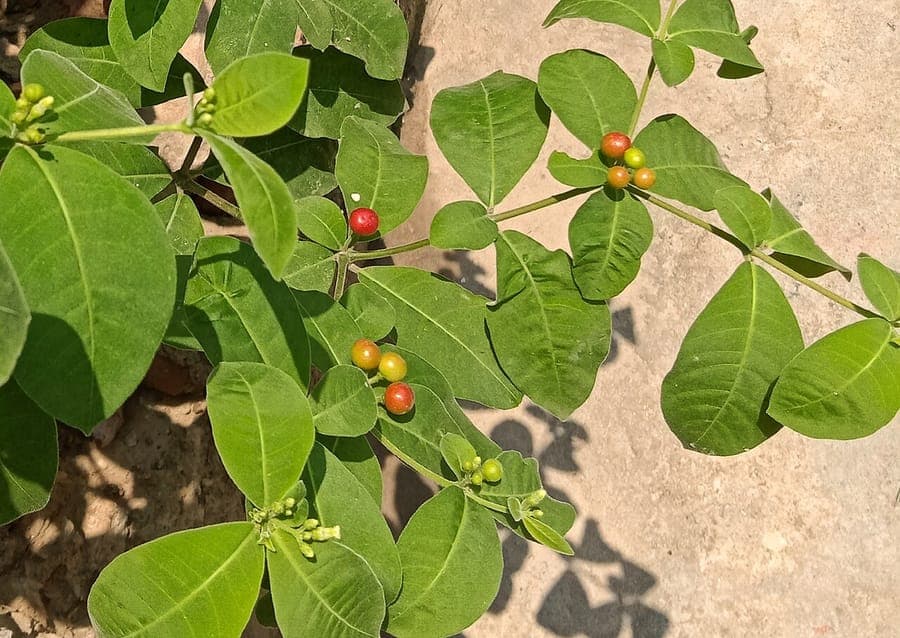
Rauvolfia tetraphylla features characteristic small, opposite leaves that occur in groups of four (hence the name "tetraphylla"). The leaves are glossy green and have a fine texture. The plant produces small, white to pink flowers that are modest but pleasantly fragrant.
After blooming, striking red, round fruits follow - this is the true attraction of this plant. The fruits are about 1 centimeter in diameter and provide ornamental value to the plant for extended periods. Leaves may turn yellow if light levels are insufficient.
Ideal location
Rauvolfia tetraphylla thrives best in a place with bright, filtered light. Do not place it in direct strong sunlight, as this can lead to leaf scorch. A spot by a north or west-facing window is ideal. In living rooms, a spot 1-2 meters from a south-facing window works excellently.
This plant loves stability: avoid drafty locations and sudden temperature fluctuations. A spot in the living room with stable temperatures between 18-25 degrees Celsius is ideal.
Soil
For Rauvolfia tetraphylla, airy, well-draining potting soil is essential. Use a mix of 50% regular universal potting soil and 50% perlite or coarse sand. This prevents water stagnation, which causes root rot. Adding some orchid bark can also help for better drainage.
Ensure drainage holes in the pot. Repot each year in spring into a pot about 2 centimeters larger than the current pot.
Watering
Water when the top centimeter of soil feels dry - approximately once per week during growing season (spring-summer). In fall-winter, water less frequently, only once every 10-14 days. Use lukewarm water, preferably collected rainwater or distilled water.
Avoid water stagnation in the pot. Ensure excess water can drain away. Mist pots regularly, especially in dry winters when heating is on.
Diseño gratis
¿Quieres ver Rauvolfia tetraphylla: complete guide en tu jardín? Crea un diseño gratis ahora.
Pruning and form
Rauvolfia tetraphylla grows fairly compact, but can become leggy. Pinch off the tips regularly to promote fuller, bushier growth. This also stimulates branching and increases flowering and fruiting. Remove yellowed or damaged leaves as needed.
Pruning is best done in spring as the plant comes out of dormancy.
Feeding
Feed monthly during the growing period (April-October) with a balanced houseplant fertilizer with slightly elevated potassium (K) for better fruit setting. Follow the instructions on the fertilizer label. Do not feed in fall-winter.
Alternative: feeding monthly with weak concentration is better than sporadic stronger feeding.
Maintenance calendar
Spring: water more, start feeding, prune if needed, repot in larger pot. Summer: water regularly, feed weekly, mist regularly. Autumn: gradually reduce water, stop feeding in October. Winter: minimal water, no feeding, maintain stable temperature.
Annually: inspect for insects (spider mite, thrips), treat if necessary with insecticidal soap.
Winter hardiness
Rauvolfia tetraphylla is a tropical plant and NOT winter-hardy in the Netherlands or Belgium. This plant should never be exposed to temperatures below 10 degrees Celsius. Ensure it is always kept in a heated room.
In extreme cold, the plant will lose leaves and may die. Protect from heat sources such as radiators - place away from these.
Companion plants
Rauvolfia tetraphylla combines well with other tropical houseplants with similar care requirements: Monstera, Philodendron, Anthurium, or ficus. With its compact growth, it can also look attractive grouped on plant tables or shelving.
Avoid placing directly next to plant-dryers such as cacti, as their water requirements are quite different.
Closing
The four-leaf devil-pepper is an elegant, beautiful houseplant that adds much character to your interior. With regular care and the right growing conditions, this plant will last for years and please you with its glossy foliage and red berries. Purchase specimens from specialized plant nurseries or online plant shippers. Gardenworld.app helps with garden design for terraces and balconies where this plant thrives.
¿Quieres ver Rauvolfia tetraphylla: complete guide en tu jardín? Crea un diseño gratis ahora.
Sube una foto, elige un estilo y obtén un diseño fotorrealista con lista de plantas en menos de un minuto.
Más de 10.000 jardines diseñados
Sin tarjeta de crédito


Plantas similares
Asclepias speciosa: complete guide
Asclepias speciosa
Showy milkweed: striking pink-white flowers, fragrant blooms. Essential monarch butterfly host plant.
Plumeria obtusa: complete guide
Plumeria obtusa
Discover the Singapore graveyard flower: an exotic evergreen with mesmerizing white blooms and exquisite fragrance. Expert cultivation, care, and maintenance tips.
Wrightia arborea: complete guide
Wrightia arborea
Wrightia arborea, known as doodhi, is an elegant tree from South Asia with delicate white flowers. Discover how to cultivate this exotic plant.