
Forestowlet / CC0, via Wikimedia Commons
Snakeroot: complete guide
Rauvolfia serpentina
¿Quieres ver Snakeroot: complete guide en tu jardín?
1 minuto, sin tarjeta de crédito
Overview
Rauvolfia serpentina, commonly known as snakeroot, is a fascinating tropical plant from the Indian subcontinent and Southeast Asia. This plant from the Apocynaceae family has a long history in traditional Indian medicine and Ayurveda. The plant contains important alkaloids and is still studied for medicinal value.
This is a toxic plant and should only be handled by experts. However, the plant is worthy of respect for its botanical interest and historical significance.
Appearance and bloom
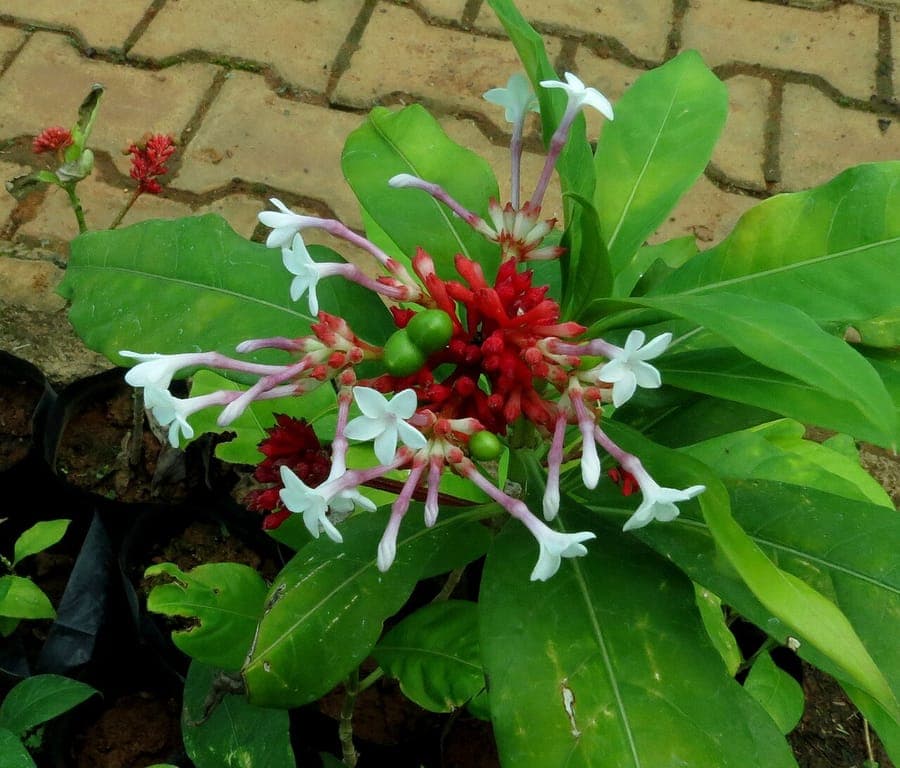
Rauvolfia serpentina is a small to medium-sized shrub that grows to approximately 60-100 centimeters in natural habitats. The leaves are elliptic to lanceolate, dark green, and glossy. The leaves grow in whorls around the stem, characteristic of this species.
The flowers are small, white to pink flowers that appear in clusters. These flowers bloom primarily in summer and autumn. After blooming, characteristic red berries form, about the size of a pea.
The entire plant contains toxic alkaloids, especially in the roots and leaves.
Ideal location
In tropical climates, this plant grows in semi-shade under trees in moist forest areas. The plant prefers indirect, filtered sunlight. In temperate climates, the plant can only be cultivated in heated greenhouses.
Protection from strong wind is helpful, although the plant is relatively robust.
Soil
Rauvolfia serpentina grows well on nutrient-rich, well-draining soil with high organic matter content. In natural habitats, the plant grows in humus-rich forest soil. pH between 6 to 7 is ideal.
Good drainage is essential to prevent root rot.
Watering
This plant loves regular, even moisture, especially during the growing season. Waterlogging must, however, be avoided. Mulching around the plant helps moisture retention and temperature regulation.
During dry periods, supplemental water is helpful, but the plant tolerates some drought.
Diseño gratis
¿Quieres ver Snakeroot: complete guide en tu jardín? Crea un diseño gratis ahora.
Pruning
This plant requires minimal pruning. Remove only dead or damaged branches carefully. The plant can be shaped through light pruning in spring.
Due to toxicity, be careful after contact with sap - wash hands after every handling.
Maintenance calendar
Spring (March-May): Growing season starts, water regularly, can apply light formative pruning.
Summer (June-September): Peak growing season, water regularly, monitor water quality and drainage.
Autumn (October-November): Blooming peaks, growth slows gradually.
Winter (December-February): Rest period, minimal watering, protect from cold.
Winter hardiness
Rauvolfia serpentina is cold-sensitive and cannot be grown outdoors outside tropical and subtropical climates. Temperatures below 10 degrees Celsius can be harmful. This plant is thus reserved for heat lovers and greenhouse owners.
Companion plants
In tropical settings, this plant can carefully be combined with:
- Other shade-loving tropical plants
- Ferns - similar moisture preference
- Orchids - tropical atmosphere, indirect light
- Alocasia - interesting foliage contrast
Due to toxicity, place this plant in safe locations away from children and animals.
Closing
Rauvolfia serpentina is a fascinating but toxic plant that deserves respect for its historical and botanical significance. With its characteristic red fruits and cultural heritage, this plant forms a unique addition for connoisseurs of exotic and medicinal plants.
Due to toxicity and special care requirements, consult only specialized tropical plant nurseries. Ask for advice on gardenworld.app for tropical garden designs with carefully selected plants.
WARNING: This plant contains toxic substances and should not be used casually. Always consult medical professionals before considering medicinal applications.
¿Quieres ver Snakeroot: complete guide en tu jardín? Crea un diseño gratis ahora.
Sube una foto, elige un estilo y obtén un diseño fotorrealista con lista de plantas en menos de un minuto.
Más de 10.000 jardines diseñados
Sin tarjeta de crédito


Plantas similares
Asclepias speciosa: complete guide
Asclepias speciosa
Showy milkweed: striking pink-white flowers, fragrant blooms. Essential monarch butterfly host plant.
Plumeria obtusa: complete guide
Plumeria obtusa
Discover the Singapore graveyard flower: an exotic evergreen with mesmerizing white blooms and exquisite fragrance. Expert cultivation, care, and maintenance tips.
Wrightia arborea: complete guide
Wrightia arborea
Wrightia arborea, known as doodhi, is an elegant tree from South Asia with delicate white flowers. Discover how to cultivate this exotic plant.