
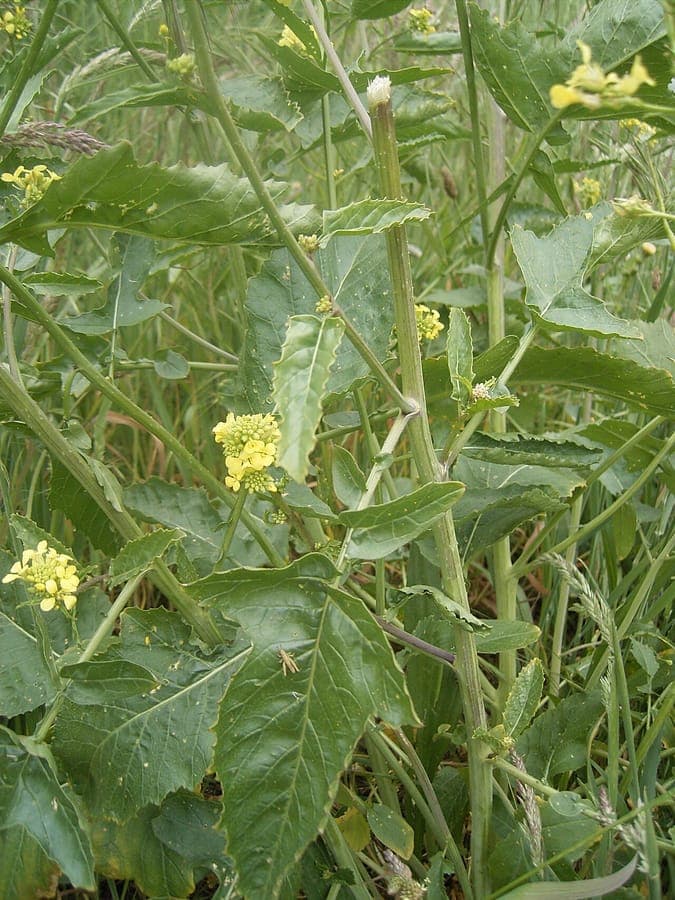
Me / Public domain, via Wikimedia Commons
Rapistrum rugosum: complete guide
Rapistrum rugosum
¿Quieres ver Rapistrum rugosum: complete guide en tu jardín?
1 minuto, sin tarjeta de crédito
Overview
Rapistrum rugosum, commonly called wrinkled-fruited radish or ball-turnip, is a fascinating wild plant from the Brassicaceae family. This hardy species naturally inhabits southern European and Mediterranean coasts. The plant is particularly notable for its characteristic wrinkled, ball-shaped seed pods which are visually striking.
The plant is extremely robust and adaptable to various climates and soil types. In modern gardens it is valued as an interesting and ecological addition to wild plantings and dry gardens. It attracts pollinators and fills ecological niches effectively.
Appearance and Blooming
Wrinkled-fruited radish reaches heights between 30 and 100 centimeters depending on growing conditions. The plant grows upright with hairy stems. The leaves are highly diverse - lower leaves are rough and finely lobed, upper leaves are much simpler and linear.
Flowers are yellow and small, approximately 0.5 centimeters across, arranged in small clusters. They appear April through July. After blooming, very striking fruits develop that are spherical or oval with pronounced wrinkles and segmentation. These fruits are highly characteristic and aid in plant identification.
Ideal Location
Wrinkled-fruited radish grows best in full sun. Minimum 6 hours direct sunlight daily is necessary for optimal growth and flowering. The plant tolerates partial shade but produces fewer flowers in heavier shade.
This plant is perfect for warm, dry locations. Use it on south-facing borders, against walls, and in poor soil areas. It works wonderfully in Mediterranean, xeriscape, and rock gardens.
Soil Requirements
Rapistrum rugosum grows best in dry, well-draining soil. It tolerates poor soil extremely well and actually requires no supplemental feeding. The plant tolerates sand, gravel, clay, and chalky soils. Very wet, compacted soil will lead to disease.
Add gravel or sand if your soil is heavy and clayey. The plant grows in neutral to acidic pH but also tolerates alkaline soils.
Diseño gratis
¿Quieres ver Rapistrum rugosum: complete guide en tu jardín? Crea un diseño gratis ahora.
Watering
After establishment, wrinkled-fruited radish tolerates drought excellently. Regular watering is only necessary during extreme drought or very hot periods. Excessive watering can lead to root rot.
In Mediterranean climates, natural rainfall will usually suffice. In regions with less rain, water during the growing season until the plant is well-established.
Pruning
This plant requires very minimal pruning. Deadhead spent flowers to encourage new blooming. Remove dead or damaged stems as needed. After seed maturation you can cut back the entire plant to ground level - it will regrow from seed next season.
Pruning is actually rarely necessary if you allow the plant its natural form.
Maintenance Calendar
March-April: Growing season begins. Light trimming possible.
April-July: Flowering period. Remove spent flowers. Minimal watering in extreme drought.
July-October: Seed formation. Allow fruits to mature on plant.
October-November: Seed naturally disperses. New seeds begin germinating.
December-February: Rest period. Plant reduces growth activity.
Winter Hardiness
Rapistrum rugosum is moderately hardy in northern zones. It tolerates temperatures down to approximately -5 to -10 degrees Celsius, depending on variety. In very cold areas you can save seed and resow next season.
In British and Dutch gardens the plant usually overwinters outdoors in mild years. In severe winters it may die, requiring regeneration from seed.
Companion Plants
Combine Rapistrum rugosum with other drought-loving species like Lavender, Santolina, and other Mediterranean herbs. In wild plantings it combines well with Nigella, Purple Sage, and other self-sowing plants. This plant combination creates attractive wild borders.
Also add marginal plants in larger areas.
Closing Thoughts
Rapistrum rugosum offers interesting form, texture, and ecological benefits. It is a fascinating plant for dry gardens and Mediterranean landscapes. The striking fruits make it botanically interesting throughout much of the year.
Buy seed from garden centres for sustainable, low-maintenance dry plants. Discover more Mediterranean species on gardenworld.app. Read our tips on gardenworld.app for dry garden design.
¿Quieres ver Rapistrum rugosum: complete guide en tu jardín? Crea un diseño gratis ahora.
Sube una foto, elige un estilo y obtén un diseño fotorrealista con lista de plantas en menos de un minuto.
Más de 10.000 jardines diseñados
Sin tarjeta de crédito


Plantas similares
Brassica cretica: complete guide
Brassica cretica
Brassica cretica, the Cretan cabbage, grows wild on Aegean cliffs. Discover how to grow this drought-tolerant, yellow-flowered Mediterranean perennial.
Corsican cabbage: complete guide
Brassica insularis
Corsican cabbage is a rare Mediterranean rock cabbage with white flowers and blue-green leaves. Location, soil and winter protection.
Prostrate cabbage: complete guide
Brassica procumbens
Prostrate cabbage is a creeping North African cliff plant with yellow flowers. Discover location, soil type and winter protection.