
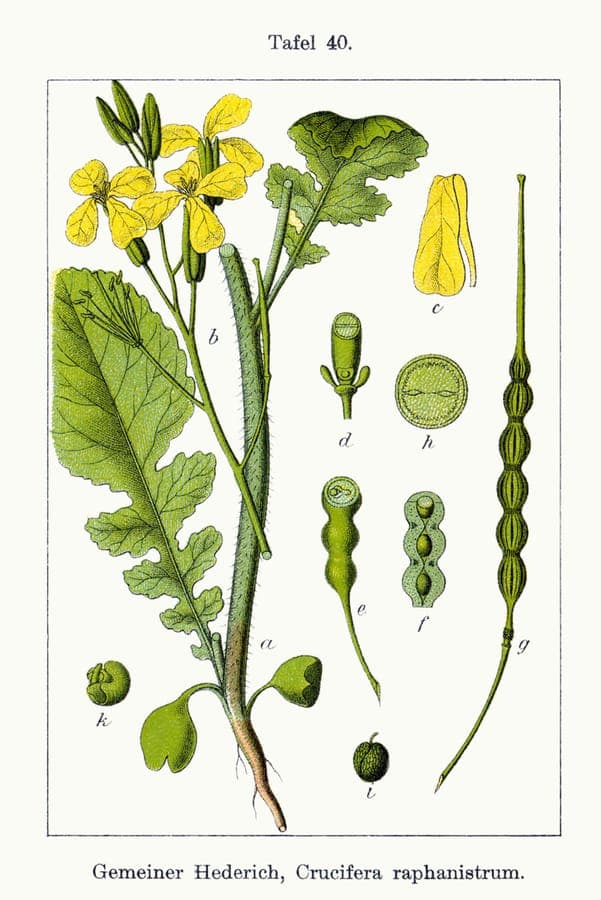
Jacob Sturm / Public domain, via Wikimedia Commons
Raphanus raphanistrum: complete guide
Raphanus raphanistrum
¿Quieres ver Raphanus raphanistrum: complete guide en tu jardín?
1 minuto, sin tarjeta de crédito
Overview
Raphanus raphanistrum, commonly known as wild radish or sea radish, is a fascinating wild mustard family plant naturally found along European coasts. This robust species flowers early in spring and attracts numerous pollinators. The sea radish is renowned for thriving in salty, poor soils where most garden plants struggle.
In modern gardens, wild radish is increasingly popular in wildflower meadows and coastal landscapes. The plant provides excellent nutrition for wild bees and butterflies. It grows quickly and adds natural charm to borders and wild plantings.
Appearance and Blooming
Wild radish reaches heights of 30 to 80 centimeters depending on growing conditions. The plant grows upright with sturdy stems and rough, slightly hairy foliage. Lower leaves are deeply lobed, almost feathery, while upper leaves are much simpler.
Flowers appear April through June in clusters at stem ends. They are white, pale pink, or purple, usually with dark veining. Each flower measures approximately 1 to 1.5 centimeters across. Following blooming, distinctive elongated seed pods develop, varying greatly - either smooth or wrinkled with pronounced segments.
Ideal Location
Wild radish grows best in full sun. At least 6 hours direct sunlight daily is essential. The plant tolerates partial shade and can grow in dappled light. It thrives in coastal areas, rocky sites, and poor soil locations. Use it in wildflower meadows for visual contrast.
This species excels in xeriscaping and water-wise gardens. It thrives in saline environments where other plants cannot survive.
Soil Requirements
Raphanus raphanistrum is not particular about soil types. The plant actually grows best in poor, sandy or clay soils. It tolerates salt exceptionally well, making it ideal for coastal gardens. Poor drainage and compacted soil can cause root problems.
Add sand or gravel if your soil is very clayey. The plant tolerates acidic to neutral pH. Adding fertility can produce excessive growth at the expense of robust, sturdy plants.
Diseño gratis
¿Quieres ver Raphanus raphanistrum: complete guide en tu jardín? Crea un diseño gratis ahora.
Watering
During establishment, water regularly, especially through the first growing season. Once established, the plant tolerates drought excellently. In normal, average conditions, supplemental water is rarely needed.
Excessive watering can lead to fungal issues. Watch for root rot in wet winters. During rainy periods, supplemental water is usually unnecessary.
Pruning
Wild radish requires minimal pruning. Deadhead spent flower clusters after blooming to encourage new flowers. This also significantly extends the flowering period. Remove dead leaves as needed.
If you want to prevent self-seeding, cut all seed pods before they mature. Otherwise the plant will abundantly self-sow.
Maintenance Calendar
March-April: Sow seeds directly in soil. Or plant seedlings if you saved seeds from last year.
April-June: Flowering period. Water regularly. Remove spent flowers.
June-July: Seed formation. Allow some pods to mature for next season.
August-October: Plant growth slows. Harvest mature seeds.
November-February: Rest period. Plant is annual or biennial so disappears after seed production.
Winter Hardiness
Raphanus raphanistrum is not winter hardy in severe climates. It is an annual or biennial plant that typically sows in late winter or very early spring. In wild conditions it usually germinates after first frost.
In British gardens you'll get best results by direct sowing seed in April-May or August-October. Allow seed to fully mature and fall for next season's plants.
Companion Plants
Combine Raphanus raphanistrum with other low-growing wildflowers like Chamomile, Corncockle, and Field Poppies. This combination creates an authentic wildflower meadow. Add grasses like Corn Cockle for texture.
In coastal gardens it combines well with Sea Thrift, Sea Pink, and other salt-tolerant species.
Closing Thoughts
Raphanus raphanistrum is a fascinating addition for gardens seeking wild, natural appearance. It requires minimal care and naturally feeds pollinators. Buy seeds from garden centres for reliable spring color.
For more wildflower tips visit gardenworld.app. Discover more native species on gardenworld.app.
¿Quieres ver Raphanus raphanistrum: complete guide en tu jardín? Crea un diseño gratis ahora.
Sube una foto, elige un estilo y obtén un diseño fotorrealista con lista de plantas en menos de un minuto.
Más de 10.000 jardines diseñados
Sin tarjeta de crédito


Plantas similares
Brassica cretica: complete guide
Brassica cretica
Brassica cretica, the Cretan cabbage, grows wild on Aegean cliffs. Discover how to grow this drought-tolerant, yellow-flowered Mediterranean perennial.
Corsican cabbage: complete guide
Brassica insularis
Corsican cabbage is a rare Mediterranean rock cabbage with white flowers and blue-green leaves. Location, soil and winter protection.
Prostrate cabbage: complete guide
Brassica procumbens
Prostrate cabbage is a creeping North African cliff plant with yellow flowers. Discover location, soil type and winter protection.