
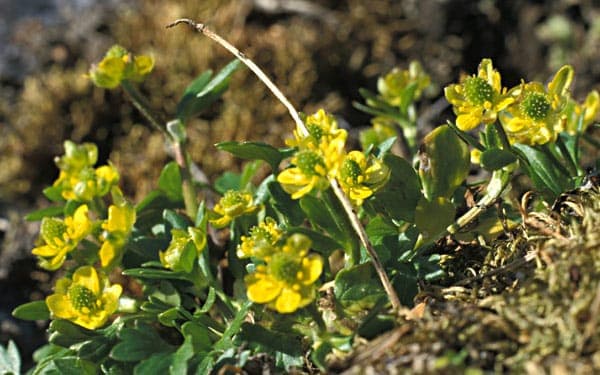
Wikimedia Commons / CC BY-SA 3.0, via Wikimedia Commons
Pygmy buttercup: complete guide
Ranunculus pygmaeus
¿Quieres ver Pygmy buttercup: complete guide en tu jardín?
1 minuto, sin tarjeta de crédito
Overview
Pygmy buttercup (Ranunculus pygmaeus) is a tiny alpine perennial native to subarctic and alpine regions of Eurasia and North America. This extraordinary plant is known for its minuscule stature and delicate yellow flowers. Standing at only a few centimeters tall, pygmy buttercup is ideal for rock gardens, alpine troughs, and trough gardening compositions where it can serve as a captivating focal point.
Appearance and bloom
Pygmy buttercup is extremely compact, typically no more than 5-15 centimeters tall. The plant produces small, glossy dark green leaves grouped at the base. Flowers are bright yellow and appear in July and August, making this plant particularly valuable late in the season. Despite its minuscule size, these blooms have all the radiance of their larger relatives.
Ideal location
Pygmy buttercup thrives in full sun to partial shade in extremely well-draining alpine situations. This plant requires cool conditions and prefers high mountain sites where temperatures remain cooler. In gardens, a spot in full sun with morning dew moisture protection is ideal. Shield from intense heat in southern regions with light afternoon shade. This plant will not persist in warm, humid lowland conditions.
Soil
Extremely well-draining soil is absolutely essential. Pygmy buttercup prefers stony, mineral-rich alpine soil. Mix generous amounts of stone material into potting mix, including coarse grit and small gravel. pH should be neutral to slightly alkaline. In alpine borders, work mineral sand and gravel deep in. This plant is sensitive to moisture buildup, so optimal drainage is paramount. Growing in sand-grit mix pots is often more successful than in ground.
Watering
Keep soil lightly moist but never wet. Water carefully and sparingly. Better under-watered than over-watered. This mountain dweller is adapted to dry alpine conditions and does not tolerate waterlogged soil. During growing period, give water when soil feels dry. Reduce watering drastically in winter. Do not mulch heavily around the plant; stone mulch is better than organic mulch which can retain moisture.
Diseño gratis
¿Quieres ver Pygmy buttercup: complete guide en tu jardín? Crea un diseño gratis ahora.
Pruning
Minimal to no pruning required. Remove only dead leaf material. Seed heads can be removed to keep the plant compact, though seed production is interesting to observe. Because the plant is so small, work carefully to avoid damage. The plant will organize itself into a dense cushion.
Maintenance calendar
Spring: Check drainage. Summer: Ensure adequate moisture without excess. Let flowers proceed. Autumn: Reduce moisture significantly. Winter: Minimal care. The plant rests in winter. In early spring, seed can be rippled and stratified under cool conditions. This is for advanced enthusiasts.
Winter hardiness
Pygmy buttercup is extremely hardy in its natural range, adapted to extreme cold. In cultivation, sheltered locations help. In regions with heavy snow, snow protects the plant. In less snowy areas, extra grit mulch or alpine frame protection can help. Good drainage prevents icing problems that could split the plant.
Companion plants
Pygmy buttercup combines well with other miniature alpine plants. Plant together with dwarf cushion phlox, tiny roses and alpine forget-me-nots. Saxifraga and small sedums add texture. In troughs, group with tiny conifers and stony rock plants. Ensure companions have similar drainage requirements. Space plants out to avoid competition.
Conclusion
Pygmy buttercup is a true precious gem for dedicated alpine gardeners. This minuscule plant proves that beauty comes in all sizes. With proper drainage and respect for its alpine nature, you will be privileged to grow this fascinating plant. Visit gardenworld.app for inspiration on alpine garden design and miniature plants. More information about pygmy buttercup and alpine collections at gardenworld.app.
¿Quieres ver Pygmy buttercup: complete guide en tu jardín? Crea un diseño gratis ahora.
Sube una foto, elige un estilo y obtén un diseño fotorrealista con lista de plantas en menos de un minuto.
Más de 10.000 jardines diseñados
Sin tarjeta de crédito


Plantas similares
Drummond's anemone: complete guide
Anemone drummondii
Discover Drummond's anemone (Anemone drummondii): a silvery-grey mountain plant for cool rock gardens and alpine troughs.
Korean clematis: complete guide
Clematis serratifolia
Clematis serratifolia is a hardy climber with fragrant yellow bell flowers in August-September. Pruning group 3, location and care tips.
Aquilegia brevistyla: complete guide
Aquilegia brevistyla
Discover Aquilegia brevistyla, the elegant North American columbine. Growing tips, shade tolerance, and design ideas for woodland and shadowed gardens.