
Wikimedia Commons / CC BY-SA 3.0, via Wikimedia Commons
Meadow Buttercup: complete guide
Ranunculus polyanthemos
¿Quieres ver Meadow Buttercup: complete guide en tu jardín?
1 minuto, sin tarjeta de crédito
Overview
Ranunculus polyanthemos, known as Meadow Buttercup or Polyanthemos Buttercup, is a charming, golden-yellow wildflower found across much of Europe, from the Atlantic to the Russian Far East and Iran. This elegant ranunculus forms a valuable addition to natural meadows, wildflower borders, and naturalistic gardens. With its numerous yellow flowers and fine leaf structure, it creates a cheerful yellow display throughout European temperate zones. This is a native plant that should be far more common in gardens than it currently is.
Appearance and bloom cycle
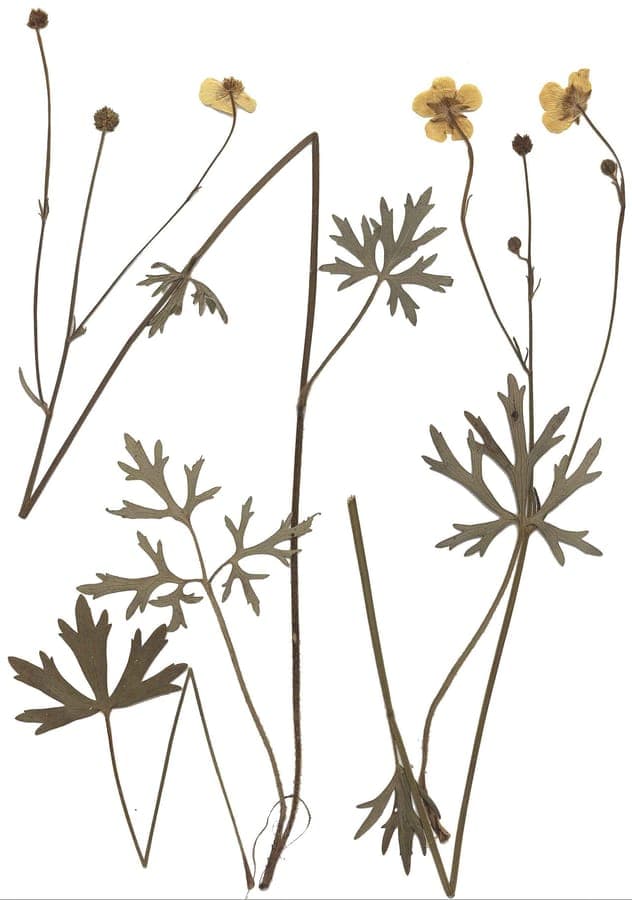
Meadow Buttercup grows as a compact, tufted plant, usually 20-40 cm tall, with very finely divided leaves resembling fern fronds. Basal leaves are deeply divided, sometimes almost to the base, while stem leaves gradually become less divided as they ascend. Flowers appear abundantly - hence the scientific name polyanthemos (many flowers) - from June to August, as glossy golden buttercups roughly 1-1.5 cm across, with the characteristic satiny sheen of ranunculus blossoms. The plant dies back in late autumn after seed set.
Ideal location
Meadow Buttercup thrives in full sun to partial shade, preferring open, well-lit sites. It grows excellently in natural meadows, moist grasslands, borders, and even ground-cover situations provided there's sufficient light. The species tolerates lightly shaded environments but grows far better in full sun. It's hardy to USDA zone 5 across much of Europe and thrives in all temperate European climates.
Soil requirements
Meadow Buttercup grows best in neutral to slightly alkaline soils (pH 7.0 to 7.5), though moderate acidity (pH 6.5) is also acceptable. The plant prefers moderately fertile soil; excess nitrogen stimulates leaf growth at the expense of flowers. Soil should be regularly moist, especially during the growing period, but waterlogging is not critical. It tolerates drought better than many other buttercups. Well-draining soil is preferable to heavy clay, but the plant grows equally well in typical meadow and grassland conditions.
Diseño gratis
¿Quieres ver Meadow Buttercup: complete guide en tu jardín? Crea un diseño gratis ahora.
Watering
Once established, Meadow Buttercup requires minimal supplemental water. During the growing period (May-June), regular moisture is ideal to promote flowering, but standard rainfall usually suffices. In dry spells, spraying helps, especially for young plants and seedlings. Waterlogging is undesirable - this plant grows better in moderately moist than wet soils.
Pruning
Meadow Buttercup requires no pruning. After flowering (August-September), you may remove withered stems and harvest seeds before the plant retreats. Foliage may remain through the entire season - it supports seed production. Remove only dead leaves in spring before new growth starts.
Maintenance calendar
April: Emergence of young seedlings from seed or growth buds. May-June: Growth and flowering, watch for heavy rain damaging blossoms. July-August: Full bloom, seed set begins. September: Seeds ripen, seed collection. October-March: Plant is dormant, watch for snow and frost damage.
Winter hardiness
Meadow Buttercup is completely winter-hardy throughout Europe, down to USDA zone 5. The plant is semi-evergreen and may retain some foliage in mild winters. In severe frosts, outer leaves may die back, but the plant will always regenerate from seed or underground parts in spring.
Companion plants
Excellent companions in natural meadows are other yellow wildflowers such as Hypericum (St. John's Wort), Achillea (yarrow), Salvia (sage species), and various native grasses. In more stylized borders, it pairs beautifully with purple violets, white Antennaria (pussy-toes), and blue forget-me-nots. For wildlife habitat, group with other seed-producing wildflowers.
Closing remarks
Meadow Buttercup is an easy-to-grow, native wildflower that every European garden should contain. It offers incalculable benefits to bees and butterflies, creates natural, cheerful color additions, and demands virtually no maintenance. Seed is available from wildflower suppliers and plant nurseries; sow directly into grassland in October-November for natural establishment. For more details on wildflower gardening and native European plants, visit gardenworld.app. Meadow Buttercup is the perfect tool for bringing European nature home.
¿Quieres ver Meadow Buttercup: complete guide en tu jardín? Crea un diseño gratis ahora.
Sube una foto, elige un estilo y obtén un diseño fotorrealista con lista de plantas en menos de un minuto.
Más de 10.000 jardines diseñados
Sin tarjeta de crédito


Plantas similares
Drummond's anemone: complete guide
Anemone drummondii
Discover Drummond's anemone (Anemone drummondii): a silvery-grey mountain plant for cool rock gardens and alpine troughs.
Korean clematis: complete guide
Clematis serratifolia
Clematis serratifolia is a hardy climber with fragrant yellow bell flowers in August-September. Pruning group 3, location and care tips.
Aquilegia brevistyla: complete guide
Aquilegia brevistyla
Discover Aquilegia brevistyla, the elegant North American columbine. Growing tips, shade tolerance, and design ideas for woodland and shadowed gardens.