
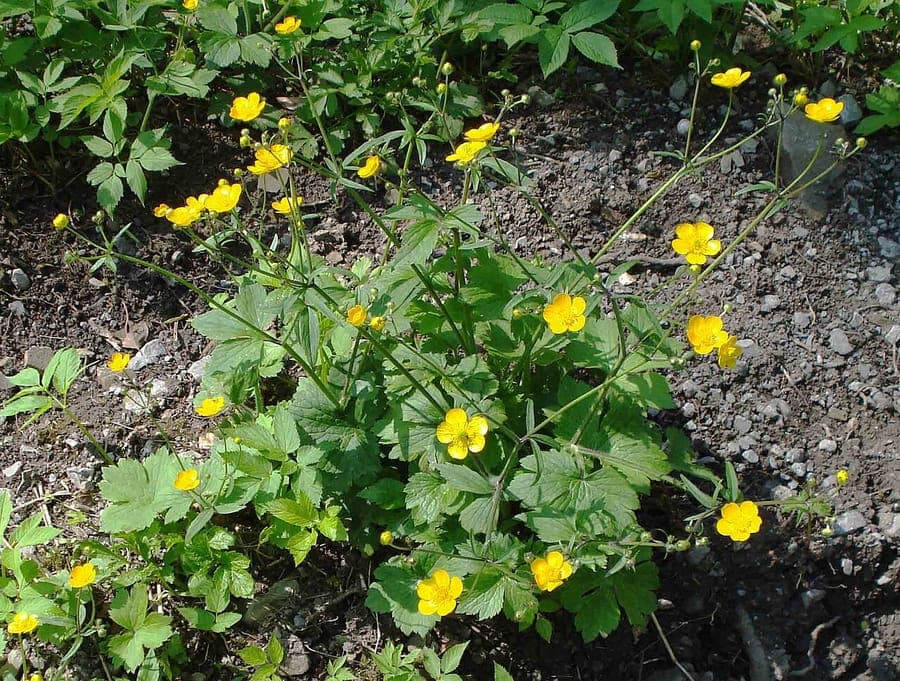
Fornax / CC BY-SA 3.0, via Wikimedia Commons
Downy Buttercup (Ranunculus lanuginosus): complete guide
Ranunculus lanuginosus
¿Quieres ver Downy Buttercup (Ranunculus lanuginosus): complete guide en tu jardín?
1 minuto, sin tarjeta de crédito
Overview
The downy buttercup (Ranunculus lanuginosus) is a charming European perennial from the Ranunculaceae family, known for its bright yellow flowers and hairy foliage. This plant grows naturally in moist high meadows and alpine pastures from central to southeastern Europe, where it has adapted to cooler, more temperate climates. At just 8 to 16 inches tall, this is a compact herbaceous plant ideal for front borders, alpine gardens, and moist rock gardens.
The name "lanuginosus" refers to the characteristic soft hairiness that covers the leaves and stems of this plant, giving it a fluffy, almost woolly texture. This distinctive feature, combined with the bright yellow, glossy-shine flowers, makes the downy buttercup a captivating addition to alpine and moist gardens. For gardeners seeking yellow in moist soils, this is a plant you cannot fault.
Appearance and Bloom
The downy buttercup displays its most distinctive features in leaf and flower. The foliage is deeply divided into narrow, lance-shaped segments densely covered with soft, silvery hairs that give the leaves a grayish-green to silvery appearance. This hairy foliage forms the base of the plant and gives a very delicate, fine-textured look.
From May to July, numerous glossy yellow flowers appear on thin stems above the foliage. These flowers are approximately 0.6 inches in diameter and have the characteristic shiny, lacquer-like gloss of buttercups, as if made of polished varnish. These flowers are very attractive to bees and butterflies, ensuring your garden is full of life. After flowering, the plant forms small, hairy seed heads that are interesting for visual texture.
Ideal Location
The downy buttercup grows best in half-shade to full sun, although it appreciates some shade in very warm climates. This plant thrives ideally in locations with at least three to four hours of direct sunlight daily, but can also flourish in light woodland shade. Provide adequate ventilation around the plant, as this promotes dry foliage and healthy growth.
Soil
The downy buttercup is very moisture-loving and grows best in moist to wet soils with good organic matter content. This is not a plant for dry soils - it feels at home in marshes, woodland landscapes, and moist alpine meadows. The ideal soil contains plenty of humus, is well-draining, and retains moisture without waterlogging.
Adaptability to pH is good; this plant grows well in both slightly acidic and neutral soils with pH between 6.0 and 7.5.
Diseño gratis
¿Quieres ver Downy Buttercup (Ranunculus lanuginosus): complete guide en tu jardín? Crea un diseño gratis ahora.
Watering
The downy buttercup is very moisture-loving and requires regular watering during the growing season. Ensure the soil never completely dries out, especially not in summer when the plant is flowering. In natural conditions, this plant grows in moist high meadows where water is always available.
During drought, this plant can wilt and flowering may diminish. Water deeply but not waterlogged; this plant prefers moist soils but does not tolerate permanently stagnant water.
Pruning
The downy buttercup requires minimal pruning during the growing season. Remove faded flowers to encourage further blooming and keep the plant neat. After flowering, when foliage begins to die back, the plant can be cut down to ground level to make room for new growth next season.
Maintenance Calendar
Spring (March-May): New growth appears. Ensure soil is moist. Flowering begins by May. Enjoy the first yellow flowers.
Summer (June-August): Peak flowering. Keep soil moist during dry periods. Remove faded flowers regularly.
Autumn (September-October): Flowering ends. Foliage begins to die back. Remove dead material.
Winter (November-February): Plant rests. Plant lies dormant below ground. No winter protection required in mild areas.
Winter Hardiness
The downy buttercup is hardy down to USDA zone 6b (-10 degrees Fahrenheit) and can survive many European winters. In very harsh winters, some individuals may not survive, so add mulch in very cold regions. The plant survives winter through underground rhizomes that remain below the frost line.
Companion Plants
The downy buttercup forms beautiful combinations with:
- Other alpines: alpine wall-cress, saxifrage, and yellow mountain avens for lower front border interest
- Silver-leaved plants: silver dollar plant, artemisia, and sage for foliage texture contrast
- Blue flowers: forget-me-nots, veronicas, and alpine flax for color contrast
- Moisture-loving ground covers: water mint, marsh marigold, and sphagnum moss for added moisture
Conclusion
The downy buttercup is an unforgettable plant for moist, alpine gardens where normal flowers give up. With its bright yellow, hairy foliage, and moisture-loving maintenance-friendly nature, this plant delivers beauty year after year. For gardeners in wet areas or lovers of alpine plants, the downy buttercup is an indispensable addition.
Looking for a downy buttercup? Visit specialized alpine plant nurseries or online suppliers. Local garden centers sometimes offer alpine selections. More information can be found at gardenworld.app, your destination for complete garden solutions.
¿Quieres ver Downy Buttercup (Ranunculus lanuginosus): complete guide en tu jardín? Crea un diseño gratis ahora.
Sube una foto, elige un estilo y obtén un diseño fotorrealista con lista de plantas en menos de un minuto.
Más de 10.000 jardines diseñados
Sin tarjeta de crédito


Plantas similares
Drummond's anemone: complete guide
Anemone drummondii
Discover Drummond's anemone (Anemone drummondii): a silvery-grey mountain plant for cool rock gardens and alpine troughs.
Korean clematis: complete guide
Clematis serratifolia
Clematis serratifolia is a hardy climber with fragrant yellow bell flowers in August-September. Pruning group 3, location and care tips.
Aquilegia brevistyla: complete guide
Aquilegia brevistyla
Discover Aquilegia brevistyla, the elegant North American columbine. Growing tips, shade tolerance, and design ideas for woodland and shadowed gardens.