
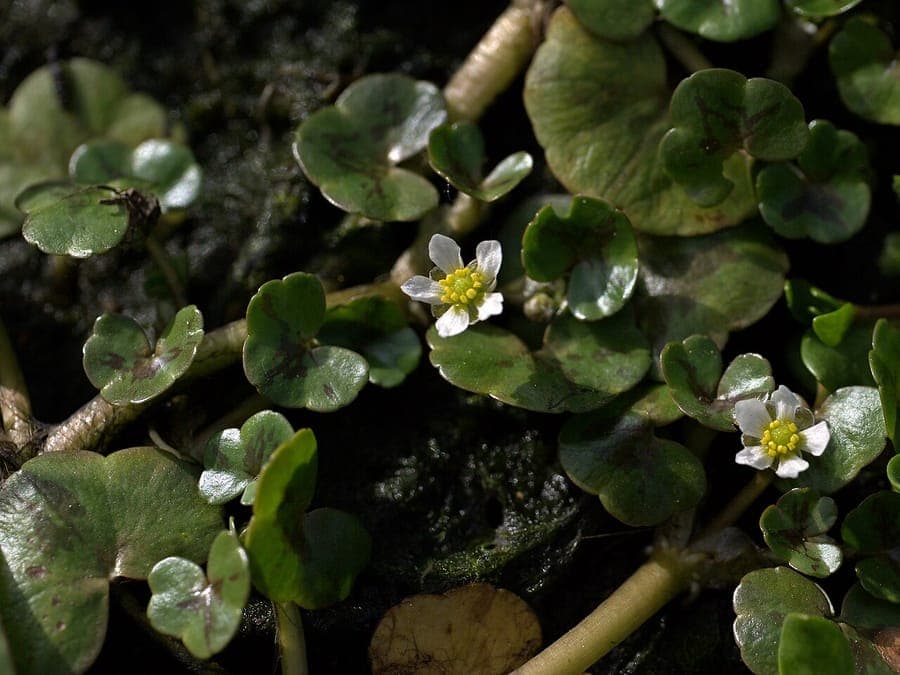
Frank Vassen from Brussels, Belgium / CC BY 2.0, via Wikimedia Commons
Ivy-leaf Crowfoot (Ranunculus hederaceus): complete guide
Ranunculus hederaceus
¿Quieres ver Ivy-leaf Crowfoot (Ranunculus hederaceus): complete guide en tu jardín?
1 minuto, sin tarjeta de crédito
Overview
Ivy-leaf crowfoot (Ranunculus hederaceus) is a delicate, small-flowered aquatic plant from the Ranunculaceae family. This modest plant is named for its ivy-like leaves and forms an important part of wet habitats across Europe and North America. With its minute white flowers and low growth habit, ivy-leaf crowfoot offers subtle beauty to water gardens.
This plant is especially valuable for moisture gardens and bank plantings where taller species cannot fit. The plant attracts water insects and other small creatures, making it ecologically important for aquatic ecosystems.
Appearance & Bloom
Ivy-leaf crowfoot grows as an extremely low, creeping plant, usually no taller than 5 to 15 centimeters. The leaves are small, kidney-shaped and resemble ivy leaves, which gives the plant its common name. The flowers are extremely tiny, only a few millimeters across, white in color and appear from May through July.
The plant forms dense mats in moist soils and along water margins. It grows slowly but creates beautiful growth patterns over years. The leaves maintain a glossy, healthy appearance.
Ideal Location
Ivy-leaf crowfoot thrives best with partial to full sunlight, requiring minimum 4 to 6 hours daily light. The plant also accepts light shade conditions well. Plant along water margins, in moisture gardens, or containers with wet soil.
The plant struggles in completely dry conditions or strong afternoon shade. For optimal growth choose locations with constant moisture.
Soil
Ivy-leaf crowfoot demands moist to very wet soils with pH values from 4.5 to 5.0, thus rather acidic. The plant grows well in poor, sandy soils and even accepts bog soils. Standard garden soil is insufficient; moisture-retaining potting soil is recommended.
The plant grows without rooting along surfaces, so shallow soil suffices. Good drainage is unnecessary; waterlogging actually helps growth.
Diseño gratis
¿Quieres ver Ivy-leaf Crowfoot (Ranunculus hederaceus): complete guide en tu jardín? Crea un diseño gratis ahora.
Watering
Ivy-leaf crowfoot requires constantly moist to very wet growing conditions. Ensure soils never completely dry. In containers, the plant can be submerged to several centimeters depth. Regular watering is essential during the growing season.
Even in very dry periods, supplemental water may be needed, though the plant prefers wet conditions.
Pruning
Ivy-leaf crowfoot demands minimal pruning. Remove only very old or damaged leaves. The plant grows slowly and rarely requires major pruning.
Gentle annual cleanup in March helps remove dead portions. Prune carefully as the plant is delicate.
Maintenance Calendar
March: Carefully remove dead leaves. Check moisture levels.
April-May: Prepare for growing season. Ensure constantly wet soil.
June-July: Observe flowering. Tiny white flowers appear.
August-September: Maintenance activities minimal. Keep soil wet.
October-November: Gradually reduce moisture.
December-February: Plant enters dormancy. Minimal care needed.
Winter Hardiness
Ivy-leaf crowfoot is fairly winter-hardy, tolerating temperatures to around -5 degrees Celsius. In very cold winters some parts may die back, but the plant usually regenerates. In mild winters it remains green.
Protection against frost formation in containers is recommended in cold climates.
Companion Plants
Ivy-leaf crowfoot combines beautifully with other moisture-loving, low plants like water mint and small sedges. Bog myrtle and other small aquatic plants create attractive combinations.
In wildlife gardens it works well alongside other nectar plants.
Conclusion
Ivy-leaf crowfoot is a delicate, underappreciated aquatic plant that enhances moist gardens. Its diminutive size and preference for wet soils make it perfect for marsh and bank plantings. With minimal care and subtle beauty, ivy-leaf crowfoot is ideal for ecological water gardens. Discover more aquatic plants on gardenworld.app and design your perfect moisture garden.
¿Quieres ver Ivy-leaf Crowfoot (Ranunculus hederaceus): complete guide en tu jardín? Crea un diseño gratis ahora.
Sube una foto, elige un estilo y obtén un diseño fotorrealista con lista de plantas en menos de un minuto.
Más de 10.000 jardines diseñados
Sin tarjeta de crédito


Plantas similares
Drummond's anemone: complete guide
Anemone drummondii
Discover Drummond's anemone (Anemone drummondii): a silvery-grey mountain plant for cool rock gardens and alpine troughs.
Korean clematis: complete guide
Clematis serratifolia
Clematis serratifolia is a hardy climber with fragrant yellow bell flowers in August-September. Pruning group 3, location and care tips.
Aquilegia brevistyla: complete guide
Aquilegia brevistyla
Discover Aquilegia brevistyla, the elegant North American columbine. Growing tips, shade tolerance, and design ideas for woodland and shadowed gardens.