
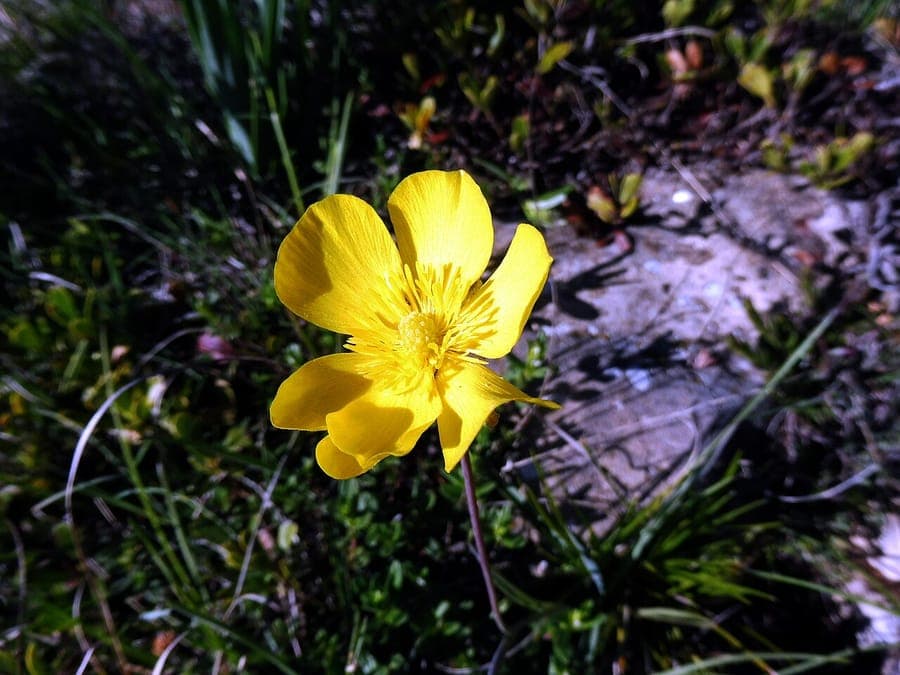
Isidre blanc / CC BY-SA 4.0, via Wikimedia Commons
Grass-leaved Buttercup: complete guide
Ranunculus gramineus
¿Quieres ver Grass-leaved Buttercup: complete guide en tu jardín?
1 minuto, sin tarjeta de crédito
Overview
The grass-leaved buttercup (Ranunculus gramineus), also called Renoncule graminee, is a charming low-growing plant from the Mediterranean region. This elegant plant distinguishes itself through fine, grass-like foliage and yellow flowers that appear in spring. At only 20-30 cm in height, this is a perfect plant for rock gardens, borders, and alpine troughs. The plant grows naturally on dry slopes in southern Europe, from Portugal to Italy.
The grass-leaved buttercup is a member of the Ranunculaceae family, the same family as many other well-known garden plants. This plant is very hardy and maintenance-friendly, making it an excellent choice for gardeners with limited time for intensive care.
Appearance and bloom
The plant grows as a compact, low-growing rosette-like plant with very slender, grass-like leaves that are 10-20 cm long. The leaves are linear and have a fine, silky appearance that provides contrast with other garden plants. From May to June, the plant produces numerous fine stems, each bearing 3-5 yellow, glossy flowers.
The flowers are approximately 1-1.5 cm in diameter with beautifully smooth, glossy surface that reflects sunlight. The flowers appear in clusters, creating a yellow carpet of color over the plant. After blooming, small, inconspicuous seed pods form. The plant dies back to ground level after blooming but regrows each spring.
Ideal location
The grass-leaved buttercup thrives best in a fully sunny location. At least 6-8 hours of direct sunlight per day is ideal, and more is even better. In partial shade, the plant produces fewer flowers and the growth pattern may become less compact. This plant is perfect for south-facing rock gardens and border highlights where solar warmth is palpable.
Protection from cold nighttime breezes is not needed; this plant loves to collect warmth! Regarding wind exposure, though low-growing, the plant does well in somewhat windy situations.
Soil requirements
The grass-leaved buttercup has very specific drainage requirements. Well-draining, sandy or stony soil is essential - this plant cannot tolerate waterlogging and will rot in wet conditions. Add sand, gravel or tuff to improve drainage in better soils. The pH may be neutral to alkaline, and in alkaline environments the plant actually blooms even better.
Poorer soils are actually preferred; rich soils can lead to excessive foliage at the expense of flowers. Plantings in customized alpine troughs with specialized horticultural soil work excellently and provide complete drainage control.
Diseño gratis
¿Quieres ver Grass-leaved Buttercup: complete guide en tu jardín? Crea un diseño gratis ahora.
Watering
Once established, the grass-leaved buttercup is very drought-tolerant and requires minimal additional water. During the growing season (March-May), occasional watering can help, especially in particularly dry periods. Once the plant blooms and subsequently dies back, watering can be virtually discontinued.
During winter months, the plant is dormant and requires virtually no water. Collect rainwater when possible; this plant prefers rainwater to tap water. Avoid overhead watering to prevent leaf rot; drip irrigation or shallow watering at ground level is better.
Pruning
The grass-leaved buttercup requires no pruning. Only remove dead or damaged leaves as they appear. After blooming and leaf drop in summer, the area where the plant grows can be cleaned by removing dead foliage material. This helps a clean start to the next season and reduces disease.
Avoid any form of heavy pruning. The plant grows naturally into an attractive form. Dead foliage material on the ground around it can actually serve as mulch and moderate moisture content.
Maintenance calendar
January-February: Plant dies back; remove dead parts carefully if desired. March-April: New growth appears; no special maintenance needed. May-June: Flowering period; enjoy the yellow blooms. July-August: Plant dies back after blooming; leave dead parts until fall. September-October: Clean up dead material; winter preparation. November-December: Plant rests; no maintenance needed.
Winter hardiness
The grass-leaved buttercup is winter hardy in zones 5-8 (USDA hardiness zones). In the Netherlands and Belgium, the plant overwinters without problems in most regions. Extreme freezing below -15C can cause damage, especially to young plants; in such areas light protection with gravel or dry leaf material may be useful.
Once established, this plant is very robust and will survive many winters without assistance. In very wet winters, drainage may be more critical than pure cold.
Companion plants
The grass-leaved buttercup combines beautifully with other alpine plants and rock garden inhabitants. Lavender, sedums, dianthus, and other low-growing Mediterranean plants fit well with this species. The yellow color of this plant harmonizes nicely with purple flowers of lavender and other hues.
In borders and hedge banks, this plant grows well next to grey-foliaged plants like Artemisia, which give it contrast. In alpine troughs it combines well with dwarf conifers and other alpine dwellers.
Closing
The grass-leaved buttercup is an unbeatable choice for those seeking a delicate, low-maintenance flowering plant for rock gardens and alpine settings. With its grass-like foliage and glossy yellow flowers, it adds grace and subtle color. Once planted and properly sited, little maintenance is needed.
With good drainage as a core requirement, you will enjoy this elegant plant for years. Available at garden centres in alpine plant sections. Visit gardenworld.app for more inspiration for your rock garden design.
¿Quieres ver Grass-leaved Buttercup: complete guide en tu jardín? Crea un diseño gratis ahora.
Sube una foto, elige un estilo y obtén un diseño fotorrealista con lista de plantas en menos de un minuto.
Más de 10.000 jardines diseñados
Sin tarjeta de crédito


Plantas similares
Drummond's anemone: complete guide
Anemone drummondii
Discover Drummond's anemone (Anemone drummondii): a silvery-grey mountain plant for cool rock gardens and alpine troughs.
Korean clematis: complete guide
Clematis serratifolia
Clematis serratifolia is a hardy climber with fragrant yellow bell flowers in August-September. Pruning group 3, location and care tips.
Aquilegia brevistyla: complete guide
Aquilegia brevistyla
Discover Aquilegia brevistyla, the elegant North American columbine. Growing tips, shade tolerance, and design ideas for woodland and shadowed gardens.