
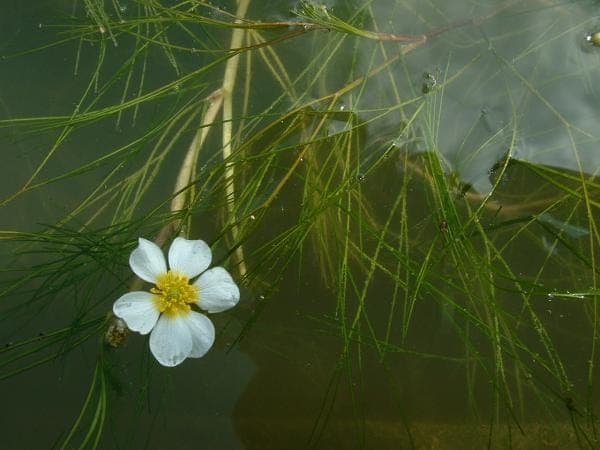
Wikimedia Commons / CC BY-SA 3.0, via Wikimedia Commons
River Water-crowfoot (Ranunculus fluitans): complete guide
Ranunculus fluitans
¿Quieres ver River Water-crowfoot (Ranunculus fluitans): complete guide en tu jardín?
1 minuto, sin tarjeta de crédito
Overview
River water-crowfoot (Ranunculus fluitans), also called floating water-buttercup, is a fascinating aquatic plant from the Ranunculaceae family. This plant is specifically adapted to fast-flowing rivers and streams where other aquatic plants cannot thrive. With its delicate, submerged leaves and white flowers, this plant forms a crucial component of river ecosystems.
For water gardens and flowing ponds, river water-crowfoot offers an authentic, ecological choice. The plant improves water quality and provides habitat for aquatic insects and young fish.
Appearance & Bloom
River water-crowfoot grows with two distinct leaf types. Submerged leaves are extremely fine, hair-like and divided into many delicate segments, creating a feathery, fiber-like appearance. Floating leaves are broader and more conventional. Small white flowers emerge above the water surface from May through July.
The plant can become quite long, reaching 1 meter or more, forming dense masses in rivers. The delicate leaves break water flow, creating beautiful, flowing effects in currents.
Ideal Location
River water-crowfoot thrives optimally in fast-flowing waters with excellent oxygen-rich conditions. Plant in streams, rivers, or artificially constructed flowing ponds. The plant demands minimum 6 to 8 hours direct light daily.
In still ponds the plant sometimes struggles. Water movement is essential for best results. Position directly against water intake for maximum flow.
Soil
River water-crowfoot prefers sandy or small-stone sediments with pH values from 7.0 to 7.5. The plant accepts nutrient-rich waters well but grows even better in clean, less nutrient-heavy conditions. Standard pond mud is suitable.
The plant roots loosely in substrate but can also float freely without root contact. This makes it very flexible for different installations.
Diseño gratis
¿Quieres ver River Water-crowfoot (Ranunculus fluitans): complete guide en tu jardín? Crea un diseño gratis ahora.
Watering
River water-crowfoot requires constant flowing water with high oxygen concentrations. In still ponds supplemental aeration may be necessary. The plant also accepts fully submerged installation.
Regular water exchanges help optimal plant growth. In artificial flow ponds, a pump provides perfect conditions.
Pruning
River water-crowfoot demands minimal pruning. Remove only dead or damaged portions. Excessive growth can be cut back to desired length, usually 30 to 60 centimeters.
The plant grows very rapidly; regular trimming prevents overgrowth. Never remove more than one-third at once.
Maintenance Calendar
March: Check water movement. Prune previous season remnants.
April-May: Prepare for flowering. Ensure optimal oxygen levels.
June-July: Observe flowering. Leave seed heads for bird food.
August-September: Prune overgrown material. Remove wilted leaves.
October-November: Gradually reduce water flow speed.
December-February: Minimal activity. Check for ice blockage.
Winter Hardiness
River water-crowfoot is hardy to -7 degrees Celsius. In harsher winters protection or drainage may be necessary. Potted plants that freeze can be damaged.
In mild water zones the plant can remain active through winter. Winter protection is usually unnecessary.
Companion Plants
River water-crowfoot combines beautifully with other flowing-water plants like water speedwell and small-flowered water grass. Wild forget-me-not and water-mint create attractive contrasts.
In river models it works well alongside other aquatic plants that accept water movement.
Conclusion
River water-crowfoot is a unique, ecologically-valuable aquatic plant ideal for flowing water. Its specialized growth habit and white flowers make it perfect for streams, rivers, and flowing ponds. With minimal care and maximum ecological benefits, river water-crowfoot is essential for authentic water landscapes. Discover more aquatic plants on gardenworld.app and design your ideal flowing-water garden.
¿Quieres ver River Water-crowfoot (Ranunculus fluitans): complete guide en tu jardín? Crea un diseño gratis ahora.
Sube una foto, elige un estilo y obtén un diseño fotorrealista con lista de plantas en menos de un minuto.
Más de 10.000 jardines diseñados
Sin tarjeta de crédito


Plantas similares
Drummond's anemone: complete guide
Anemone drummondii
Discover Drummond's anemone (Anemone drummondii): a silvery-grey mountain plant for cool rock gardens and alpine troughs.
Korean clematis: complete guide
Clematis serratifolia
Clematis serratifolia is a hardy climber with fragrant yellow bell flowers in August-September. Pruning group 3, location and care tips.
Aquilegia brevistyla: complete guide
Aquilegia brevistyla
Discover Aquilegia brevistyla, the elegant North American columbine. Growing tips, shade tolerance, and design ideas for woodland and shadowed gardens.