
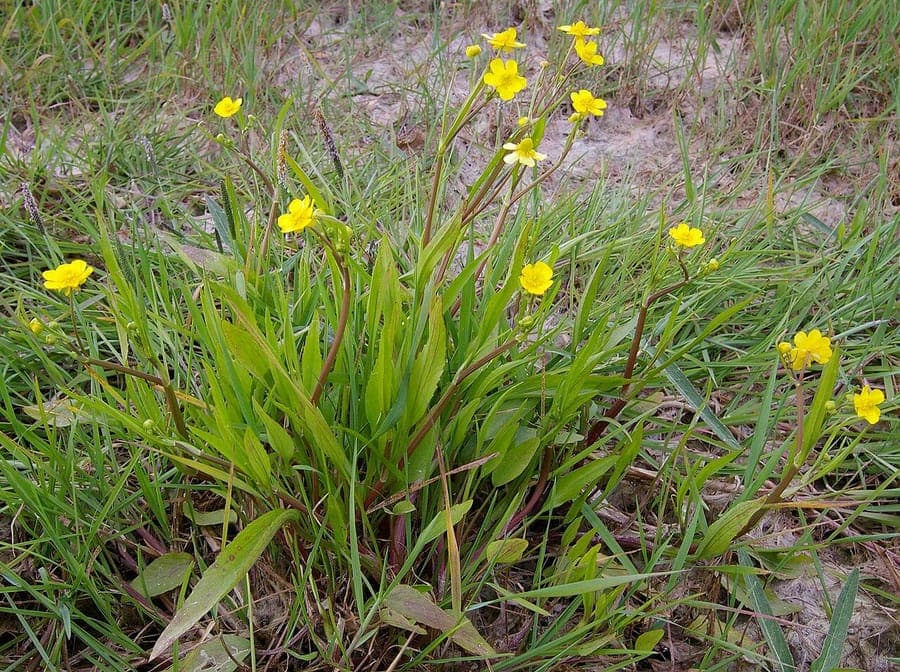
Christian Fischer / CC BY-SA 3.0, via Wikimedia Commons
Lesser Spearwort (Ranunculus flammula): complete guide
Ranunculus flammula
¿Quieres ver Lesser Spearwort (Ranunculus flammula): complete guide en tu jardín?
1 minuto, sin tarjeta de crédito
Overview
Lesser spearwort (Ranunculus flammula), also called creeping buttercup, is an elegant aquatic plant from the Ranunculaceae family. This diminutive buttercup relative thrives in marshy habitats, along water channels, and in wet corners throughout European gardens. With its vivid yellow flowers and delicate foliage, lesser spearwort adds subtle beauty to aquatic ecosystems.
This versatile plant functions perfectly as ornamental plantings along pond margins, while simultaneously serving as ecologically valuable wetland habitat. Lesser spearwort attracts insects, bees, and other pollinators, while providing food sources for waterfowl.
Appearance & Bloom
Lesser spearwort grows as a low, creeping plant typically 10 to 50 centimeters tall, depending on growing conditions. The narrow, lance-shaped leaves display bright green coloring and fine texture. Small, golden-yellow flowers bloom from May through September in clusters along slender stems.
The plant produces stolons, thin runners that spread across wet ground, making it an ideal groundcover for marshy zones. The vibrant yellow flowers are highly attractive to bees and bumble bees, enhancing garden pollination.
Ideal Location
Lesser spearwort thrives best with full to partial sun exposure, requiring minimum 4 to 6 hours daily light. The plant also accepts light shade conditions well. Plant along water margins, in bog gardens, or moisture-loving containers.
Optimal growth occurs along shallow water edges and regularly moistened areas. Avoid completely dry locations and strong afternoon shade in warm climates.
Soil
Lesser spearwort demands consistently moist to very wet soils with pH ranges from 6.0 to 7.5. The plant accepts heavy, clay-rich soils excellently and even thrives in muddy environments. Standard garden soil is insufficient; aquatic plant potting mix is recommended for container cultivation.
The plant prefers nutrient-rich soils with organic matter. Regular amendment with composted organic material improves growth substantially.
Diseño gratis
¿Quieres ver Lesser Spearwort (Ranunculus flammula): complete guide en tu jardín? Crea un diseño gratis ahora.
Watering
Lesser spearwort requires constant moist to very wet growing conditions. Ensure soils never completely dry. In containers, the plant can be submerged to 2-3 centimeters depth. Regular watering is essential, especially during flowering periods.
In waterside gardens, routine watering is usually unnecessary. During dry summers, supplemental water may become necessary.
Pruning
Lesser spearwort demands minimal pruning. Remove spent flowers during bloom season to encourage continuous flowering. After blooming, cut back gently to base level.
In early spring, extensive stolons may be pruned back. Annual renewal pruning in March is recommended.
Maintenance Calendar
March: Cut back dead winter growth and thin aggressively. Manage stolon growth.
April-May: Prepare for growing season. Apply slow-release fertilizer.
June-September: Regularly deadhead spent flowers. Keep soils wet.
October-November: Gradually reduce watering. Prepare for dormancy.
December-February: Minimal activity. Protect against severe frost.
Winter Hardiness
Lesser spearwort is quite winter-hardy, tolerating temperatures to -10 degrees Celsius. In mild climate zones, the plant remains evergreen. Hard frosts may damage above-ground portions, but the plant reliably regenerates each spring from root systems.
In very cold regions, mulch protection with straw may prove beneficial. Ice formation in containers can be damaging.
Companion Plants
Lesser spearwort combines beautifully with other aquatic plants like sweet flag, watermoss, and sedges. Cranberry and water-crowfoot create striking visual contrasts.
In wildlife gardens it works well alongside other insect-attracting plants. Combine with lower water-loving plants for layered margin effects.
Conclusion
Lesser spearwort is a charming, underappreciated aquatic plant enriching any water garden zone. Its yellow flowers, low growth habit, and ecological value make it perfect for marshes and pond margins. With straightforward care requirements and maximum pollinator attraction, lesser spearwort is ideal for natural water landscapes. Discover more aquatic plants on gardenworld.app and design your perfect water garden.
¿Quieres ver Lesser Spearwort (Ranunculus flammula): complete guide en tu jardín? Crea un diseño gratis ahora.
Sube una foto, elige un estilo y obtén un diseño fotorrealista con lista de plantas en menos de un minuto.
Más de 10.000 jardines diseñados
Sin tarjeta de crédito


Plantas similares
Drummond's anemone: complete guide
Anemone drummondii
Discover Drummond's anemone (Anemone drummondii): a silvery-grey mountain plant for cool rock gardens and alpine troughs.
Korean clematis: complete guide
Clematis serratifolia
Clematis serratifolia is a hardy climber with fragrant yellow bell flowers in August-September. Pruning group 3, location and care tips.
Aquilegia brevistyla: complete guide
Aquilegia brevistyla
Discover Aquilegia brevistyla, the elegant North American columbine. Growing tips, shade tolerance, and design ideas for woodland and shadowed gardens.