
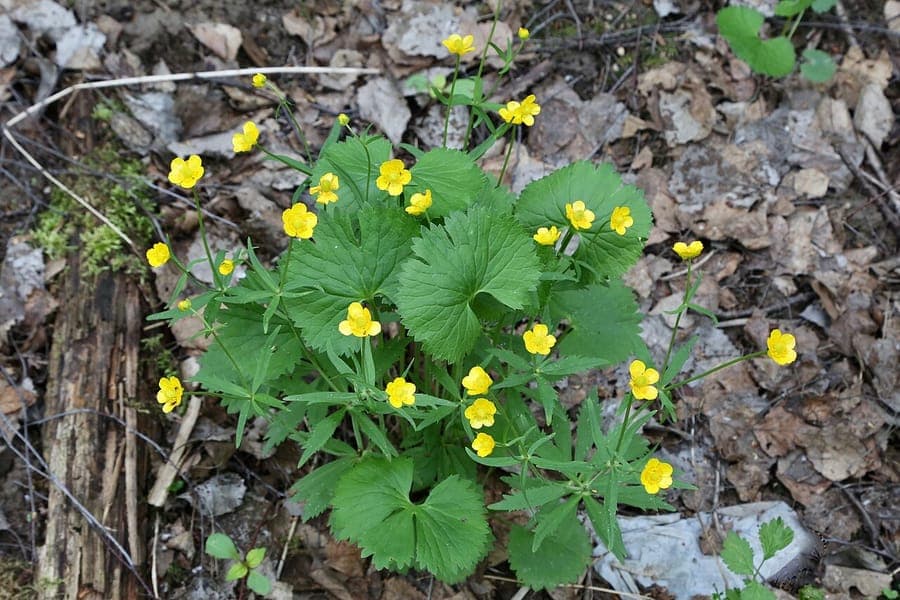
Dr. Alexey Yakovlev / CC BY-SA 2.0, via Wikimedia Commons
Cassubian Buttercup: complete guide
Ranunculus cassubicus
¿Quieres ver Cassubian Buttercup: complete guide en tu jardín?
1 minuto, sin tarjeta de crédito
Overview
Ranunculus cassubicus, also known as the Cassubian buttercup, is a charming wildflower from Eastern and Central Europe. This plant belongs to the Ranunculaceae family and is known for its vibrant yellow flowers. In natural gardens and woodland edges, this plant provides an early spring burst of color.
This mid-sized plant grows to approximately 20-40 centimeters tall and forms attractive yellow flower clusters. It is a particularly valuable plant for gardens aiming for natural, informal styles.
Appearance and bloom
The plant has elongated leaves that grow in clusters at the base. These leaves are slightly hairy and give the plant a soft texture. The stems are relatively thin and slender, providing an elegant, natural appearance.
Flowers appear from May to July and are bright yellow with a glossy effect. Each flower has five shiny petals characteristic of buttercup species. These blooms are highly attractive to bees and other insects.
Fruit formation occurs after flowering and contributes to the biological interest of the plant.
Ideal location
This plant grows optimally in semi-shade to full sun, depending on moisture. In dry summer regions, semi-shade is preferable. In temperate climates with regular rainfall, the plant can also grow in full sun.
Natural plant locations are often found in woodland edges, moist grasslands, and hillsides where the plant is protected from intense midday sun.
Soil
Ranunculus cassubicus grows well on various soil types but prefers moisture-retentive soil with good drainage. The plant thrives on loamy soils with reasonable organic matter content.
Acidic to neutral soil (pH 6.5 to 7.5) is ideal. The plant can grow on moderately poor soil, but flowering and growth are promoted by regular organic additions.
Diseño gratis
¿Quieres ver Cassubian Buttercup: complete guide en tu jardín? Crea un diseño gratis ahora.
Watering
This plant loves consistent moisture, especially during the growing season (March to August). Ensure consistent moisture supply without waterlogging. Mulching around the plant helps retain soil moisture.
During dry periods, supplemental water promotes healthier growth and better flowering. The plant is, however, moderately drought-tolerant once roots are well established.
Pruning
This wildflower requires virtually no pruning. After flowering, wilted flowers can be removed to limit self-seeding if desired. In autumn, dead material can be cleared.
If you want to encourage natural self-seeding, leave some flowers to produce seeds.
Maintenance calendar
Spring (March-May): Plant new specimens, add compost, anticipate blooming, water regularly.
Summer (June-August): Enjoy the yellow flowers, water during drought, remove spent blooms.
Autumn (September-October): Allow seeds to ripen for self-seeding, clear dead foliage.
Winter (November-February): Plant dormancy, check woodland edge ecosystem health.
Winter hardiness
Ranunculus cassubicus is hardy to USDA zone 3 (-40 degrees Celsius). The plant grows natively throughout Eastern and Central Europe and is therefore more than suitable for Northern European gardens.
The plant requires no special winter protection and can remain permanently in the garden.
Companion plants
This plant combines well with other woodland edge and grassland plants:
- Liverwort (Hepatica) - early bloom, complementary blue
- Bistort (Bistorta) - later blooming, pink
- Pasque flower (Pulsatilla) - simultaneous bloom, purple
- Lily of the valley (Convallaria) - elegant white
- Sun roses (Helianthemum) - yellow, sunny
These combinations create a natural woodland edge-like atmosphere in the garden.
Closing
Ranunculus cassubicus is a valuable addition to gardens that appreciate naturalness and wild beauty. With its yellow flowers and graceful growth habit, this plant adds a playful element to semi-shaded and woodland edge situations.
Discover this beautiful wildflower through garden retailers. Ask for advice on gardenworld.app for nature-oriented garden design with wildflowers.
¿Quieres ver Cassubian Buttercup: complete guide en tu jardín? Crea un diseño gratis ahora.
Sube una foto, elige un estilo y obtén un diseño fotorrealista con lista de plantas en menos de un minuto.
Más de 10.000 jardines diseñados
Sin tarjeta de crédito


Plantas similares
Drummond's anemone: complete guide
Anemone drummondii
Discover Drummond's anemone (Anemone drummondii): a silvery-grey mountain plant for cool rock gardens and alpine troughs.
Korean clematis: complete guide
Clematis serratifolia
Clematis serratifolia is a hardy climber with fragrant yellow bell flowers in August-September. Pruning group 3, location and care tips.
Aquilegia brevistyla: complete guide
Aquilegia brevistyla
Discover Aquilegia brevistyla, the elegant North American columbine. Growing tips, shade tolerance, and design ideas for woodland and shadowed gardens.