
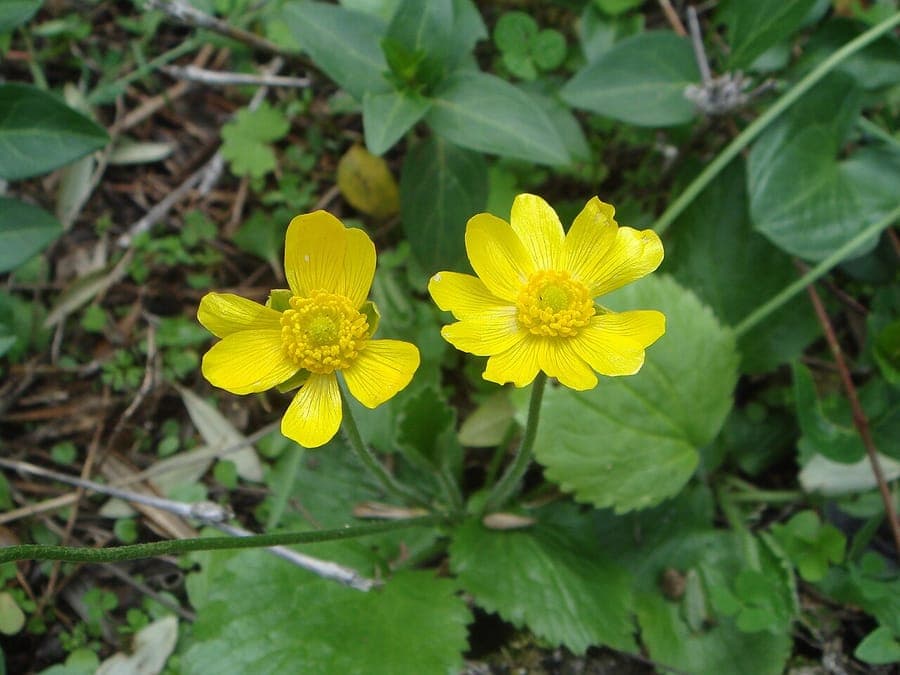
Xemenendura / CC BY-SA 4.0, via Wikimedia Commons
Autumn Buttercup: complete guide
Ranunculus bullatus
¿Quieres ver Autumn Buttercup: complete guide en tu jardín?
1 minuto, sin tarjeta de crédito
Overview
Ranunculus bullatus, commonly known as Autumn Buttercup or Blistered Buttercup, is a fascinating herbaceous plant native to the Western and Central Mediterranean region extending to the Aegean islands. This diminutive but striking plant is prized for its unique bullate (blistered) leaves with characteristic veining and its lustrous golden-yellow flowers. Growing on dry, calcareous hillsides, it reaches only 15-30 cm in height and thrives in full sun environments.
Appearance and Bloom
Ranunculus bullatus is a compact herbaceous plant with a dense, low habit. Its most striking feature is the foliage: leaves are strongly bullate (puffed), creating a distinctive textured appearance with prominent veins. The glossy golden-yellow flowers appear in autumn (October-November in its native range) but in northern hemisphere gardens typically bloom March-May. Flowers are lustrous and approximately 1.5-2 cm across. Plant height: 15-30 cm; spread: 20-30 cm. Leaves are distinctive with their bumpy, blistered texture.
Ideal Location
Autumn Buttercup thrives in full sun (6+ hours direct sunlight daily) in dry growing positions. Mediterranean climates and drought-tolerant environments are ideal. This plant despises waterlogging and grows most vigorously on dry, sunny slopes. In temperate climates, protect from excessive winter rain. Sharp drainage is essential. Shield from strong winds that may damage delicate flowers.
Soil Requirements
Ranunculus bullatus performs best on well-drained, calcareous soils (pH 6.5-8.0). Heavy clay soils are entirely unsuitable without drastic amendment. A mixture of gravel, coarse sand, and organic matter (40% gravel, 40% sand, 20% compost) is ideal. Preference is for poor to average soils; excessive nutrients promote foliage at the expense of flowers. Lean soils actually perform better.
Diseño gratis
¿Quieres ver Autumn Buttercup: complete guide en tu jardín? Crea un diseño gratis ahora.
Watering
Once established, Ranunculus bullatus is highly drought-tolerant and endures even prolonged dryness. Young plants (first year) require regular water during dry periods, approximately 10-15 liters every two weeks in summer. After establishment: minimal water is needed. Overwatering causes rot. Winter is dormancy time with minimal water; the plant enters deep rest. Mulching is not recommended due to rot risk.
Pruning
Minimal pruning required. Remove spent flower stalks after bloom for neater appearance. Dead leaves may be removed. No heavy pruning required. The plant naturally re-seeds if seed heads are allowed to persist; this provides future plants. Avoid heavy-handed intervention.
Maintenance Calendar
OCTOBER-NOVEMBER: In Mediterranean climates: peak bloom; minimal water. MARCH-MAY: In Northern climates: flowering period; light feeding optional. JUNE-SEPTEMBER: Dormancy and rest period; minimal water. Seed can drop naturally in fall and germinate next season. Annually remove damaged plant material and debris.
Winter Hardiness
Ranunculus bullatus is hardy to approximately USDA zones 7-8 (-12 to -15C/-10 to 5F). In more northern climates (zones 5-6), covered or protected growing positions are preferable. The plant tolerates frost damage but does not thrive in regions with very severe winters. In temperate climates without extreme rainfall, it survives outdoors. Dry mulch may help in extreme winters.
Companion Plants
Combine with other Mediterranean drought-tolerant flowering plants: Dianthus, Cistus, lavender (Lavandula), euphorbia. Plant with other native Mediterranean herbaceous species. Avoid wet-soil-loving plants in the same bed. Grouping in small clusters of 3-5 plants provides greater visual impact than single specimens.
Closing
Autumn Buttercup is an underrated gem for gardeners in warm, dry climates. With unique foliage texture and golden-yellow flowers, it offers refined elegance. Seeds are available from specialized nurseries. Perfect for rock gardens, xeriscape designs, or Mediterranean borders!
¿Quieres ver Autumn Buttercup: complete guide en tu jardín? Crea un diseño gratis ahora.
Sube una foto, elige un estilo y obtén un diseño fotorrealista con lista de plantas en menos de un minuto.
Más de 10.000 jardines diseñados
Sin tarjeta de crédito


Plantas similares
Drummond's anemone: complete guide
Anemone drummondii
Discover Drummond's anemone (Anemone drummondii): a silvery-grey mountain plant for cool rock gardens and alpine troughs.
Korean clematis: complete guide
Clematis serratifolia
Clematis serratifolia is a hardy climber with fragrant yellow bell flowers in August-September. Pruning group 3, location and care tips.
Aquilegia brevistyla: complete guide
Aquilegia brevistyla
Discover Aquilegia brevistyla, the elegant North American columbine. Growing tips, shade tolerance, and design ideas for woodland and shadowed gardens.