
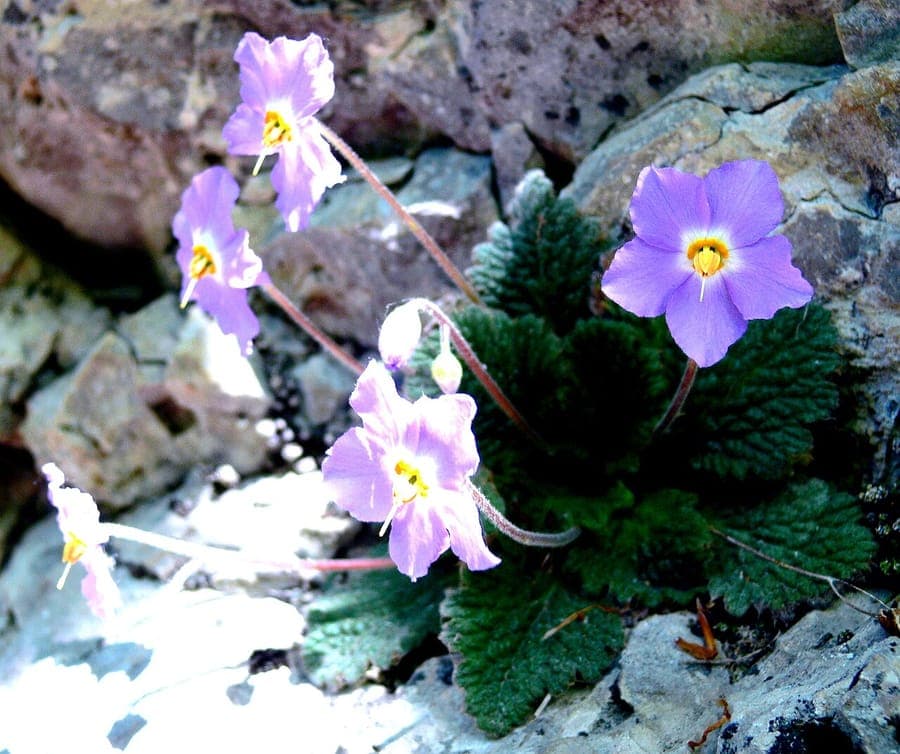
Ziegler / CC BY-SA 3.0, via Wikimedia Commons
Ramonda myconi: complete guide
Ramonda myconi
¿Quieres ver Ramonda myconi: complete guide en tu jardín?
1 minuto, sin tarjeta de crédito
Overview
Ramonda myconi, commonly known as the Pyrenean violet, is an exceptional small plant native to the Pyrenees of France and Spain. This moisture-loving rock garden specialist grows in crevices of vertical rock faces where seepage and shade combine perfectly. With its delicate purple flowers and rosettes of wrinkled green foliage, this diminutive treasure ranks among alpine gardening's finest discoveries.
Belonging to the Gesneriaceae family (which includes African violets), Ramonda myconi differs radically from its tender relatives by being fully hardy outdoors. It thrives in temperate to cold climates and represents an excellent choice for specialized gardeners seeking to master alpine shade gardening.
Appearance and Bloom
Ramonda myconi forms compact rosettes approximately 10-15 centimeters across. The leaves are deeply wrinkled, dark green, and heavily pubescent, which helps prevent desiccation. During dry periods, the plant may appear completely dead yet revitalizes immediately upon rehydration, a remarkable adaptation.
The flowers are the main attraction. Soft lavender-purple with five petals and yellow stamens, they emerge from May to July. Each bloom measures only a few centimeters but possesses exceptional charm and delicacy. Under proper conditions, flowering is abundant.
Following bloom, the plant produces small seed capsules. However, seed set is typically sparse in cultivation.
Ideal Location
Ramonda myconi thrives in filtered shade or partial shade positions. In strong sun regions, afternoon shade protection becomes essential. North or east-facing locations are ideal.
In its native habitat, the plant grows on steep, seeping rock faces receiving protection from direct rainfall while experiencing constant moisture from seepage. In the garden, replicate this by positioning plants in vertical stone troughs or between rocks where water can flow over foliage without pooling in the rosettes.
Proper drainage and avoidance of stagnant moisture are non-negotiable.
Soil
Ramonda myconi requires gritty, mineral-rich, well-draining soil. A mix of approximately 50% rock grit, 30% leaf mold, and 20% sand or perlite works excellently. Soil pH should be neutral to slightly acidic (pH 6-7).
Plant in narrow stone crevices or use specialized alpine potting mix. Add extra grit when growing in containers. This species cannot tolerate heavy clay soils.
Diseño gratis
¿Quieres ver Ramonda myconi: complete guide en tu jardín? Crea un diseño gratis ahora.
Watering
Watering is the most critical aspect. The plant requires regular moisture achieved via dripping or misting, but rosettes must never sit in standing water. Ideally, mist the plant from above with fine water, allowing it to flow over foliage into the soil below.
During the growing season (April to September), water regularly. In winter, reduce watering but never allow complete drying. Use filtered or rainwater preferentially, as hard water can stain foliage.
Pruning
Ramonda myconi requires minimal pruning. Remove only dead or damaged leaves carefully. If the plant becomes too large, gently remove some outer leaves to maintain shape.
Remove spent flower stems to encourage continued blooming.
Maintenance Calendar
April-May: Growth begins, commence regular watering June-July: Peak flowering, maintain consistent moisture August-September: Growth wanes, gradually reduce watering October-March: Dormancy, minimal water, protection from extreme frost
Winter Hardiness
Ramonda myconi is extremely hardy to -20 degrees Celsius. The plant overwinters without protection in most temperate climates. Foliage may disappear during extreme winters, but underground growth points survive.
In very wet winters, rot can become problematic. Ensure good drainage and protection from water stagnation.
Companion Plants
Excellent companion plants for Ramonda myconi include:
- Other alpine violets
- Sempervivum species
- Saxifraga species
- Small rock garden plants
- Helleborus niger (Christmas rose)
Preference goes to plants sharing similar moisture and drainage requirements.
Closing
Ramonda myconi is a hardy gem for accomplished gardeners. Though requiring specific conditions and careful attention, growers are rewarded with years of delicate purple blooms and botanical fascination.
Visit local garden centers for seeds or young plants. Growing from seed proves most rewarding. This rare alpine specialist deserves a place in every serious rock garden.
Visit gardenworld.app for additional alpine gardening guidance. Enjoy your Ramonda!
¿Quieres ver Ramonda myconi: complete guide en tu jardín? Crea un diseño gratis ahora.
Sube una foto, elige un estilo y obtén un diseño fotorrealista con lista de plantas en menos de un minuto.
Más de 10.000 jardines diseñados
Sin tarjeta de crédito


Plantas similares
Acer pycnanthum: complete guide
Acer pycnanthum
Acer pycnanthum, the Japanese swamp maple, is a fast-growing tree with early red flowers and brilliant autumn color, ideal for damp garden settings.
Freeman maple: complete guide
Acer × freemanii
Everything about the Freeman maple (Acer x freemanii): a fast-growing shade tree with spectacular autumn colour for large gardens.
Silver vine: complete guide
Actinidia polygama
Discover silver vine (Actinidia polygama): a hardy climbing plant with silvery foliage, loved by gardeners and cats alike.