
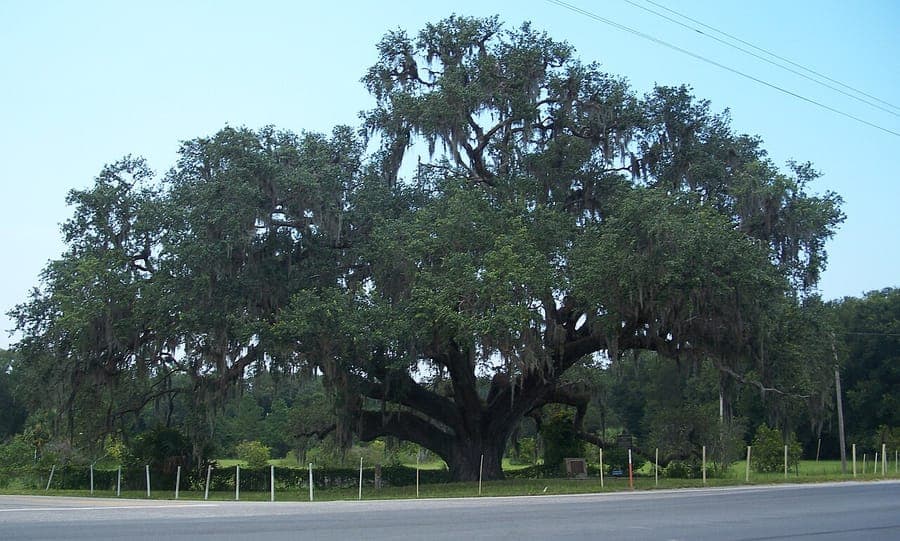
Ebyabe / CC BY 2.5, via Wikimedia Commons
Quercus virginiana: complete guide
Quercus virginiana
¿Quieres ver Quercus virginiana: complete guide en tu jardín?
1 minuto, sin tarjeta de crédito
Overview
The American live oak (Quercus virginiana) is an impressive evergreen tree from the southeastern United States, renowned for its massive crown and commanding presence. This is a tree that stands for generations, creating character-filled gardens with its twisted branches and dense canopy. In the right climate, this tree becomes a true garden majesty.
Appearance and bloom
The live oak reaches a height of 18 to 25 meters with a spread of up to 30 meters. The bark is dark gray to black with deep furrows. The lance-shaped leaflets are small, glossy dark green, and retain their color year-round. The flowers are inconspicuous yellow, but the brown acorns are decorative. The tree develops into a broad, rounded crown.
Ideal location
Choose a location with full sun to light shade. This tree grows optimally in mild, southern regions (USDA zones 7-10). Provide ample space around the tree: it needs room for its impressive spread. Plant it at least 10 meters away from buildings.
Soil
The American live oak tolerates varied soil types: acidic to neutral (pH 4.5-7.3). Ensure well-draining soil; this tree thrives in both sandy and clay soils. Add organic material when planting to improve water retention.
Diseño gratis
¿Quieres ver Quercus virginiana: complete guide en tu jardín? Crea un diseño gratis ahora.
Watering
Water young trees regularly, especially during the first growing season. Once established, this oak is drought-tolerant, making it ideal for southern gardens with hot summers. Provide extra water during extremely dry periods.
Pruning
Minimal pruning needed. In the young stage, you can guide the form. Remove dead or damaged branches in late winter. The tree naturally grows into an attractive shape. Excessive pruning slows growth.
Maintenance calendar
Spring: Check for winter damage, water during dry conditions. Summer: Maintain regular watering for young trees. Fall: No special actions needed. Winter: Protect young trees from frost.
Winter hardiness
Winter hardy to zone 7 (minimum temperature -18 degrees Celsius). In colder climates, protect with burlap wrap around the trunk. Mature trees are fairly cold-hardy.
Companion plants
Complementary plants include southern magnolia, Crape Myrtle, glossy privet, and azaleas. Underplant with shade-tolerant groundcovers.
Closing
The American live oak is a long-lived investment that provides generations of shade and character. With minimal care, this tree grows into an iconic element in southern gardens. Plant it now on gardenworld.app and design a garden that future generations will see flourish. Visit gardenworld.app for more inspiration.
¿Quieres ver Quercus virginiana: complete guide en tu jardín? Crea un diseño gratis ahora.
Sube una foto, elige un estilo y obtén un diseño fotorrealista con lista de plantas en menos de un minuto.
Más de 10.000 jardines diseñados
Sin tarjeta de crédito


Plantas similares
Lucombe oak: complete guide
Quercus crenata
Lucombe oak (Quercus crenata): a majestic semi-evergreen giant with corky bark, perfect for large gardens, parks, and country estates.
Blue oak: complete guide
Quercus douglasii
Discover the blue oak, a drought-tolerant Californian shade tree with striking blue-green foliage, ideal for large, climate-resilient gardens.
Quercus montana: complete guide
Quercus montana
Quercus montana, the chestnut oak, is a rugged American shade tree with deeply furrowed bark and large acorns, well suited to dry, rocky, spacious gardens.