
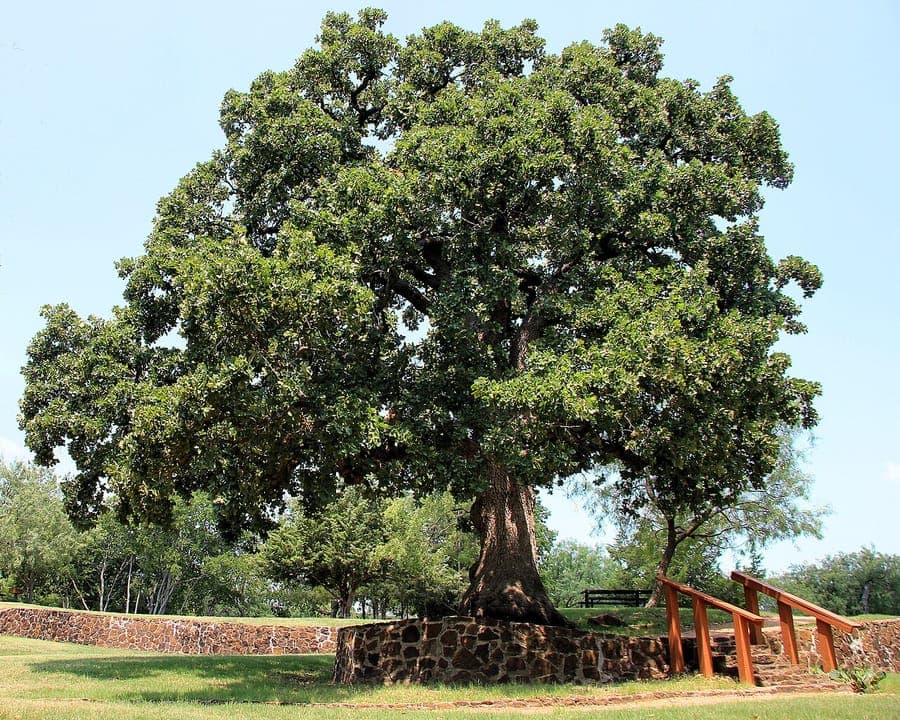
Larry D. Moore / CC BY 4.0, via Wikimedia Commons
Post oak: complete guide
Quercus stellata
¿Quieres ver Post oak: complete guide en tu jardín?
1 minuto, sin tarjeta de crédito
Overview
The post oak (Quercus stellata) is a fascinating North American tree native to central and eastern United States. Also known by the alternative name iron oak, this tree is a valuable element for gardens in temperate climates. The tree is known for its strong wood quality and adaptability to diverse growing conditions.
This tree belongs to the Fagaceae family and is well adapted to American climates. In European gardens, this tree can be used for sustainable landscape designs and offers interesting seasonal changes.
Appearance and Bloom
The post oak is a medium-sized tree with characteristic leaves that have a unique form. The leaves are larger than in many other oaks and often have a whitish underside. In spring, inconspicuous flowers appear, and the tree produces characteristic acorns.
The growth form is strong and structured, providing a solid foundation for garden designs. The leaf veining and growth pattern contribute to the overall visual character of the tree.
Ideal Location
The post oak thrives best in locations with full sun exposure. The tree loves open, sunny positions where it receives at least six hours of direct sunlight daily. This is essential for healthy growth and maximum strength.
The tree is extremely wind-tolerant and handles exposure well. This makes it suitable for open gardens, landscape situations, and even urban environments where many other trees struggle.
Soil
The post oak is extremely adaptable regarding soil type. The tree can handle heavy clay soils, rocky substrates, and even poor soils. This is an advantage in gardens with difficult soils where many other trees do not thrive.
The ideal pH range is between 4.8 and 6.5. The tree prefers well-draining soils but can also cope well with less optimal conditions. When planting, it is recommended to mix in some organic material.
Diseño gratis
¿Quieres ver Post oak: complete guide en tu jardín? Crea un diseño gratis ahora.
Watering
Once established, the post oak is an extremely drought-tolerant tree requiring minimal supplemental watering. This makes it ideal for sustainable gardening in regions with limited water availability. However, during the first growing year, regular watering (once per week) provides the best start.
Once the tree is mature, irrigation can be significantly reduced. In typical weather conditions, supplemental watering is usually not needed.
Pruning
The post oak grows slowly to moderately and requires minimal pruning work. Remove dead, damaged, or diseased branches as needed, ideally in late autumn or early winter.
Gently shape the tree's natural silhouette but avoid aggressive cutting back. The tree prefers to develop its own form and becomes stronger when this is allowed.
Maintenance Calendar
January to February: Check for winter damage, remove deadwood.
March to May: Tree grows; check water needs especially for young specimens.
June to August: Minimal care needed; rests after intense spring growth.
September to October: Check health, prepare for autumn.
November to December: Autumn leaf fall; organic material can remain in place.
Winter Hardiness
The post oak is extremely frost-hardy and can tolerate temperatures well below -20 degrees Celsius. This makes it ideal for almost all European gardens, including the Netherlands, Germany, and many other countries. Even young specimens are well frost-hardy.
Companion Plants
The post oak combines well with other North American plant species and adaptable plant material. Understory shrubs and understory trees can be used to create a natural woodland landscape.
Conclusion
The post oak is an excellent choice for sustainable, long-term garden designs. With its strong wood quality, drought tolerance, and winter hardiness, this is a valuable tree. You can find this tree at OBI and Hornbach. Discover more on gardenworld.app and design a robust, long-term garden.
¿Quieres ver Post oak: complete guide en tu jardín? Crea un diseño gratis ahora.
Sube una foto, elige un estilo y obtén un diseño fotorrealista con lista de plantas en menos de un minuto.
Más de 10.000 jardines diseñados
Sin tarjeta de crédito


Plantas similares
Lucombe oak: complete guide
Quercus crenata
Lucombe oak (Quercus crenata): a majestic semi-evergreen giant with corky bark, perfect for large gardens, parks, and country estates.
Blue oak: complete guide
Quercus douglasii
Discover the blue oak, a drought-tolerant Californian shade tree with striking blue-green foliage, ideal for large, climate-resilient gardens.
Quercus montana: complete guide
Quercus montana
Quercus montana, the chestnut oak, is a rugged American shade tree with deeply furrowed bark and large acorns, well suited to dry, rocky, spacious gardens.