
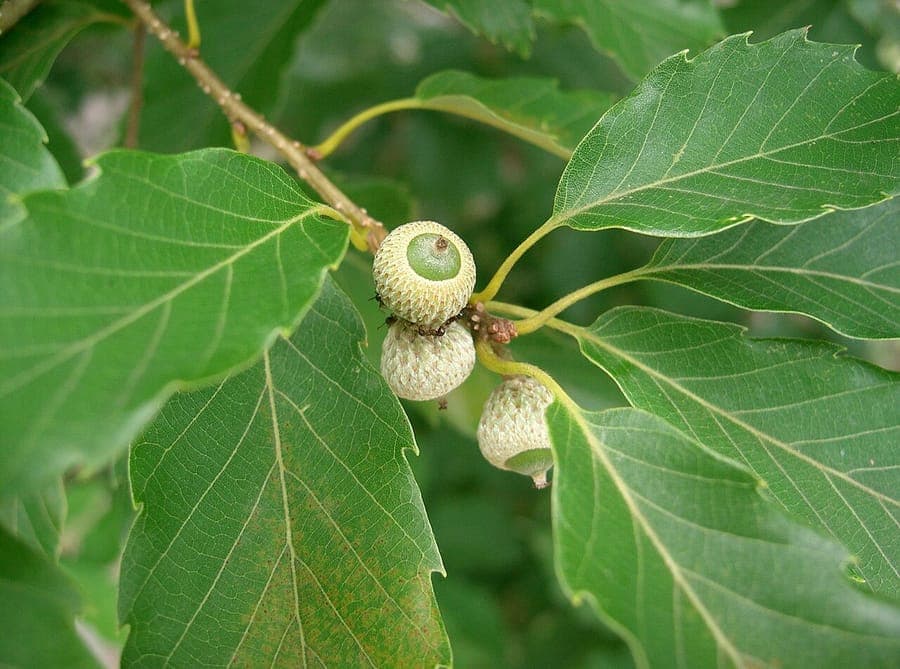
KENPEI / CC BY-SA 3.0, via Wikimedia Commons
Bao li oak: complete guide
Quercus serrata
¿Quieres ver Bao li oak: complete guide en tu jardín?
1 minuto, sin tarjeta de crédito
Overview
The Bao li oak (Quercus serrata) is an interesting Asian tree native to East Asia, including Japan, China, Korea, and Taiwan. Also known by the alternative name Jolcham oak, this is a valuable element for gardens seeking to create larger tree variety with interesting Asian characteristics. The tree is known for its serrate (saw-toothed) leaf margins, from which its botanical name is derived.
This tree belongs to the Fagaceae family and is well adapted to temperate climates of East Asia. In European gardens, this tree can be used for ornamental purposes and offers interesting leaf forms and seasonal changes.
Appearance and Bloom
The Bao li oak is a medium-sized tree with characteristic leaves that have serrate margins. The leaves are green and display beautiful autumn colors in fall, adding visual interest to the garden landscape. The leaves have a fine texture that contributes to the overall ornamental value of the tree.
The tree blooms in spring with inconspicuous male and female flowers. Later in the season characteristic acorns follow. The growth pattern is graceful and natural, making it a welcome addition to landscapes seeking more structure and depth.
Ideal Location
The Bao li oak thrives best in locations with full sun to partial shade. While the tree can handle full sun exposure, it can also cope with somewhat more shade than some other oaks. This makes it flexible for various garden situations.
The tree prefers protected locations where it is not exposed to strong sea winds or mountain winds. In temperate zones, south or east-facing locations are ideal. Avoid low-lying areas where frost persists longer.
Soil
The Bao li oak prefers well-draining soils with sufficient organic matter. The tree grows best in soils that are slightly acidic to neutral (pH 6.0 to 7.5). When planting, it is recommended to mix in compost or humus.
The tree can handle various soil types, from sandy loam to moderate clay, as long as drainage is good. Waterlogging should be avoided, as this can lead to root diseases.
Diseño gratis
¿Quieres ver Bao li oak: complete guide en tu jardín? Crea un diseño gratis ahora.
Watering
During the growing season and especially after planting, regular watering (once per week) provides the best growth. Once established, watering can be gradually reduced. The tree copes well with normal rainfall in temperate climates.
During dry periods, supplemental watering may help, but the tree is not known as a drought-tolerant species. Ensure the soil does not dry out, especially in the first growing year. A layer of mulch around the base helps retain moisture.
Pruning
The Bao li oak grows at a moderate rate and undergoes minimal pruning work. Remove dead, damaged, or diseased branches as needed, ideally in late autumn or early winter.
Gently shape the tree's natural silhouette while maintaining its characteristic form. Heavy pruning can weaken the tree and is therefore not recommended.
Maintenance Calendar
January to February: Check for winter damage, remove deadwood.
March to May: Tree awakens from dormancy; check water requirements.
June to August: Minimal maintenance; water as needed during dry periods.
September to October: Prepare for autumn colors; check health.
November to December: Autumn leaf fall; organic material can remain in place.
Winter Hardiness
The Bao li oak is well frost-hardy in temperate zones down to -15 degrees Celsius. The tree can overwinter in European gardens from the Netherlands to Germany without special protection. Young specimens may benefit from protection in very harsh winters.
Companion Plants
The Bao li oak combines well with understory Asian plant species such as azaleas, fatsia, and certain cherry varieties. These combinations create a coherent Asian garden landscape.
Conclusion
The Bao li oak is a valuable element for gardens wishing to add exotic Asian elements. With its interesting leaf form and seasonal changes, this tree adds character. Consult specialist shops such as Intratuin and Gamma for specialized advice. Discover more about international trees on gardenworld.app and design a unique garden.
¿Quieres ver Bao li oak: complete guide en tu jardín? Crea un diseño gratis ahora.
Sube una foto, elige un estilo y obtén un diseño fotorrealista con lista de plantas en menos de un minuto.
Más de 10.000 jardines diseñados
Sin tarjeta de crédito


Plantas similares
Lucombe oak: complete guide
Quercus crenata
Lucombe oak (Quercus crenata): a majestic semi-evergreen giant with corky bark, perfect for large gardens, parks, and country estates.
Blue oak: complete guide
Quercus douglasii
Discover the blue oak, a drought-tolerant Californian shade tree with striking blue-green foliage, ideal for large, climate-resilient gardens.
Quercus montana: complete guide
Quercus montana
Quercus montana, the chestnut oak, is a rugged American shade tree with deeply furrowed bark and large acorns, well suited to dry, rocky, spacious gardens.