
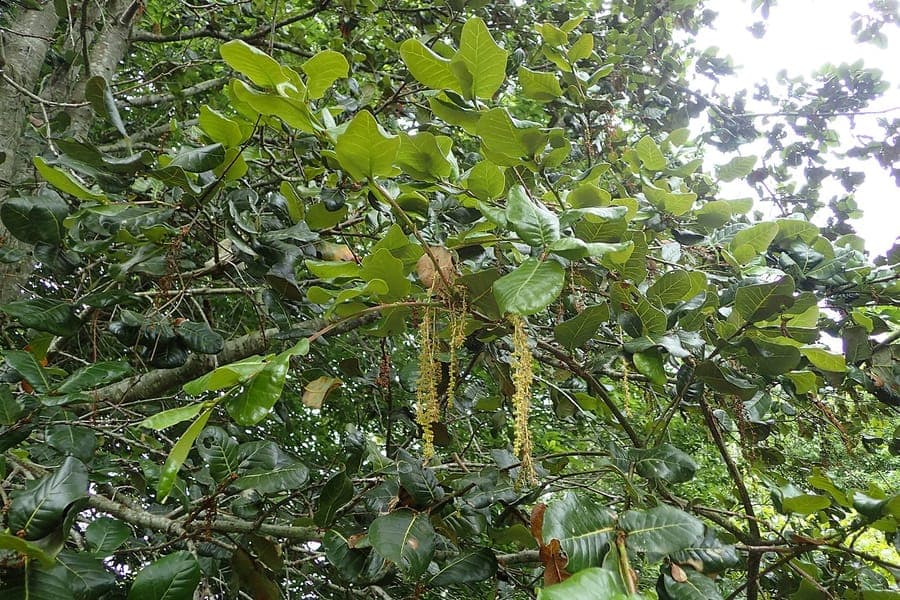
Krzysztof Ziarnek, Kenraiz / CC BY-SA 4.0, via Wikimedia Commons
Brown Oak: complete guide
Quercus semecarpifolia
¿Quieres ver Brown Oak: complete guide en tu jardín?
1 minuto, sin tarjeta de crédito
Overview
Brown Oak, scientifically known as Quercus semecarpifolia, is an impressive mountain tree from the Himalayan region stretching from Afghanistan to Thailand. This species was scientifically described in 1814 as Quercus semecarpifolia Smith. The name "semecarpifolia" refers to the half-opening fruits (semi = half, carpus = fruit). For mountain gardeners, this tree offers an opportunity to cultivate a true alpine climber.
Brown Oak belongs to the beech family (Fagaceae) and grows from 2000 to 3500 meters elevation in its natural habitat. This makes it a tree that is extremely hardy and can withstand alpine conditions. This is not an ordinary oak - it is a heritage specimen from Asian mountain ecosystems.
Appearance and Growth
Brown Oak grows into a medium-sized tree of 10 to 20 meters tall and 8 to 15 meters wide. The leaves are characteristic: green underneath, but with a brown tint on many leaves, especially in winter and fall. This gives the tree a unique almost-brown color that distinguishes it from other oaks.
The leaves are rather small (5 to 10 centimeters), elongated and have somewhat wavy margins. They are dark glossy-green, contrasting with brown petioles. This two-tone effect (green leaf, brown petioles and partial brown leaf discoloration) gives the tree a very characteristic appearance.
The tree form is regular, rather narrow-conical than broad, making it well-suited for Alpine gardens where space is limited. The bark is gray-brown and wrinkled, typical for Quercus.
Ideal Location
Brown Oak thrives best in fully sunny locations with good air movement. This mountain tree does NOT thrive in dark, sheltered corners. Place it in the most exposed spot in your garden, with maximum 6+ hours direct sunlight.
Wind exposure is not harmful but beneficial. In fact, you could place the tree in exposed spots where other trees refuse to grow. This suits its mountain heritage perfectly.
Temperature: no problems. This tree tolerates -35 degrees Celsius and grows in Himalayas under extremely cold conditions.
Soil
Brown Oak grows in mountain areas with only moderately nutrient-rich soil. This is not a nutrient-shy tree (unlike some alpine plants), but accepts well-draining soil perfectly.
Mix your soil: 40% garden soil, 40% sand/gravel and 20% compost. This creates good drainage and nutrition. Heavy clay is not suitable - drainage must be perfect.
The pH can be neutral to slightly acidic (pH 6.5-7.5). In alkaline soils (pH > 8) the tree can get yellow leaves (iron deficiency).
Once established, the tree needs little feeding - natural leaf fall adds nutrition.
Watering
In the first and second year, water regularly. Check weekly whether the top 5 centimeters are dry. Then water. Ensure good infiltration.
Once established (year 3+), the tree needs little artificial water. This mountain tree is very drought-tolerant with its deep root system.
In exceptional dry periods (for example 2 months without rain), you can water, but this is rarely needed in moderate climates.
Diseño gratis
¿Quieres ver Brown Oak: complete guide en tu jardín? Crea un diseño gratis ahora.
Pruning
Brown Oak naturally forms a beautiful tree structure. Minimal pruning is needed.
Young tree (first 5 years): gently remove lower side branches so you can walk under the tree. This also gives better visual balance.
Later years: only remove dead or diseased branches. No more regular pruning.
Formation: natural conical form doesn't need adjustment - this suits mountain character.
Maintenance Calendar
February-March: Check for winter damage. Remove dead wood. Young tree pruning. Fertilize (organic).
April-May: Leaf emergence begins. Water young tree regularly. Check for disease.
June-August: Full growing season. Water much less (only in drought). Summer pruning possible.
September-October: Growth slows. Acorns ripen. Fall color. No more feeding.
November-January: Winter rest. Check drainage. No active care.
Winter Hardiness
Brown Oak is extremely winter hardy to USDA zone 3 (-30 to -35 degrees Celsius). Throughout Dutch and Belgian regions it grows perfectly. No winter protection needed.
Young tree first winter: protect against extremely cold frost (below -25 degrees) with windscreen. But usually not needed - this tree is made for this.
Long-term: this is one of the hardiest oaks for mountain regions.
Companion Plants
Brown Oak combines nicely with other mountain plants:
- Other Himalayan mountain plants like Viburnum
- Helleborus niger (Christmas rose) for support
- Alpine rhododendron
- Arctostaphylos (bearberry)
- Dwarf conifers like Picea glauca 'Conica'
It creates a true mountain landscape simulation.
Final Thoughts
Brown Oak is a tree for the serious mountain gardener willing to think long-term. This is not a standard oak - it is a mountain creature with alpine heritage. With its distinctive brown leaves, robust form and extreme hardiness, it offers something truly unique and valuable to collectors.
Patience is absolutely required - the tree grows rather slowly in the first 10 years of its life. But once mature at twenty-five years old, it becomes a majestic monument to mountain forest beauty and ecosystem value.
This is heritage gardening at its finest. A tree that supports birds, insects and wildlife for centuries. This is legacy thinking - planting for generations you may never meet.
Looking for Brown Oak seed or young trees? Availability remains very limited in European tree nurseries. Much careful research is needed before purchase. Online specialized tree traders and seed companies sometimes have seeds from known and traceable sources. Always verify that genetic lineage is documented and from appropriate altitudes.
On gardenworld.app you'll find more alpine trees, mountain landscape design and heritage gardening concepts. Visit for inspiration at altitude and mountain ecosystem restoration!
¿Quieres ver Brown Oak: complete guide en tu jardín? Crea un diseño gratis ahora.
Sube una foto, elige un estilo y obtén un diseño fotorrealista con lista de plantas en menos de un minuto.
Más de 10.000 jardines diseñados
Sin tarjeta de crédito


Plantas similares
Lucombe oak: complete guide
Quercus crenata
Lucombe oak (Quercus crenata): a majestic semi-evergreen giant with corky bark, perfect for large gardens, parks, and country estates.
Blue oak: complete guide
Quercus douglasii
Discover the blue oak, a drought-tolerant Californian shade tree with striking blue-green foliage, ideal for large, climate-resilient gardens.
Quercus montana: complete guide
Quercus montana
Quercus montana, the chestnut oak, is a rugged American shade tree with deeply furrowed bark and large acorns, well suited to dry, rocky, spacious gardens.