
Wikimedia Commons / CC BY-SA 3.0, via Wikimedia Commons
Quercus rotundifolia: complete guide
Quercus rotundifolia
¿Quieres ver Quercus rotundifolia: complete guide en tu jardín?
1 minuto, sin tarjeta de crédito
Overview
Quercus rotundifolia, also called holm oak, is a beautiful Mediterranean tree from the Fagaceae family. This robust, evergreen oak originates from Mediterranean regions and grows into an elegant tree with grey-green foliage. The plant makes an ideal choice for dry, warm locations and xeriscape designs.
With its characteristic grey bark, permanent foliage and drought tolerance, Quercus rotundifolia proves excellent for modern, sustainable garden designs.
Appearance and Bloom
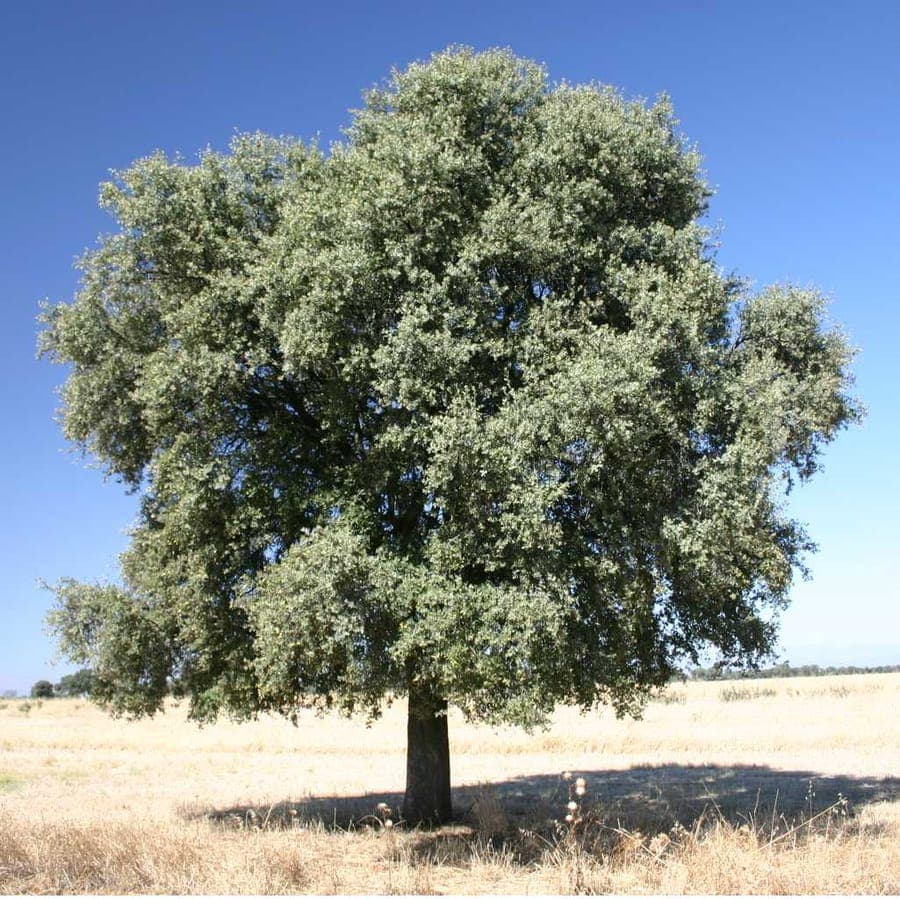
Holm oak grows as a medium-sized tree, typically 10-15 metres tall in cultivation. The tree forms a dense, attractive globular to broadly oval profile. The leaves are small to medium, 2-4 centimetres long, rounded to ovate in shape with grey-green to olive-coloured tint.
The tree proves completely evergreen, retaining foliage throughout the year. The bark is characteristically dark grey and deeply furrowed. In spring, small yellow flower catkins appear. Acorns are small, approximately 1-1.5 centimetres.
Ideal Location
Holm oak grows optimally in sunny, warm locations with excellent drainage. The plant requires minimum six hours direct sunlight daily and cannot tolerate wet feet. Gardenworld.app advises planting on high, well-drained sites.
The tree proves highly suitable for xeriscape designs and dry, warm locations. Protect young specimens against strong cold wind during their first winters.
Soil
Holm oak grows optimally in dry, well-drained, calcareous soil. The plant tolerates poor to moderately fertile soil extremely well. Heavy clay or wet soils prove unsuitable; mix sand and gravel for improvement.
The tree proves very flexible in pH requirements and thrives in both acidic and alkaline soils. Drainage remains critical and non-negotiable.
Watering
Once established, holm oak requires minimal watering thanks to its deep root system. Young trees however need regular water during their first two growing seasons. Ensure even moisture without waterlogging.
Mature trees tolerate drought excellently and require supplemental water only during exceptionally hot periods. Mulching helps moisture retention and temperature regulation.
Diseño gratis
¿Quieres ver Quercus rotundifolia: complete guide en tu jardín? Crea un diseño gratis ahora.
Pruning
Holm oak requires minimal pruning. Remove only dead or diseased branches. Formative pruning proves unnecessary due to the tree's naturally elegant form.
Avoid heavy pruning as oak species prove susceptible to fungi entering cut surfaces. Limit yourself to necessary maintenance.
Maintenance Calendar
March to April: Inspect for winter damage; prune dead material May to July: Young trees water regularly; no pruning August to October: Reduce watering as tree matures; check drainage November to February: Winter dormancy; prepare for next season; mulch
Winter Hardiness
Quercus rotundifolia proves marginally hardy and suits warmer regions (USDA zones 8-10). In Northern Europe, the tree may suffer during severe winters with temperatures below -10 degrees Celsius. In northern European countries, planting only in very protected southern locations is recommended.
Young trees require protection against harsh frost. Mature specimens prove hardier.
Companion Plants
Holm oak combines well with other Mediterranean xeriscape plants like rosemary, lavender and cistus. Forms beautiful contrast with silver-leaved plants. As a specimen tree, the tree speaks optimally to its strength.
In xeriscape designs, use holm oak as structural anchor surrounded by drought-tolerant groundcovers.
Conclusion
Quercus rotundifolia offers gardeners and landscape architects an elegant, drought-tolerant tree for warm regions. With its grey-green foliage, graceful form and water economy, this Mediterranean oak forms an essential element in modern, sustainable garden designs. Enjoy this low-maintenance, elegant tree.
Available at specialised tree nurseries in Southern Europe and Mediterranean regions. For more inspiration on xeriscaping and Mediterranean design, visit gardenworld.app/en and discover how to incorporate holm oak into your garden project.
¿Quieres ver Quercus rotundifolia: complete guide en tu jardín? Crea un diseño gratis ahora.
Sube una foto, elige un estilo y obtén un diseño fotorrealista con lista de plantas en menos de un minuto.
Más de 10.000 jardines diseñados
Sin tarjeta de crédito


Plantas similares
Lucombe oak: complete guide
Quercus crenata
Lucombe oak (Quercus crenata): a majestic semi-evergreen giant with corky bark, perfect for large gardens, parks, and country estates.
Blue oak: complete guide
Quercus douglasii
Discover the blue oak, a drought-tolerant Californian shade tree with striking blue-green foliage, ideal for large, climate-resilient gardens.
Quercus montana: complete guide
Quercus montana
Quercus montana, the chestnut oak, is a rugged American shade tree with deeply furrowed bark and large acorns, well suited to dry, rocky, spacious gardens.