
Wikimedia Commons / CC BY-SA 3.0, via Wikimedia Commons
Pedunculate oak: complete guide
Quercus robur
¿Quieres ver Pedunculate oak: complete guide en tu jardín?
1 minuto, sin tarjeta de crédito
Overview
The pedunculate oak (Quercus robur) is one of Europe's most iconic trees. This powerful specimen has symbolized strength and endurance for millennia. With its massive trunk and spreading crown, the pedunculate oak dominates any landscape. A mature tree can reach 800 years old, making it a living legacy for future generations.
This hardwood oak is perfect for gardeners seeking an architectural element that outlives them. It demands patience - rapid results don't apply here - but offers unmatched permanence.
Appearance & bloom cycle
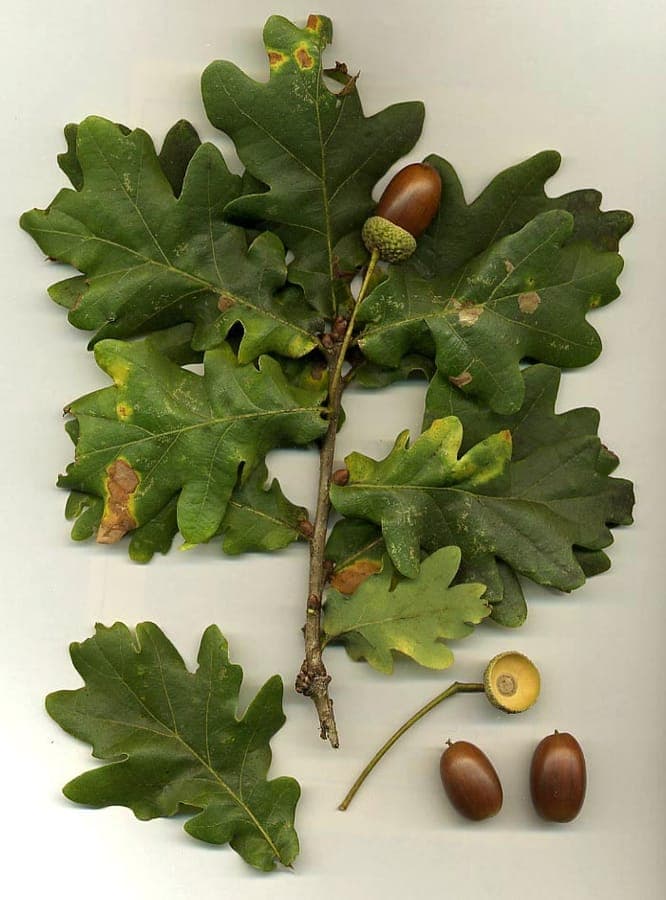
The pedunculate oak distinguishes itself through dark grey, deeply furrowed bark and characteristic deeply lobed leaves. The leaves are glossy green, 7-14 centimetres long, with two small lobes at the base. In May and June, inconspicuous flowers appear; male flowers form yellowish catkins while female flowers remain discrete.
The acorn (fruit) is the most recognizable feature: approximately 2-3 centimetres long, partially enclosed by a bumpy cupule. By September-October, acorns ripen, containing seeds for natural propagation. Autumn colours are golden-brown, though less dramatic than some other oaks.
Ideal location
The pedunculate oak thrives in full sun with minimum six hours direct sunlight daily. It tolerates partial shade but grows slower and develops thinner canopies. Plant it at least 15 metres from buildings and other large trees, as mature specimens reach 25-30 metres tall with 20-metre crown spread.
Keep the tree away from drainage pipes and sewers due to its aggressive root system. The pedunculate oak is highly wind-resistant and performs well at altitude; its deep roots make it tolerant to drought once established.
Soil requirements
The pedunculate oak grows on nearly all soil types, from clay to sand, but prefers deep, well-draining earth. Optimal pH is 6.0-8.0 (neutral to slightly alkaline). Poor soils pose no problem - this tree is modest regarding nutrients and forms strong specimens even on lean ground.
Better growth occurs in soils enriched with organic matter; work 20-30% well-rotted compost into planting holes. The oak tolerates wet sites better than many other oaks, but prolonged waterlogging can cause issues. Ensure good drainage in heavy clay soils.
Watering
Once established (after the first season), the pedunculate oak requires minimal water thanks to its deep root system. Young trees in their first year need regular watering: twice weekly during dry spells, approximately 20-30 litres per plant. Avoid waterlogged conditions; water must drain away.
In very dry summers (>3 weeks without rain), supplemental watering helps, especially for trees under 5 years old. Established trees need virtually no supplemental water except during extreme droughts.
Diseño gratis
¿Quieres ver Pedunculate oak: complete guide en tu jardín? Crea un diseño gratis ahora.
Pruning
The pedunculate oak requires minimal pruning work. Remove only dead, diseased, or crossing branches. Do this in winter (November-January) when the tree is dormant. Large cuts heal slowly, so work conservatively.
Young trees can be gently shaped by removing competing leaders to establish one strong central stem. Above 5 metres height, avoid pruning; let the natural crown form develop. For pyramidal form, avoid cutting the central leader.
Maintenance calendar
March-April: Inspect for winter damage; newly planted trees may show frost weakness. Remove any snow damage. Begin feeding with organic winter compost.
May-June: Bloom season; observe inconspicuous flowers. Check for pests like spider mite caterpillars.
July-September: Monitor acorn set and ripening. Provide supplemental water during dry periods.
October-November: Acorn drop; remove aged leaves. Scatter fresh acorns for wildlife food.
December-January: Pruning work; winter maintenance of surroundings.
Winter hardiness
The pedunculate oak is extremely hardy, tolerating winters down to USDA zone 4 (-30°C). Young trees (2-3 years) can experience frost damage, so protect against severe frost and east winds. Mature trees need no protection.
In extremely cold regions (zone 3), young trees may suffer winter twig dieback. Mulch 10 centimetres deep around the root zone in October.
Companion plants
Around a pedunculate oak grows its own ecosystem. Underplant with shade-tolerant species:
- Helleborus niger (Christmas rose): blooms beneath the tree in shade
- Hedera helix (Common ivy): clothes the light shade elegantly
- Polystichum setiferum (Soft shield fern): elegant understory
- Epimedium x youngianum: purple foliage, subtle contrast
Avoid dense planting close to the trunk; leave 1-2 metres free for air circulation. Oaks produce abundant leaf-fall - accept this as free mulch.
On gardenworld.app, see how pedunculate oaks fit into heritage landscape designs for permanent garden styles. Many Dutch estates from the 18th century are still surrounded by original pedunculate oaks.
Closing remarks
The pedunculate oak is an investment in the future. Patience is required - initial growth is slow (30 centimetres yearly), but accelerates after 10 years. Once established, you'll do little and enjoy it for generations.
On gardenworld.app, find inspiration for native-tree landscapes that endure for centuries. This is authentic luxury gardening: creating a legacy.
¿Quieres ver Pedunculate oak: complete guide en tu jardín? Crea un diseño gratis ahora.
Sube una foto, elige un estilo y obtén un diseño fotorrealista con lista de plantas en menos de un minuto.
Más de 10.000 jardines diseñados
Sin tarjeta de crédito


Plantas similares
Lucombe oak: complete guide
Quercus crenata
Lucombe oak (Quercus crenata): a majestic semi-evergreen giant with corky bark, perfect for large gardens, parks, and country estates.
Blue oak: complete guide
Quercus douglasii
Discover the blue oak, a drought-tolerant Californian shade tree with striking blue-green foliage, ideal for large, climate-resilient gardens.
Quercus montana: complete guide
Quercus montana
Quercus montana, the chestnut oak, is a rugged American shade tree with deeply furrowed bark and large acorns, well suited to dry, rocky, spacious gardens.